Nepal Travel Guide 2027: Best Places to Visit, Treks, Tours, Costs & Adventure Activities
Nepal Travel Guide
Your Complete Guide to Exploring Nepal with Best Trek and Adventure Pvt. Ltd.
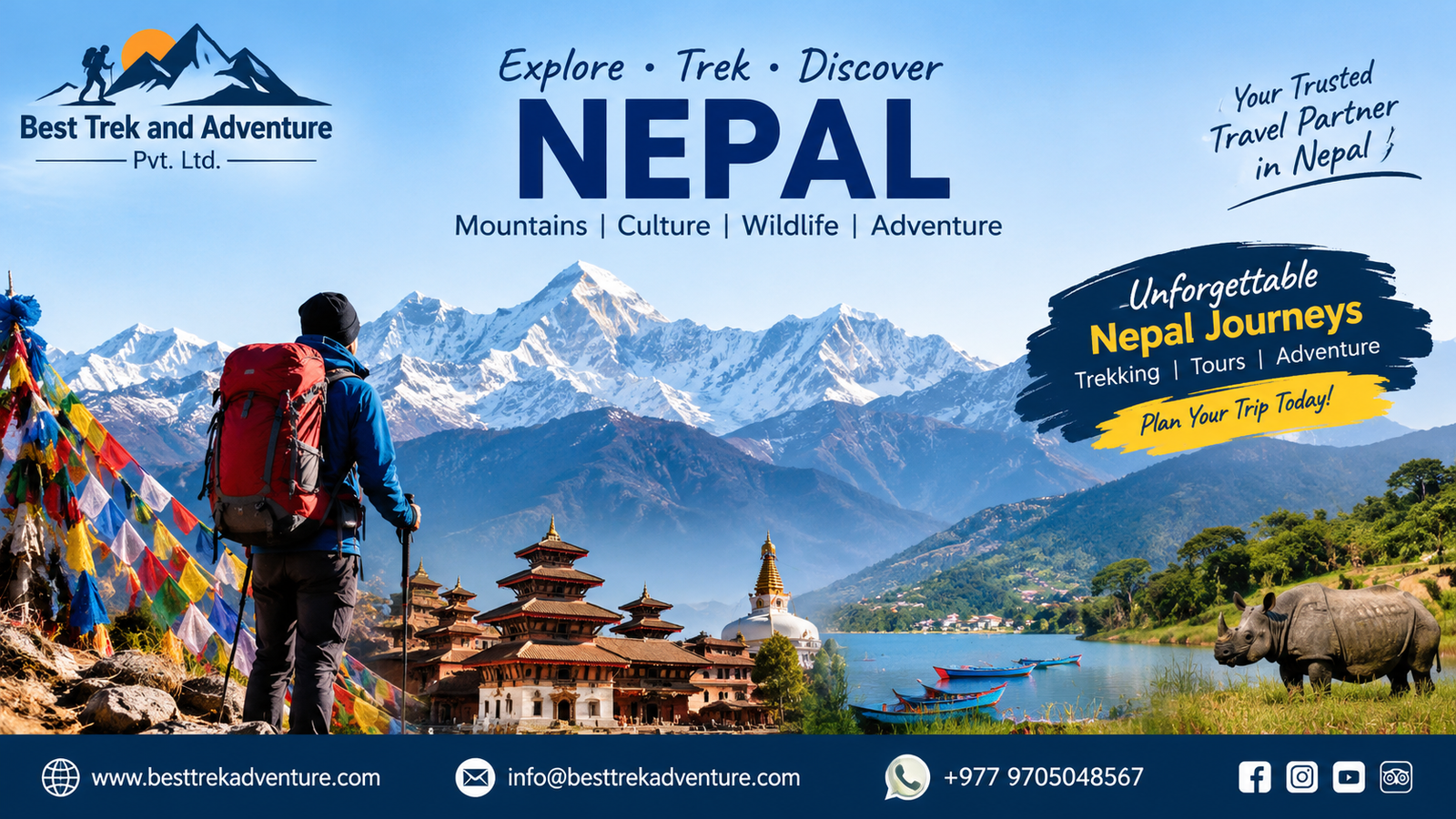
Nepal is a destination where the world’s highest mountains, ancient cultural heritage, peaceful spiritual sites, traditional villages, and extraordinary adventure experiences come together. Whether you dream of trekking to Everest Base Camp, exploring the Annapurna Himalayas, discovering Kathmandu’s UNESCO World Heritage Sites, watching wildlife in Chitwan National Park, or enjoying a relaxing holiday beside Phewa Lake in Pokhara, Nepal offers an unforgettable experience for every kind of traveler.
For visitors from the United States, Canada, and Australia, a trip to Nepal can be an opportunity to experience a different pace of life, discover welcoming communities, explore spectacular landscapes, and create memories that last a lifetime.
However, planning a successful Nepal holiday requires more than choosing destinations. You need to consider the best season, travel duration, transportation, accommodation, trekking permits, altitude, insurance, and budget.
This comprehensive Nepal Travel Guide 2027 by Best Trek and Adventure Pvt. Ltd. explains everything you need to plan your journey. From the best places to visit in Nepal and the most popular trekking routes to estimated travel costs, suggested itineraries, and essential travel tips, this guide will help you choose the right Nepal tour package for your interests and budget.
Whether you are planning your first visit to Nepal, a family vacation, a private cultural tour, or a challenging Himalayan adventure, your journey begins with understanding what this remarkable country has to offer.
Why Visit Nepal in 2027?
Nepal is one of the world’s most distinctive travel destinations because it offers a remarkable variety of experiences within a relatively compact country.
In one holiday, you can explore historic temples, walk through traditional mountain villages, enjoy Himalayan panoramas, visit Buddhist monasteries, discover subtropical wildlife habitats, and experience the warmth of Nepalese hospitality.
The country is also suitable for different travel styles. Some visitors prefer comfortable hotels and private sightseeing tours, while others seek multi-day treks, remote landscapes, and physically demanding adventures.
Here are some of the main reasons to visit Nepal in 2027:
- The Himalayas: Experience spectacular mountain scenery, including views of Mount Everest, Annapurna, Manaslu, and other famous peaks.
- World-class trekking: Choose from short Himalayan hikes, classic teahouse treks, and challenging high-altitude journeys.
- Cultural heritage: Explore ancient temples, royal squares, historic cities, and traditional Newari architecture.
- Spiritual travel: Visit Buddhist stupas, monasteries, meditation destinations, and important Hindu pilgrimage sites.
- Wildlife experiences: Discover national parks, forests, grasslands, and diverse birdlife.
- Adventure activities: Enjoy rafting, paragliding, mountain biking, scenic flights, and selected helicopter tours.
- Authentic local experiences: Discover Nepalese cuisine, handicrafts, traditional settlements, and local festivals.
Nepal also offers opportunities to customize your holiday according to your interests, travel dates, fitness level, and budget.
With local knowledge and careful planning, you can combine several destinations into one memorable journey.
Best Places to Visit in Nepal
Choosing the right destinations is one of the most important parts of planning a Nepal vacation. The country offers historic cities, mountain regions, peaceful lakes, wildlife destinations, and spiritual pilgrimage sites.
1. Kathmandu: Nepal’s Cultural and Historical Heart
Kathmandu is Nepal’s capital and the main international gateway for many visitors. It is an excellent starting point for exploring the country’s history, architecture, religion, cuisine, and everyday culture.
The Kathmandu Valley contains seven monument zones recognized together as a UNESCO World Heritage property.
Major attractions include:
Swayambhunath Stupa: Also known as the Monkey Temple, this hilltop Buddhist complex offers panoramic views of Kathmandu Valley and an atmosphere of religious devotion.
Boudhanath Stupa: One of the most important centers of Tibetan Buddhist culture in Nepal, Boudhanath is surrounded by monasteries, shops, and traditional restaurants.
Pashupatinath Temple: Situated beside the Bagmati River, this important Hindu pilgrimage destination provides insight into Nepal’s religious traditions. Access to the main temple is restricted to Hindus, but visitors can explore permitted surrounding areas respectfully.
Kathmandu Durbar Square: This historic royal complex features temples, courtyards, palace buildings, and traditional architecture.
Travelers can also explore local markets, sample Nepalese dishes, visit museums, and discover historic neighborhoods.
A guided Kathmandu sightseeing tour is particularly useful for first-time visitors who want to understand the history and significance of the city’s monuments.
Allow at least one full day for the main attractions, although two or three days provide more time to explore the valley comfortably.
2. Pokhara: Lakeside Beauty and Himalayan Views
Pokhara is one of Nepal’s most popular destinations for travelers seeking mountain scenery, outdoor activities, and a relaxed atmosphere.
The city sits beside Phewa Lake and provides access to spectacular views of the Annapurna range when weather conditions allow.
Popular attractions include Phewa Lake, the World Peace Pagoda, Sarangkot, Davis Falls, and the International Mountain Museum.
Visitors can enjoy lakeside walks, boat rides, sunrise excursions, photography, and local restaurants.
Pokhara is also a major gateway for trekking in the Annapurna region. Treks such as Annapurna Base Camp and Mardi Himal are commonly organized with transportation arrangements through Pokhara.
Adventure activities may include tandem paragliding, mountain biking, rafting, and selected scenic flights, subject to weather and operator availability.
For international visitors, Pokhara is an excellent place to slow down after a trek or combine mountain scenery with cultural sightseeing.
3. Chitwan National Park: Wildlife and Nature
Chitwan offers a completely different landscape from Nepal’s Himalayan regions.
Its subtropical forests, grasslands, wetlands, and rivers support a variety of wildlife, including the greater one-horned rhinoceros, crocodiles, deer, and numerous bird species.
Visitors can participate in authorized wildlife activities, guided nature walks, birdwatching, and cultural experiences that introduce them to local communities, including Tharu traditions.
Wildlife sightings depend on season, habitat conditions, and luck. No responsible operator can guarantee encounters with particular animals.
Two or three days can provide a rewarding wildlife experience and allow travelers to enjoy the region without rushing.
Chitwan is especially suitable for families, couples, nature enthusiasts, and travelers who want to combine cultural tours with wildlife adventures.
4. Bhaktapur: Traditional Newari Architecture
Bhaktapur is a historic city in the Kathmandu Valley known for its traditional architecture, brick-paved streets, courtyards, and Newari cultural heritage.
Bhaktapur Durbar Square is a major attraction, with historic palace buildings, temples, carved wooden windows, and traditional monuments.
Visitors can explore local pottery traditions, handicraft shops, traditional food, and quieter residential streets.
Bhaktapur is an excellent destination for photography, architecture, and cultural exploration.
It can be visited on a day tour from Kathmandu or combined with Nagarkot for a scenic overnight experience.
5. Nagarkot: Sunrise and Mountain Scenery
Nagarkot is a hill station near Kathmandu that attracts travelers seeking fresh air, scenic surroundings, and potential Himalayan sunrise views.
On clear days, the surrounding mountain panorama can be impressive. Visibility depends on weather, season, and atmospheric conditions.
Nagarkot is suitable for couples, families, photographers, and travelers who want to experience the countryside without undertaking a demanding trek.
An overnight stay provides more flexibility than a short visit and gives you another opportunity to enjoy the scenery if the first morning is cloudy.
6. Lumbini: The Sacred Birthplace of Buddha
Lumbini is one of the most important Buddhist pilgrimage destinations in the world and a UNESCO World Heritage Site.
The sacred garden, Maya Devi Temple, Ashoka Pillar, and surrounding monastic zones attract pilgrims and visitors interested in Buddhist philosophy, history, and spirituality.
Different Buddhist communities have established monasteries in the area, offering opportunities to appreciate a range of architectural and cultural traditions.
Lumbini is an excellent addition to a pilgrimage-focused itinerary or a longer cultural tour of Nepal.
Allow one or two nights if you want time to explore the site without rushing.
7. Bandipur: A Peaceful Traditional Hill Town
Bandipur is a charming hilltop settlement known for its traditional architecture, mountain surroundings, and relaxed atmosphere.
The town provides an opportunity to explore Nepalese small-town life away from the busier tourist centers.
Visitors can enjoy scenic walks, local restaurants, traditional streets, and views of the surrounding hills.
Bandipur can be included in selected overland itineraries between Pokhara and Chitwan, depending on road conditions and available time.
8. Upper Mustang: A Unique Himalayan Cultural Region
Upper Mustang is famous for its dramatic dry landscapes, colorful cliffs, traditional settlements, and Tibetan Buddhist heritage.
The historic walled settlement of Lo Manthang is one of the region’s major attractions.
Unlike Nepal’s greener Himalayan foothills, Upper Mustang has a distinctive landscape shaped by its location in the rain shadow of the Himalayas.
The region requires additional planning because special restricted-area permits and applicable trekking regulations may apply.
Travelers should confirm current requirements, costs, guide arrangements, and route conditions before booking.
Upper Mustang is particularly rewarding for visitors seeking remote landscapes, distinctive cultural experiences, and a less conventional Himalayan adventure.
Best Treks in Nepal for 2027
Nepal is internationally known for trekking, with routes that pass through forests, traditional villages, alpine valleys, and dramatic Himalayan landscapes.
The best trek depends on your available time, fitness, altitude experience, budget, and preferred level of challenge.
1. Everest Base Camp Trek
The Everest Base Camp Trek is one of the world’s most recognized trekking adventures.
The journey takes visitors into the Khumbu region, where mountain scenery, Sherpa culture, Buddhist monasteries, and traditional settlements create an unforgettable Himalayan experience.
The route commonly includes Namche Bazaar, Tengboche, Dingboche, and Gorak Shep, with acclimatization days built into the itinerary.
Highlights include:
- Views of Mount Everest and surrounding Himalayan peaks.
- Sherpa villages and local cultural traditions.
- Tengboche Monastery and other Buddhist landmarks.
- The opportunity to reach Everest Base Camp.
- Optional excursions to Kala Patthar, a famous viewpoint.
A typical itinerary takes approximately 12–16 days, including arrival, trekking, acclimatization, and departure arrangements. The exact duration depends on the route, flight arrangements, and contingency days.
This is a demanding high-altitude trek. Physical fitness alone does not eliminate altitude risk, so a gradual ascent, appropriate acclimatization, and a suitable itinerary are essential.
Explore the Everest Base Camp Trek with Best Trek and Adventure.
2. Annapurna Circuit Trek
The Annapurna Circuit Trek is known for its varied landscapes, traditional mountain villages, and dramatic Himalayan scenery.
Depending on the itinerary, trekkers travel through green valleys, forests, terraced farmland, and the drier landscapes around Manang and Mustang.
Crossing Thorong La Pass is a major highlight for many trekkers, although the high elevation requires careful acclimatization and preparation.
Road access has changed sections of the traditional route, so the itinerary should be selected according to current conditions and the experience you want.
The Annapurna Circuit is particularly appealing to travelers who want a varied multi-day journey with cultural experiences and changing mountain scenery.
3. Annapurna Base Camp Trek
The Annapurna Base Camp Trek leads into a spectacular mountain sanctuary surrounded by towering Himalayan peaks.
The route commonly passes through villages, forests, stone stairways, terraced hillsides, and rhododendron woodland.
It is an attractive option for travelers who want an immersive Himalayan experience without committing to the longer traditional Annapurna Circuit.
Many itineraries take approximately 7–12 days, depending on the starting point, pace, transportation, and acclimatization needs.
4. Manaslu Circuit Trek
The Manaslu Circuit Trek is a rewarding option for travelers seeking dramatic landscapes, traditional villages, and a more remote trekking experience.
The route circles Mount Manaslu, the world’s eighth-highest mountain, and crosses varied terrain that includes river valleys, forests, mountain settlements, and high-altitude landscapes.
The crossing of Larkya La Pass is a major highlight and requires careful planning.
Manaslu is a restricted trekking region with specific permit and guide requirements. Travelers should organize the trip through an appropriately registered trekking agency and verify current regulations before departure.
A typical itinerary takes around two weeks or longer, depending on acclimatization, route selection, and transportation.
5. Langtang Valley Trek
The Langtang Valley Trek offers beautiful mountain scenery, traditional settlements, forest trails, and opportunities to learn about local Himalayan culture.
Its location north of Kathmandu makes it an appealing option for visitors who prefer not to fly to Lukla.
The journey commonly takes around 7–10 days, although the exact duration depends on the selected route and travel arrangements.
Road travel to the trailhead can be lengthy, so allow sufficient time for transportation and possible delays.
6. Mardi Himal Trek
Mardi Himal is a popular shorter trekking option in the Annapurna region.
The trail passes through forested hillsides, ridge paths, and open mountain viewpoints. It is especially attractive to travelers who want impressive Himalayan scenery within a limited holiday schedule.
Many itineraries take approximately 5–8 days, depending on the starting point, pace, and transport arrangements.
Although shorter than some classic treks, Mardi Himal still involves steep sections, changing weather, and altitude exposure. Suitable footwear, preparation, and route planning remain important.
Which Trek Should You Choose?
- Choose Everest Base Camp if reaching the Everest region is your dream and you can allocate sufficient time for acclimatization.
- Choose Annapurna Circuit if you want a longer journey through changing landscapes and traditional mountain settlements.
- Choose Annapurna Base Camp if you prefer a focused trek into a spectacular Himalayan sanctuary.
- Choose Manaslu Circuit if you want a remote-feeling adventure with special permit requirements and high mountain scenery.
- Choose Langtang Valley if you want a culturally rewarding trek accessible from Kathmandu by road.
- Choose Mardi Himal if you prefer a shorter Himalayan adventure with impressive viewpoints.
For every route, check current trekking regulations, weather, road access, and trail conditions before departure.
Best Time to Visit Nepal in 2027
Nepal’s climate varies significantly according to region and elevation. The best season for cultural sightseeing may differ from the ideal time for a high-altitude trek.
Spring: March to May
Spring is a popular season for trekking and outdoor exploration.
Rhododendrons bloom in many hill regions, temperatures become warmer, and many trekking routes offer attractive conditions.
Spring is suitable for numerous Everest and Annapurna itineraries, although higher elevations can still experience cold weather and snow.
Kathmandu, Pokhara, and other cultural destinations can also be enjoyable during this period.
Autumn: September to November
Autumn is traditionally one of Nepal’s busiest trekking seasons.
Many travelers choose this period for mountain views, trekking, cultural tours, and outdoor activities.
Dashain and Tihar, two of Nepal’s major festivals, often occur during this broad season, although exact dates change each year.
Book popular trekking routes, hotels, and domestic flights well in advance if traveling during peak periods.
Winter: December to February
Winter is suitable for cultural sightseeing, lower-elevation walks, and selected trekking routes.
Kathmandu, Pokhara, and Chitwan can be rewarding destinations, although mornings and evenings may be cold.
High mountain routes can experience snow, icy trails, and severe temperatures. Some passes may become difficult or inaccessible.
Choose winter trekking according to current conditions and professional local advice.
Monsoon: June to August
The monsoon brings substantial rainfall to many parts of Nepal.
Forests and hills become lush, but muddy trails, leeches, landslides, cloud cover, and transportation disruptions may affect travel.
Some rain-shadow destinations can have different conditions from the wetter southern slopes, but access and weather must still be checked.
If traveling during the monsoon, allow flexibility in your schedule and confirm transportation arrangements in advance.
Overall recommendation: Spring and autumn are excellent starting points for many first-time visitors, but the best time depends on your exact destination, activities, and travel preferences.
How Much Does a Trip to Nepal Cost in 2027?
Nepal offers a wide range of travel options, from simple accommodation and local transport to comfortable hotels, private vehicles, guided sightseeing, and premium trekking arrangements.
Your total cost depends on the duration of your holiday, group size, accommodation standard, transportation, activities, permits, and included services.
The following figures are illustrative planning estimates in US dollars, not confirmed prices from Best Trek and Adventure.
| Travel style | Approximate daily budget per person |
|---|---|
| Budget travel | US$25–50 |
| Mid-range travel | US$60–150 |
| Premium private travel | US$150–350+ |
These estimates are broad guides. Trekking, domestic flights, permits, specialist guides, high-altitude logistics, and helicopter excursions can increase the total significantly.
Estimated Costs for Popular Nepal Trips
| Trip type | Illustrative cost per person |
|---|---|
| 5–7 day cultural tour | US$350–1,200 |
| 7–10 day Kathmandu and Pokhara tour | US$500–1,500 |
| 10–14 day tour with Chitwan | US$800–2,200 |
| 5–8 day shorter trekking adventure | US$450–1,200 |
| 12–16 day Everest Base Camp Trek | US$1,200–3,000+ |
| Premium customized holiday | US$2,000+ |
These estimates are not quotations and may exclude international airfare, travel insurance, visa fees, personal expenses, and other services. Actual package prices depend on dates, accommodation, group size, permits, route, and inclusions.
What Is Included in a Nepal Tour Package?
Depending on the package, services may include airport transfers, hotel accommodation, private ground transportation, sightseeing guides, selected meals, trekking guides, porter services, domestic flights, permits, and entrance fees.
Always review the written itinerary to understand what is included and excluded.
Ask about cancellation terms, payment schedules, emergency arrangements, and possible additional costs before confirming your booking.
Budget Tips for International Travelers
Travelers from the United States, Canada, and Australia can manage their Nepal holiday budget by choosing suitable accommodation, booking popular arrangements in advance, and selecting an itinerary that avoids unnecessary transfers.
Traveling with a small group may reduce some shared transportation costs. However, high-altitude trekking and remote destinations can involve fixed costs regardless of group size.
Request a detailed quotation so you can compare services rather than comparing headline prices alone.
Suggested Nepal Itineraries for 7, 10, 14, and 21 Days
7-Day Nepal Tour: Kathmandu and Pokhara
Day 1: Arrive in Kathmandu, transfer to your hotel, and relax.
Day 2: Explore Kathmandu’s major cultural attractions, such as Boudhanath, Pashupatinath, and Swayambhunath.
Day 3: Visit selected heritage sites before traveling to Pokhara, depending on the transportation schedule.
Day 4: Explore Pokhara, including Phewa Lake and local attractions.
Day 5: Enjoy a sunrise excursion if conditions permit, followed by optional activities or sightseeing.
Day 6: Return to Kathmandu by road or domestic flight.
Day 7: Transfer to the airport for departure.
This itinerary is suitable for visitors who want a first introduction to Nepal without a demanding trek.
10-Day Nepal Tour: Culture, Mountains, and Wildlife
Days 1–2: Arrive in Kathmandu and explore the valley’s cultural highlights.
Day 3: Travel to Pokhara.
Days 4–5: Enjoy lakeside scenery, mountain viewpoints, and optional adventure activities.
Day 6: Travel to Chitwan.
Days 7–8: Experience guided wildlife activities and local cultural experiences, subject to park rules and availability.
Day 9: Return to Kathmandu.
Day 10: Depart Nepal.
This itinerary combines cultural heritage, natural scenery, and wildlife. Transportation times should be planned realistically, particularly for road journeys.
14-Day Nepal Adventure: Everest Base Camp
A two-week holiday may accommodate a carefully planned Everest Base Camp itinerary, but the exact duration depends on the route, acclimatization schedule, flight arrangements, and contingency days.
A typical plan includes arrival and preparation in Kathmandu, travel to the Everest region, gradual trekking with acclimatization, the approach to Everest Base Camp, the return trek, and departure arrangements.
Weather-related flight disruptions and altitude-related changes can affect the schedule. Some travelers should choose a longer itinerary.
21-Day Nepal Tour and Trekking Holiday
Three weeks allows greater flexibility for combining cultural sightseeing, trekking, and nature experiences.
A possible structure includes:
- Days 1–3: Kathmandu Valley sightseeing.
- Days 4–5: Pokhara and surrounding viewpoints.
- Days 6–17: A selected trekking itinerary with acclimatization and contingency time.
- Days 18–19: Rest and additional sightseeing, depending on the trek.
- Days 20–21: Return travel and departure arrangements.
Alternatively, visitors can combine Kathmandu, Pokhara, Chitwan, Lumbini, and Bandipur without undertaking a high-altitude trek.
Best Trek and Adventure can help travelers select a route according to their interests, available time, and fitness.
Best Adventure Activities in Nepal
Nepal offers much more than trekking. Travelers can enjoy a variety of outdoor activities and scenic experiences according to their interests, budget, and comfort level.
Mountain Flights and Helicopter Tours
Mountain flights provide an opportunity to see Himalayan peaks from the air without undertaking a multi-day trek.
Helicopter excursions may offer access to selected viewpoints or destinations, subject to aviation regulations, weather, landing permissions, and operator arrangements.
These experiences are attractive to visitors with limited time, but flights may be delayed or canceled because of weather or operational conditions.
Confirm the itinerary, inclusions, altitude considerations, and cancellation policy before booking.
Paragliding in Pokhara
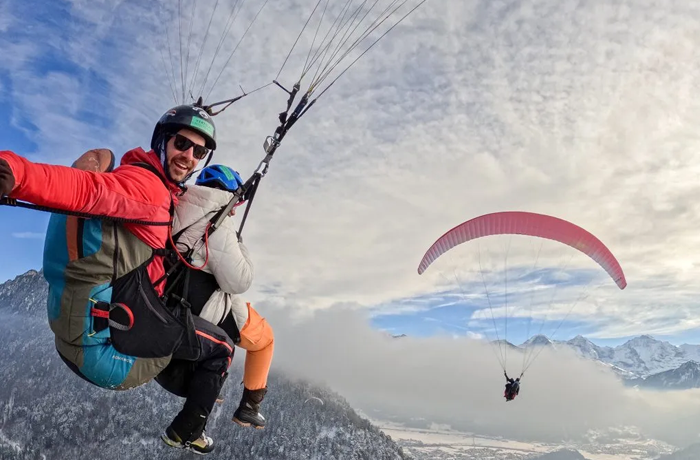
Pokhara is a popular destination for tandem paragliding with a qualified pilot.
When conditions are suitable, visitors can enjoy aerial views of the surrounding hills, lake, and mountain landscape.
Choose a reputable operator, follow the pilot’s instructions, and confirm that the activity is operating safely on the day.
White-Water Rafting
Nepal’s rivers offer rafting trips ranging from introductory experiences to challenging white-water adventures.
The appropriate river and trip duration depend on water levels, season, experience, and safety conditions.
Travelers should check the operator’s safety procedures, equipment, and guide qualifications before participating.
Jungle Safaris and Wildlife Experiences
Chitwan and other wildlife destinations offer opportunities to learn about Nepal’s ecosystems and conservation efforts.
Guided nature walks, birdwatching, and other authorized activities can introduce visitors to local wildlife.
Follow park regulations, respect animal habitats, and avoid operators that promise guaranteed close encounters.
Mountain Biking and Scenic Hiking
Selected areas around Kathmandu, Pokhara, and the Himalayan foothills offer mountain biking, day hikes, and scenic walks.
These experiences are suitable for travelers who want an active holiday without committing to a multi-day trek.
Choose routes according to fitness, equipment, weather, and the availability of qualified local support.
Cultural and Spiritual Experiences in Nepal
Nepal’s living cultural traditions are an important part of its appeal.
Buddhist Heritage
Visitors can explore Boudhanath Stupa, Swayambhunath, monasteries around Kathmandu, and the sacred pilgrimage destination of Lumbini.
Namobuddha is another important Buddhist pilgrimage destination southeast of Kathmandu.
A respectful guided visit can explain the history and significance of these places while helping travelers understand local customs.
Hindu Heritage
Pashupatinath is one of Nepal’s most important Hindu pilgrimage destinations.
Other temples and heritage sites around the Kathmandu Valley offer opportunities to appreciate religious architecture, traditional worship, and local culture.
Dress respectfully and follow posted rules. Access to certain sacred areas may be restricted according to religious practice.
Festivals and Local Traditions
Dashain and Tihar are among Nepal’s major festivals, while many communities celebrate their own cultural and religious events throughout the year.
Festival dates vary, and some transport services, businesses, and public offices may operate differently during major holidays.
Travelers interested in festivals should confirm dates and arrange accommodation in advance.
Essential Travel Information for American, Canadian, and Australian Visitors
Before traveling to Nepal, check the latest entry requirements, permits, insurance conditions, and safety information.
Tourist Visa
Nepal offers tourist visa-on-arrival facilities to eligible visitors at designated entry points, including Tribhuvan International Airport. Eligibility, fees, and procedures can change.
Check the official Department of Immigration website for current requirements:
https://www.immigration.gov.np/visa-information
Confirm passport validity, visa eligibility, required documents, and accepted payment methods before departure.
Trekking Permits and Guides
Some trekking routes require national park or conservation-area entry permits. Restricted regions, including Upper Mustang and Manaslu, have additional requirements.
Guide and trekking-agency rules vary by route and current regulation.
Consult the Nepal Tourism Board’s official trekking information before booking:
https://ntb.gov.np/plan-your-trip/before-you-come/trekking-permit
Travel Insurance and Altitude Safety
Travel insurance is strongly recommended, especially for trekking and adventure activities.
Check whether your policy covers the intended altitude, trekking, emergency medical treatment, helicopter evacuation, and selected adventure sports.
High-altitude travel requires gradual ascent and appropriate acclimatization. Consult a healthcare professional before departure, and seek urgent assistance if you develop symptoms of altitude illness.
The US Centers for Disease Control and Prevention provides travel health information at:
https://wwwnc.cdc.gov/travel/destinations/traveler/none/nepal
What to Pack
Your packing list should match your itinerary and the season.
For cultural tours, bring comfortable walking shoes, suitable clothing, sun protection, and a light jacket.
For trekking, consider:
- Broken-in hiking boots.
- Moisture-managing base layers.
- Warm insulating clothing.
- Waterproof outerwear.
- Warm hat, gloves, and appropriate socks.
- Sunglasses and sunscreen.
- A reusable water bottle and suitable water-treatment supplies.
- A headlamp and spare batteries.
- Personal medication and basic first-aid supplies.
- A daypack and rain protection.
Higher elevations can be cold even when Kathmandu is warm. Check conditions for your actual route before departure.
Responsible Tourism in Nepal
Responsible tourism helps protect Nepal’s cultural heritage, natural landscapes, and local communities.
Respect local customs, dress appropriately at religious sites, and ask permission before photographing people.
Reduce waste where possible, dispose of rubbish properly, and follow local waste-management guidance on trekking routes.
Support local communities by choosing legitimate tourism businesses, using qualified guides, and purchasing crafts directly from local makers where practical.
Respect wildlife and protected areas. Follow park rules, maintain safe distances from animals, and avoid activities that disturb wildlife.
Responsible travel makes your journey more meaningful while helping preserve the places that make Nepal special.
Why Choose Best Trek and Adventure Pvt. Ltd.?
Best Trek and Adventure Pvt. Ltd. is a Kathmandu-based trekking and tour company offering Himalayan adventures, cultural sightseeing, private tours, and customized travel experiences across Nepal.
The company features trekking options such as Everest Base Camp, Annapurna Circuit, Annapurna Base Camp, Manaslu Circuit, Langtang Valley, Mardi Himal, and Upper Mustang, along with cultural tours and nature experiences. You can explore available trips on the Best Trek and Adventure website.
Depending on your interests, the company can help you explore:
- Nepal trekking packages.
- Kathmandu Valley sightseeing tours.
- Kathmandu, Pokhara, and Chitwan holidays.
- Buddhist pilgrimage and cultural journeys.
- Private and customized tours.
- Scenic mountain flights and selected helicopter excursions.
- Wildlife experiences and outdoor adventures.
Working with a local operator can simplify the coordination of transportation, guides, accommodation, and trekking logistics.
Before confirming any package, request a written itinerary and a clear breakdown of inclusions, exclusions, payment conditions, cancellation terms, and applicable permit requirements.
The best itinerary is one that matches your interests, allows sufficient time at each destination, and gives you realistic expectations about travel conditions.
Frequently Asked Questions About Nepal Travel
1. Is Nepal a good destination for American, Canadian, and Australian travelers?
Yes. Nepal offers cultural sightseeing, Himalayan trekking, wildlife experiences, adventure activities, and scenic holidays. The best itinerary depends on your interests, budget, available time, and fitness.
2. How many days should I spend in Nepal?
Seven days can provide a useful introduction to Kathmandu and Pokhara. Ten to fourteen days allow more opportunities for wildlife or trekking, while three weeks provides flexibility for longer adventures.
3. What is the best month to visit Nepal?
March, April, October, and November are popular months for many trekking and cultural itineraries. The ideal month depends on your chosen destination and activities.
4. Is Nepal affordable for tourists?
Nepal offers different price levels, from budget accommodation to premium private travel. International flights, high-altitude trekking, domestic flights, and specialist activities can significantly affect the overall cost.
5. Can beginners go trekking in Nepal?
Yes. Several shorter treks and hiking routes are suitable for people with limited trekking experience. Beginners should choose a route that matches their fitness and allow enough time to walk comfortably.
6. Is Everest Base Camp suitable for first-time trekkers?
Some first-time trekkers successfully complete Everest Base Camp with careful preparation. However, it is a demanding high-altitude trek that requires acclimatization, suitable equipment, and awareness of altitude-related risks.
7. Do I need a guide for trekking in Nepal?
Requirements depend on the route and current regulations. Many popular trekking routes have guide and trekking-agency requirements, and restricted regions have additional rules. Check the latest official guidance before departure.
8. Can I combine trekking with cultural sightseeing?
Yes. Many travelers explore Kathmandu before or after trekking and add Pokhara or Chitwan when time allows. Build sufficient time into your itinerary for transportation, rest, and possible delays.
9. Is travel insurance necessary?
Travel insurance is strongly recommended. For trekking, check that your policy covers the intended altitude, activities, medical treatment, and emergency evacuation where applicable.
10. Can Best Trek and Adventure arrange a customized Nepal holiday?
You can contact Best Trek and Adventure Pvt. Ltd. to discuss your travel dates, group size, preferred destinations, accommodation, activities, and budget. Confirm the final itinerary and inclusions in writing before booking.
Plan Your Nepal Adventure for 2027
Nepal is a destination where spectacular mountain landscapes, ancient cultural heritage, peaceful spiritual sites, wildlife experiences, and welcoming communities create opportunities for extraordinary travel.
Whether you dream of reaching Everest Base Camp, exploring the Annapurna region, discovering Kathmandu’s historic monuments, visiting Buddhist pilgrimage sites, or enjoying a wildlife adventure in Chitwan, Nepal offers a wide range of experiences to suit different travel styles.
For visitors from the United States, Canada, and Australia, careful planning can help you choose the right season, budget, itinerary, and level of adventure.
Start by deciding what matters most to you. You may prefer a cultural holiday, a family trip, a challenging trek, a wildlife experience, or a combination of several destinations.
Then select an itinerary that allows enough time to enjoy each place rather than rushing from one destination to another.
Best Trek and Adventure Pvt. Ltd. welcomes travelers who want to discover Nepal through carefully planned trekking adventures, cultural tours, private journeys, and customized holidays.
Explore available trips and begin planning your Himalayan journey at www.besttrekadventure.com.
Contact Best Trek and Adventure Pvt. Ltd.
- Website: https://besttrekadventure.com/
- Email: info@besttrekadventure.com
- WhatsApp: +977 9705048567
Discover the Himalayas, experience Nepalese culture, and create unforgettable memories with Best Trek and Adventure Pvt. Ltd.
Make an Inquiry


 December 12, 2025
Best Time To Travel and Trek in Nepal by Month & Season
Nepal, Known for its Himalayas, ancient heritage cities, varied cultures and trekking through the world’s greatest trail, is a year-round...
 September 10, 2026
Best Trekking and Adventure in Nepal: Complete Guide to Nepal Treks & Tours
Complete Guide to Nepal Treks & Tours in Nepal Nepal is one of the world’s most extraordinary destinations for trekking,...
 April 14, 2026
Best Time for Everest Base Camp Trekking – Easy Guide for Beginners
Introduction to Everest Base Camp Trekking Everest Base Camp Trekking is one of the most famous trekking journeys in the...


