Annapurna Circuit Trek with Tilicho Lake and Ice Lake
The Annapurna Circuit Trek with Tilicho Lake and Ice Lake is an unforgettable Himalayan adventure combining spectacular mountain scenery, high-altitude lakes, diverse landscapes, and authentic Himalayan culture. The journey takes you through traditional villages, lush valleys, rugged mountain terrain, and some of the Annapurna region’s most remarkable destinations, including Tilicho Lake, Ice Lake, and Thorong La Pass.

Trip Duration
15 Days

Country
Nepal

Region
Annapurna

Activities
Trekking

Grade
Easy to Moderate

Max Altitude
5,416 m

Best Season
Spring and Autumn

Accomodation
Teahouse/Hotel

Meals
Breakfast, Lunch and Dinner

Start-End Point
Kathmandu - Kathmandu

Group Size
1 - 2+

Transportation
Tourist Bus/ Flight
Annapurna Circuit Trek with Tilicho Lake and Ice Lake Overview
A Complete Annapurna Himalayan Adventure
The Annapurna Circuit Trek with Tilicho Lake and Ice Lake is an extended Himalayan adventure that combines the classic Annapurna Circuit with two spectacular high-altitude lake excursions. The route takes you through lush valleys, terraced farmland, pine and rhododendron forests, alpine meadows, rugged mountain landscapes, and the dry, Tibetan-influenced terrain of the Manang and Mustang regions. This exceptional variety is one of the main reasons the Annapurna Circuit is considered one of Nepal’s most diverse trekking routes.
Exploring the Diverse Annapurna Circuit
The classic Annapurna Circuit Trek follows the dramatic Marshyangdi Valley before crossing into the drier landscapes of the upper Manang region. As the trail gains altitude, the scenery changes significantly, from green hills and traditional farming villages to rocky valleys and high Himalayan terrain. The route eventually crosses Thorong La Pass at 5,416 m / 17,769 ft, before descending toward Muktinath and the Kali Gandaki Valley.
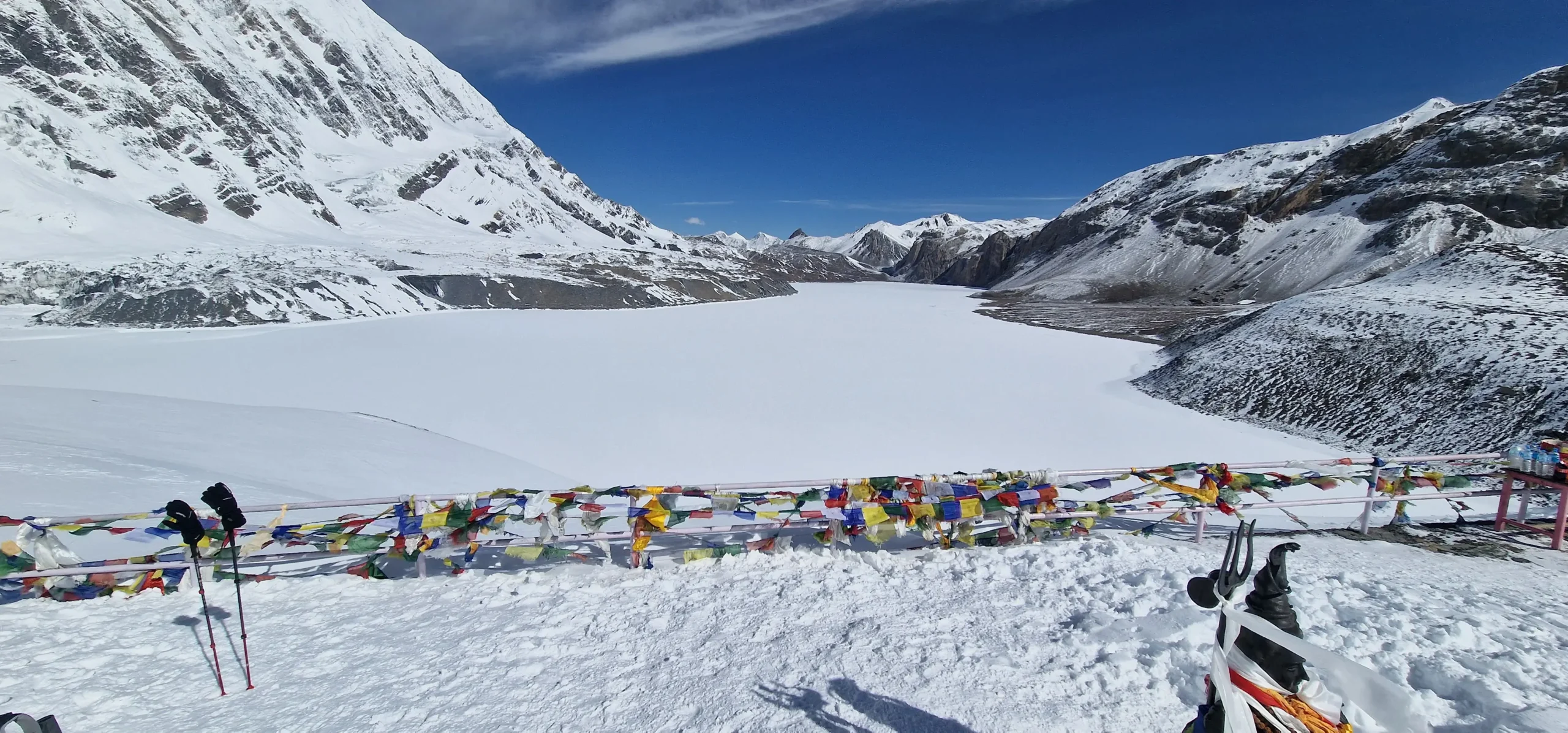
Tilicho Lake: A Spectacular High-Altitude Lake
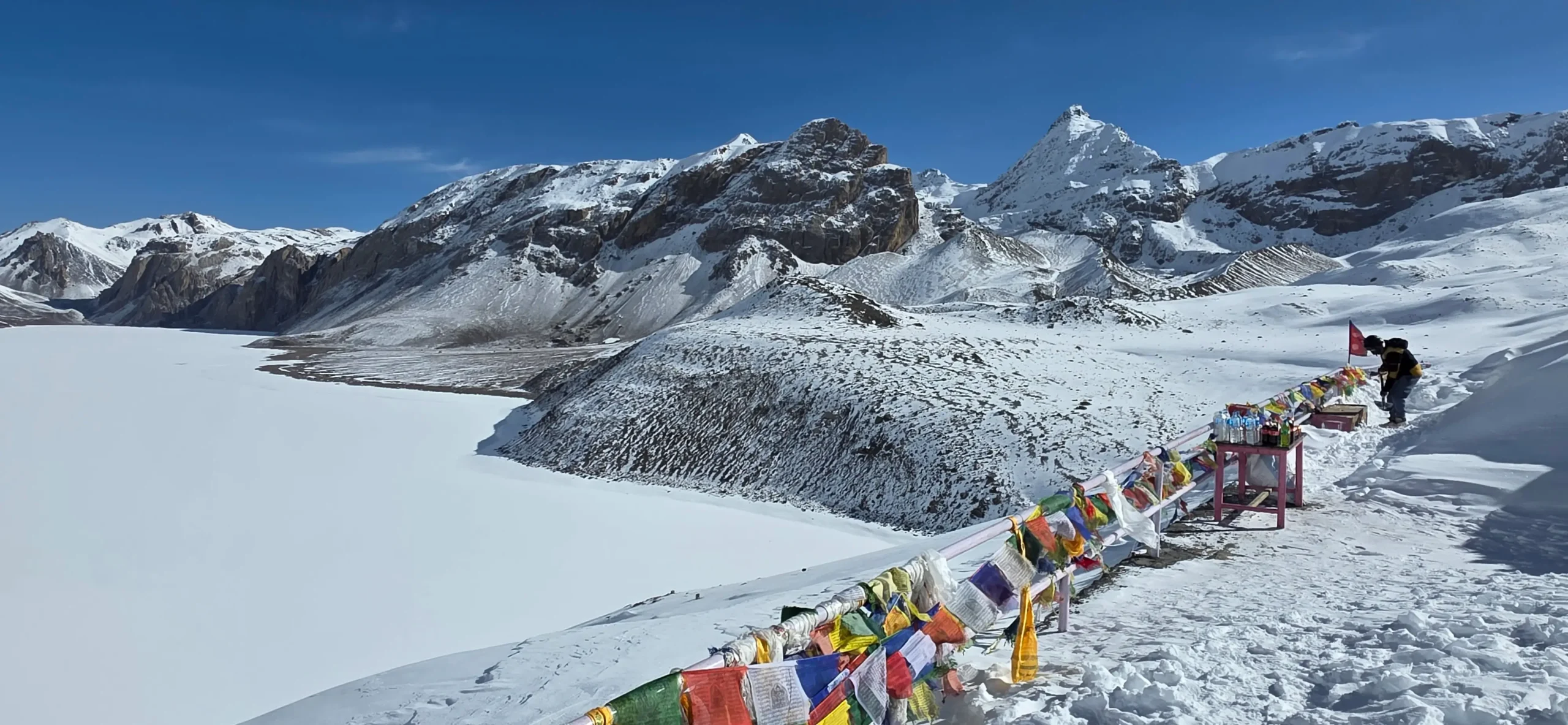
One of the biggest highlights of this extended itinerary is the excursion to Tilicho Lake at approximately 4,919 m / 16,138 ft. The lake is surrounded by dramatic Himalayan landscapes and is officially recognized by the Nepal Tourism Board as one of the major attractions of the Annapurna region. The Tilicho side trip adds an exciting high-altitude experience to the traditional Annapurna Circuit.
Ice Lake and Panoramic Himalayan Views
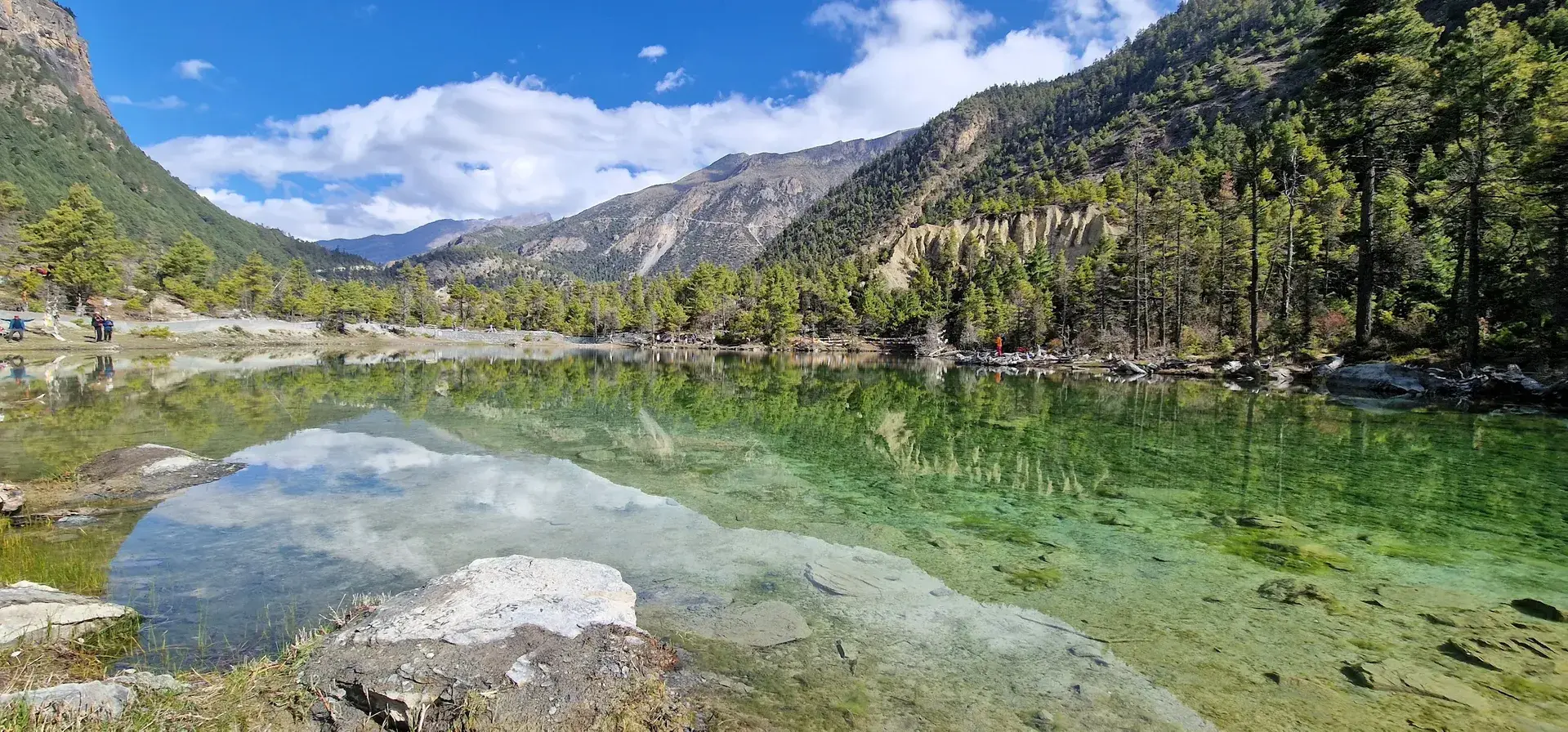
The trek also includes an excursion to Ice Lake, locally known as Kicho Tal. Located above Manang, the hike provides an opportunity to experience a quieter high-altitude environment away from the main circuit trail. From the lake and surrounding viewpoints, trekkers can enjoy impressive panoramas of the Annapurna and surrounding Himalayan ranges.
Crossing Thorong La Pass
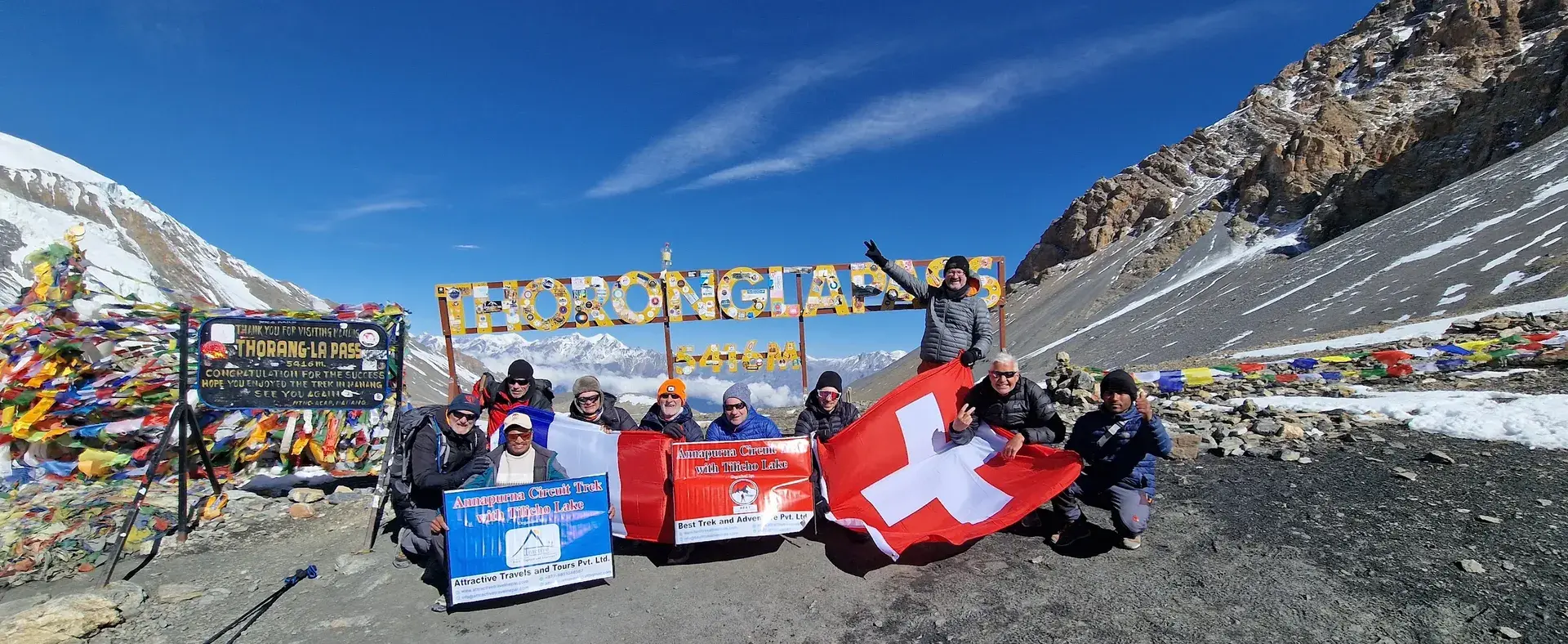
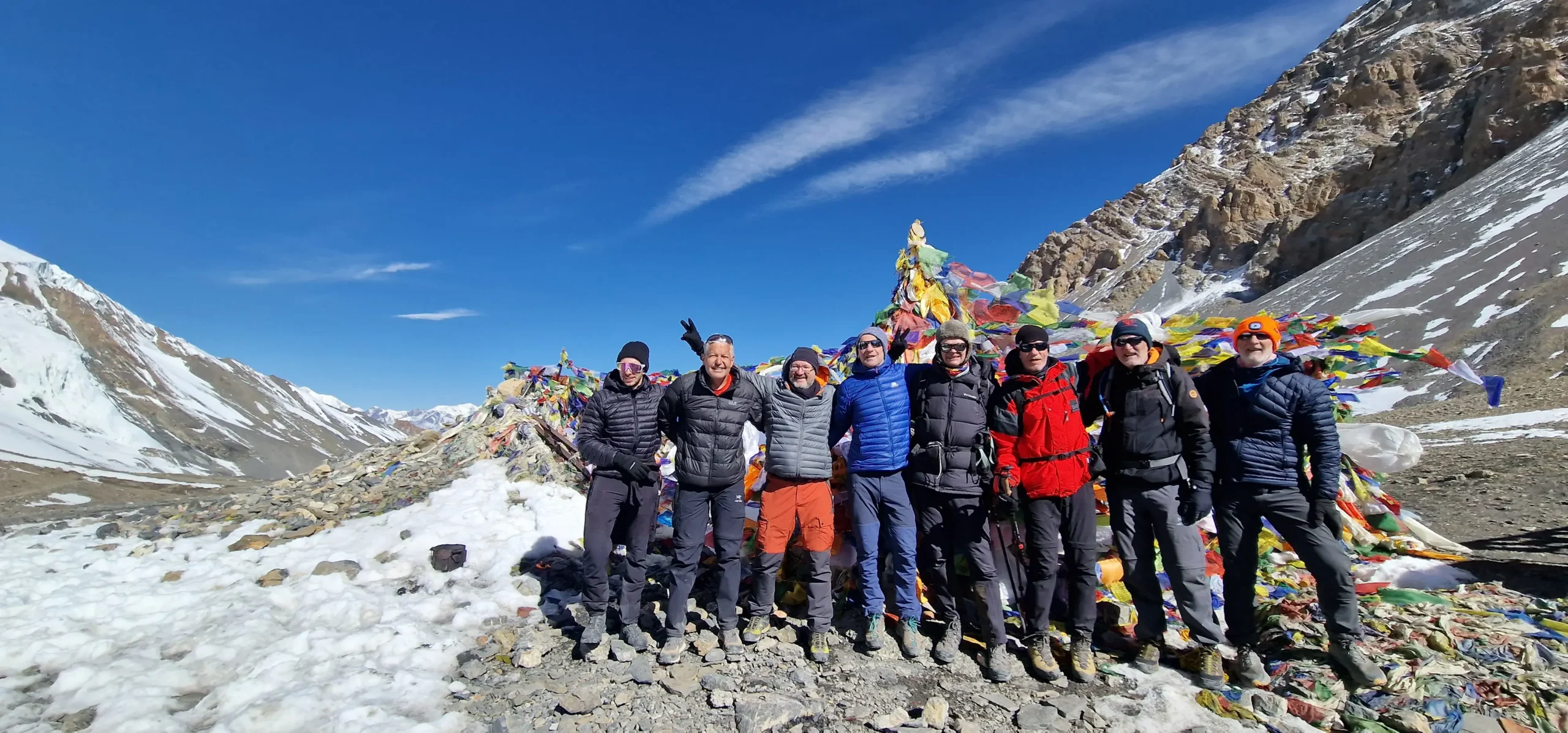
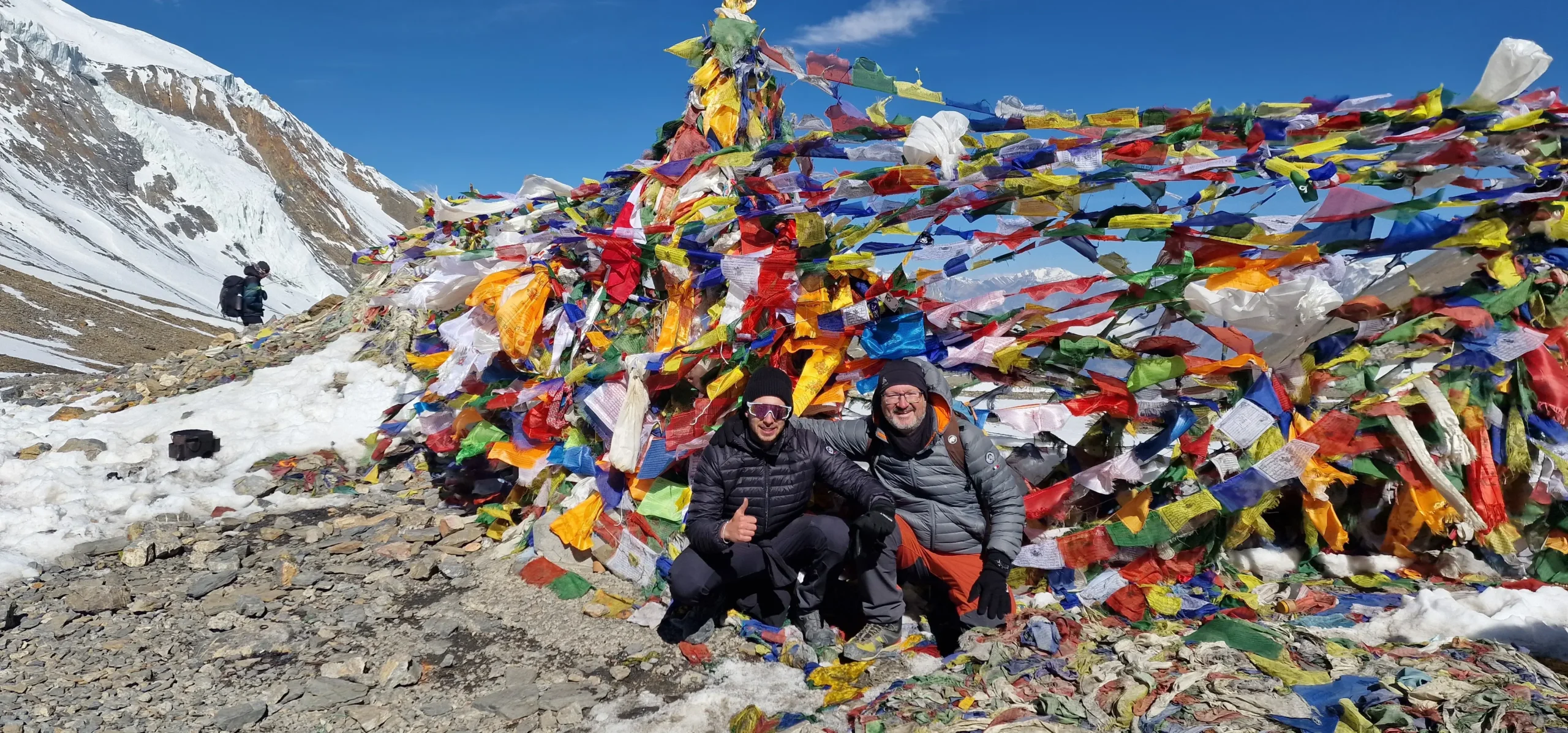
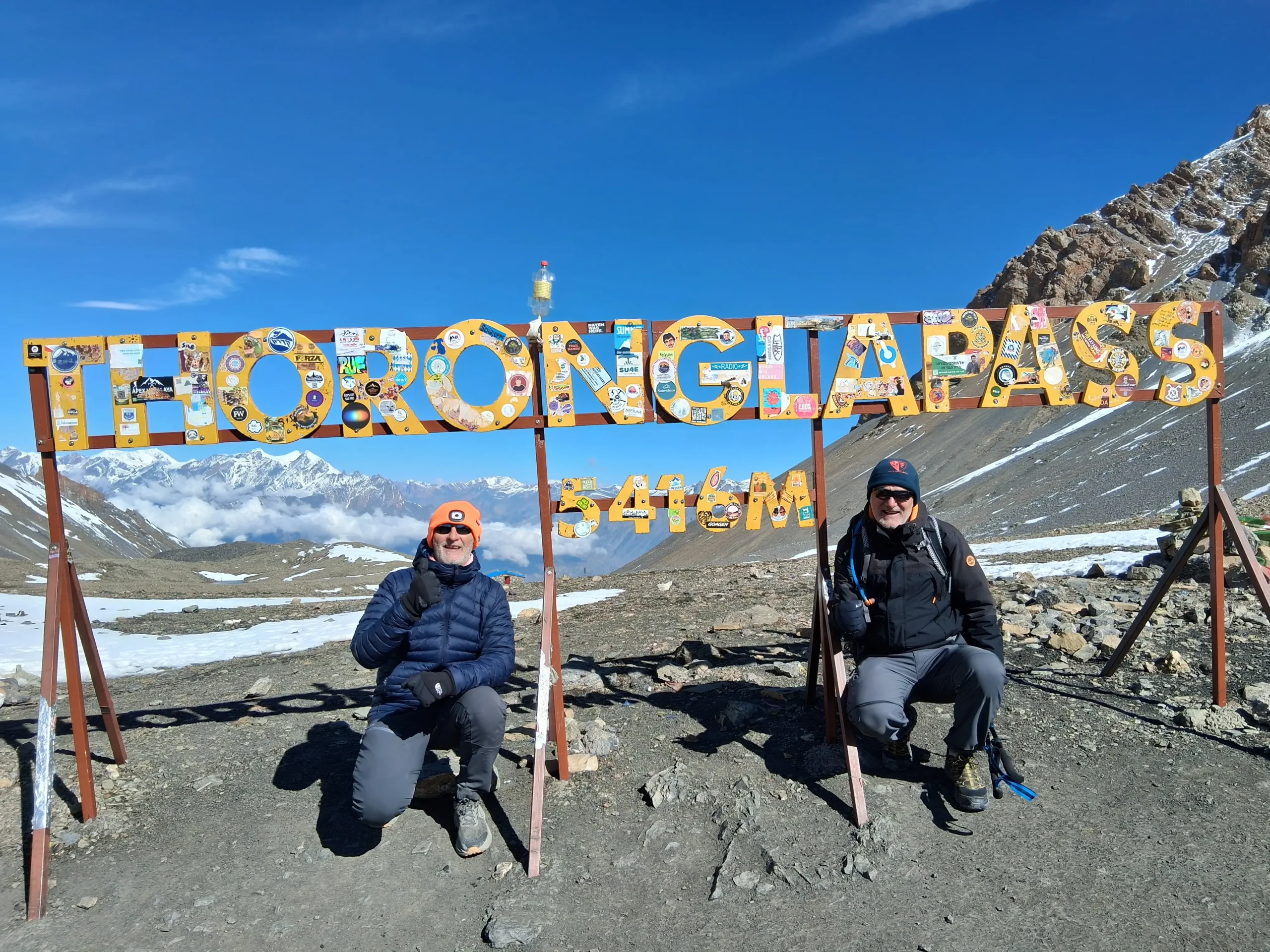
Thorong La Pass is the highest point of the trek and one of its greatest challenges. Reaching 5,416 m / 17,769 ft requires an early start, steady pacing, and careful attention to altitude and weather conditions. Standing at the top of the pass provides a tremendous sense of achievement before the long descent toward Muktinath.
Muktinath and the Sacred Mustang Region
After crossing Thorong La, the trail descends to Muktinath, one of the most important pilgrimage sites in Nepal. The site is sacred to both Hindus and Buddhists and is known for its temples, monasteries, sacred springs, and 108 water spouts. Muktinath also provides a fascinating transition from the Manang side of the circuit into the culturally distinct Mustang region.
Ancient Villages and Himalayan Culture
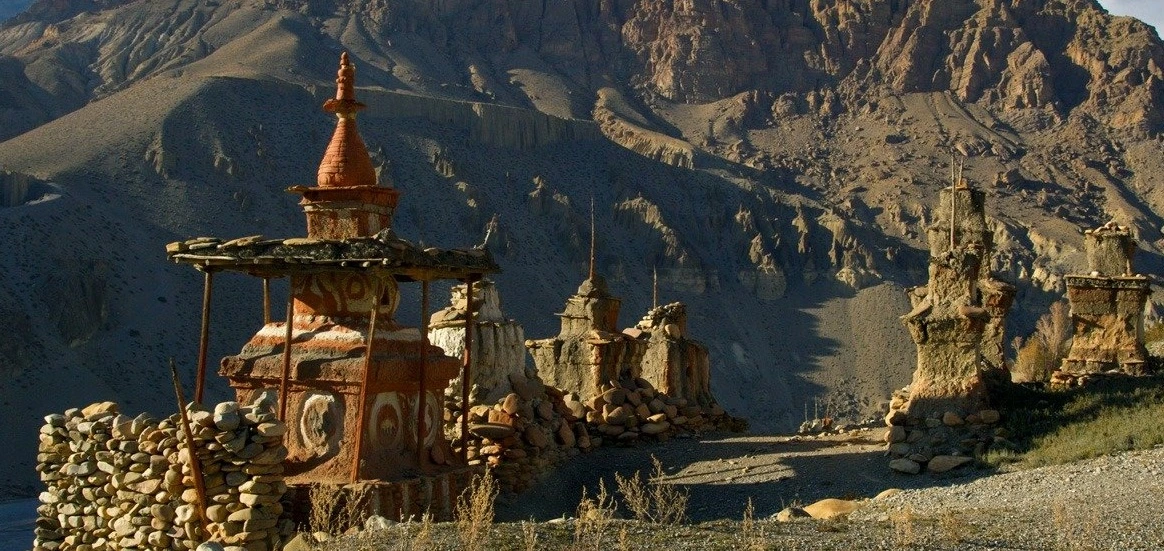
The trek is not only about mountains and high-altitude landscapes. Along the route, you can explore traditional villages, Buddhist monasteries, mani walls, prayer wheels, chortens, and ancient settlements influenced by Tibetan culture. Staying in local tea houses also gives you the opportunity to interact with mountain communities and experience their hospitality and traditional way of life.
From Green Valleys to Trans-Himalayan Landscapes
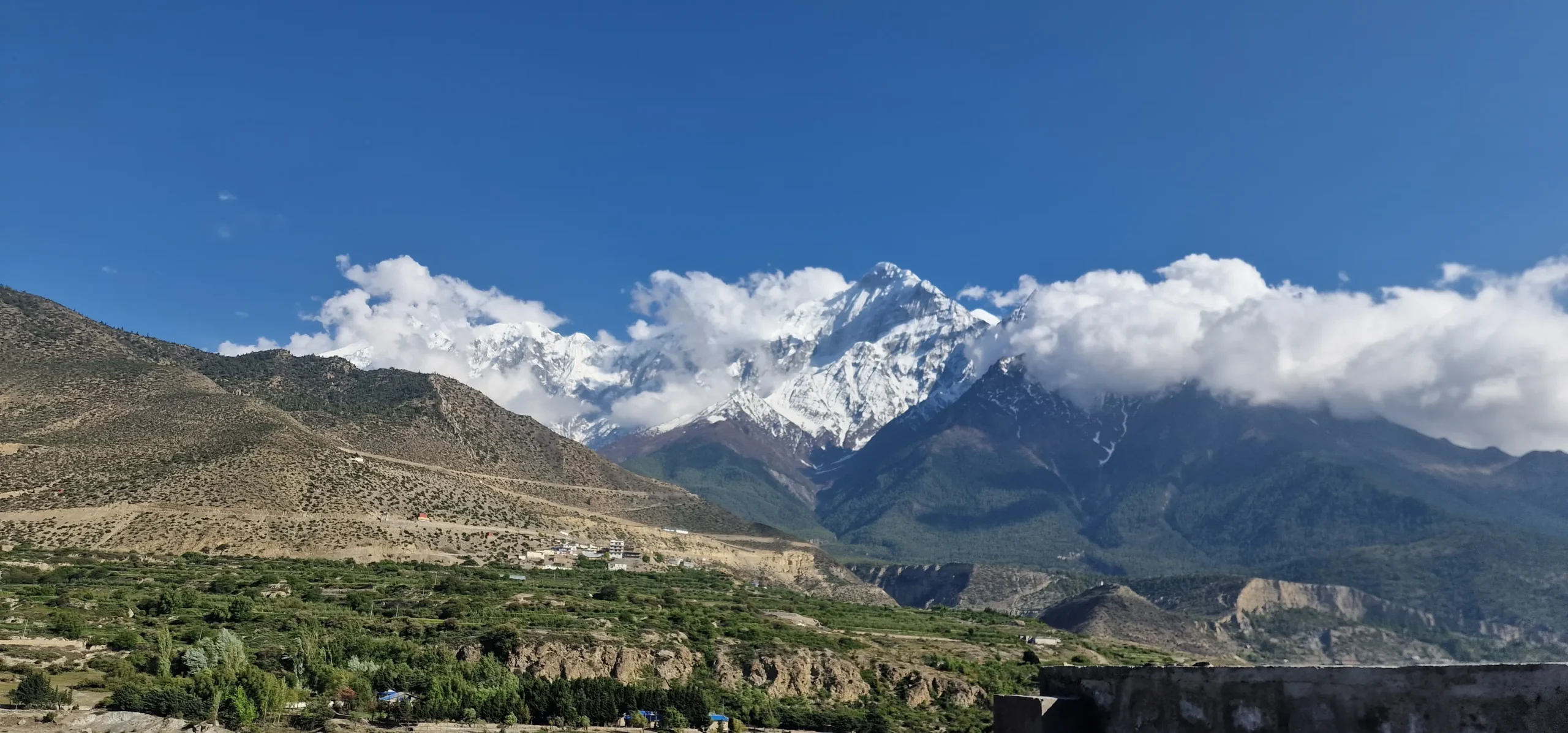
One of the most remarkable features of the Annapurna Circuit Trek with Tilicho Lake and Ice Lake is the dramatic change in scenery. The lower sections are characterized by green hills, forests, waterfalls, and terraced fields, while the upper Manang and Mustang areas become increasingly dry, rocky, and desert-like. This contrast is created partly by the rain-shadow effect of the Annapurna and Dhaulagiri ranges.
Wildlife and Natural Diversity
The Annapurna Conservation Area is home to remarkable biodiversity, including numerous species of mammals, birds, reptiles, and plants. The region contains rhododendron forests, orchids, and wildlife such as blue sheep, while the broader conservation area is also habitat for rare species including the snow leopard.
Accommodation and Local Tea Houses
Accommodation along the Annapurna Circuit is primarily available in tea houses and mountain lodges. Facilities vary depending on elevation and location, with more basic services at higher elevations. Staying in these lodges provides a practical and authentic way to experience the trekking culture of the Annapurna region. The Nepal Tourism Board notes that tea houses and lodges are widely available along the trekking routes.
Permits and Trekking Requirements
Because the route passes through the Annapurna Conservation Area, trekkers need the appropriate conservation-area entry permit and trekking documentation. The Nepal Tourism Board also lists the Annapurna Circuit among routes requiring a TIMS card. If you book with a registered trekking agency, the agency can assist with arranging the necessary permits and documentation.
Best Time to Take the Trek
The most favorable periods for this trek are generally spring (March–May) and autumn (September–November), when mountain visibility and trail conditions are usually favorable. The high-altitude sections around Tilicho Lake, Ice Lake, and Thorong La require particular attention to weather conditions, so the itinerary should always allow some flexibility. The Nepal Tourism Board also identifies March–May and September–November as the main trekking seasons for the Annapurna Conservation Area.
A Challenging but Rewarding Trek
This extended Annapurna route is best suited to trekkers who are comfortable with long walking days, significant elevation gain, high-altitude terrain, and challenging uphill and downhill sections. The combination of Tilicho Lake, Ice Lake, and Thorong La makes the itinerary more demanding than a standard lower-altitude trek, but the rewards include exceptional mountain scenery, cultural experiences, and some of the most memorable landscapes in the Annapurna region.
Explore More Annapurna Adventures
If you are looking for a different experience in the region, you can explore our Annapurna Circuit Trek for the classic circuit route or our Annapurna Base Camp Trek for a journey into the Annapurna Sanctuary. Travelers interested in another high-altitude lake adventure can also consider the Annapurna Base Camp with Poon Hill Trek.
Why Choose Annapurna Circuit with Tilicho Lake and Ice Lake?
The Annapurna Circuit Trek with Tilicho Lake and Ice Lake offers far more than a conventional Himalayan trek. It combines Tilicho Lake, Ice Lake, Thorong La Pass, Muktinath, diverse landscapes, traditional Himalayan villages, Buddhist culture, and spectacular mountain scenery into one extended adventure. For trekkers seeking a challenging and diverse journey through the heart of the Annapurna region, this route provides an exceptional Himalayan experience.
Annapurna Circuit Trek with Tilicho Lake and Ice Lake Highlights
- Thorong La Pass Crossing: Conquer the mighty Thorong La Pass (5,416 m / 17,769 ft), one of the highest and most thrilling trekking passes in the world.
- Tilicho Lake Excursion: Trek to the breathtaking Tilicho Lake (4,919 m / 16,138 ft), one of the highest alpine glacial lakes on Earth, framed by sheer ice walls and towering peaks.
- Sacred Muktinath Temple: Visit the revered pilgrimage site of Muktinath, a sacred sanctuary holy to both Hindus and Buddhists featuring 108 holy water spouts.
- Dramatic Landscapes & Terrain Shifts: Journey through incredible climatic variations, transitioning from lush subtropical river valleys and dense pine forests to arid, lunar-like high-altitude deserts resembling the Tibetan Plateau.
- Rich Cultural Immersion: Explore ancient Tibetan-influenced mountain villages like Upper Pisang and Manang, discovering centuries-old monasteries, mani walls, and traditional ethnic communities.
- World-Class Himalayan Panoramas: Enjoy close-up, jaw-dropping views of majestic eight-thousanders and giant massifs, including Annapurna I, Dhaulagiri, Manaslu, and Gangapurna.
- Kali Gandaki Gorge: Trek and drive alongside the Kali Gandaki River, carved through the deepest river gorge in the world between the massive Dhaulagiri and Annapurna ranges.
- Cultural Sightseeing & Lakeside Leisure: Discover the vibrant cultural heritage of Kathmandu via guided UNESCO World Heritage tours, and unwind at the end of your journey with boating and sunset views over Phewa Lake in Pokhara.
- Ice Lake (Kicho Tal) Acclimatization Hike: Climb to this stunning high-altitude alpine lake at 4,600 m (15,092 ft), offering breathtaking reflective views of Annapurna II, Gangapurna, and Tilicho Peak.
- Ancient Tibetan-Influenced Villages: Wander through traditional upper-elevation settlements like Ghyaru, Ngawal, and Manang, featuring stone houses, ancient monasteries, mani walls, and fluttering prayer flags.
- Scenic Mountain Flight: Experience a thrilling, low-flying scenic flight out of Jomsom, soaring right through the dramatic gorge between the massive Dhaulagiri and Annapurna massifs.
- Historic Kali Gandaki Valley Villages: Explore culturally distinct lower Mustang settlements like Kagbeni and Marpha, famous for local apple orchards, whitewashed alleyways, and unique Thakali traditions.
Brief Itinerary of Annapurna Circuit Trek with Tilicho Lake and Ice Lake
Annapurna Circuit Trek with Tilicho Lake and Ice Lake Itinerary
Expand AllWelcome to Nepal! Enjoy breathtaking views of the Kathmandu Valley as your plane descends into Tribhuvan International Airport. Upon arrival, our representative will greet you at the terminal and transfer you to your hotel.
Take the afternoon to unwind and settle in. In the late afternoon or evening, meet your trek leader for a comprehensive pre-trek briefing and gear check to ensure you are fully prepared for your upcoming Annapurna adventure. If you need any extra equipment, the vibrant streets of Thamel offer a wide range of shops for buying or renting gear.
(Note: Because the journey begins early on Day 2, we recommend booking a flight that arrives in Kathmandu by early afternoon so you have ample time to prepare and rest.) Overnight stay in a hotel in Kathmandu.
Max Altitude:
1,400 m / 4,593 ft
Duration:
30 to 45 minutes drive
Accommodation:
3 star hotel
-
After breakfast, your guide will pick you up from your hotel for a private sightseeing tour of Kathmandu’s premier cultural and historical landmarks. Head first to the sacred Pashupatinath Temple situated along the holy Bagmati River, Nepal’s most revered Hindu shrine dedicated to Lord Shiva. Next, travel to the hilltop Swayambhunath Stupa (Monkey Temple) to take in panoramic views of the entire valley alongside ancient shrines and fluttering prayer flags. Continue across the city to Lalitpur to explore Patan Durbar Square, renowned for its breathtaking Malla-era architecture, intricate Newari wood and stone carvings, the stone-carved Krishna Temple, and the Patan Museum.
After completing the day’s explorations, transfer back to your hotel to rest, pack, and prepare for the start of your trek tomorrow. Overnight stay in Kathmandu.
Max Altitude:
1,400 m / 4,593 ft
Duration:
5 to 6 hours guided sightseeing tour
Accommodation:
3 star hotel
Meals:
Breakfast
Depart early from Kathmandu along the Prithvi Highway, following roaring rivers and terraced hillsides to Besisahar—the official gateway of the Annapurna Circuit. Transfer to a local four-wheel-drive jeep to navigate the rugged, winding dirt road alongside the Marsyangdi River valley, passing cascading waterfalls and small rural settlements before arriving at Chame, the administrative headquarters of the Manang district. Overnight stay at a teahouse in Chame.
Max Altitude:
2,670 m / 8,760 ft
Duration:
8 to 9 hours drive
Accommodation:
local hotel
Meals:
Breakfast , lunch dinner
Walk through deep pine and fir forests, crossing a dramatic suspension bridge as the valley widens. Pass the massive rock cliff face of Paungda Danda rising sharply from the riverbank before climbing toward Upper Pisang. This traditional Tibetan-influenced village offers close-up, sweeping views of Annapurna II and Pisang Peak. Overnight stay at a teahouse in Upper Pisang.
Trek Distance:
12 km / 7.5 mi
Max Altitude:
3,300 m / 10,827 ft
Duration:
5 to 6 hours
Accommodation:
Local hotel
Meals:
Breakfast , lunch , dinner
Take the upper panoramic trail through Ghyaru and Ngawal. Though more demanding, this route rewards you with breathtaking, unobstructed bird’s-eye views of the Annapurna range, Pisang Peak, and Gangapurna. Pass through ancient stone villages lined with mani walls and prayer wheels before descending gradually into the wide, windswept valley of Manang. Overnight stay at a teahouse in Manang.
Trek Distance:
15 km / 9.3 mi
Max Altitude:
3,540 m / 11,614 ft
Duration:
6 to 7 hours
Accommodation:
local hotel
Meals:
Breakfast , lunch , dinner
The journey to Yak Kharka begins with a gentle ascent through high-altitude scenery. Passing through an abandoned mountain settlement, the trail dips down alongside terraced farmlands and cultivated fields.
Another gradual climb brings you to a hilltop ridge, rewarding you with your first full view of Yak Kharka below. From the ridge, follow a steep descent down to the river, cross the footbridge, and walk steadily upward until reaching the village. Traditionally a high alpine grazing pasture used by local yak herders, Yak Kharka is a quiet outpost with just a handful of cozy teahouses offering warm food and shelter for the night. Overnight Teahouse in Yak Kharka
Trek Distance:
10 km / 6.2 mi
Max Altitude:
4,600 m / 15,092 ft
Duration:
6 to 7 hours (Round trip)
Accommodation:
Local hotel
Meals:
Breakfast , lunch , dinner
Leave the main Annapurna Circuit trail behind and branch off toward the wilder western route leading to Tilicho Lake. The trail winds through arid, rugged terrain with dramatic rock formations and sweeping canyon views. Arrive at the quiet settlement of Siri Kharka, nestled beneath towering cliffs. Overnight stay at a teahouse in Siri Kharka.
Max Altitude:
4,000 m / 13,123 ft
Duration:
4 to 5 hours
Accommodation:
local hotel
Meals:
breakfast , lunch , dinner
Trek along a narrow trail carved into steep landslide areas (scree slopes) above deep gorges. Exercise caution as you navigate these loose gravel paths while enjoying incredible, raw high-altitude landscapes. Arrive at Tilicho Base Camp by early afternoon to rest and hydrate properly for tomorrow’s major highlight. Overnight stay at a teahouse at Tilicho Base Camp.
Trek Distance:
10 to 12 km / 6.2 to 7.5 mi
Max Altitude:
4,919 m / 16,138 ft
Duration:
6 to 8 hours
Accommodation:
local hotel
Meals:
breakfast , lunch , dinner
Start well before dawn on a steady, steep ascent toward Tilicho Lake, one of the highest glacial lakes in the world. Situated in a dramatic bowl of sheer rock and ice faces under Tilicho Peak, the turquoise frozen or crystal-clear waters create an ethereal atmosphere. After taking in the pristine alpine surroundings, retrace your steps carefully down past Tilicho Base Camp and continue back to Siri Kharka for the night. Overnight stay at a teahouse in Siri Kharka.
Trek Distance:
10 to 12 km / 6.2 to 7.5 mi
Max Altitude:
4,919 m / 16,138 ft
Duration:
6 to 8 hours
Accommodation:
local hotel
Meals:
Breakfast , lunch , dinner
Rejoin the classic Annapurna Circuit path, walking through high alpine pastures where herds of domestic yaks graze freely against a backdrop of craggy peaks. The trail offers gentle ups and downs across the hillside, providing magnificent views of Gangapurna and Annapurna III. Arrive at Yak Kharka by afternoon. Overnight stay at a teahouse in Yak Kharka.
Trek Distance:
8 km / 5.0 mi
Max Altitude:
4,050 m / 13,287 ft
Duration:
4 to 5 hours
Accommodation:
local hotel
Meals:
Breakfast , lunch , dinner
A short but cautious trek as you climb higher toward the base of the mighty Thorong La Pass. Pass through Letdar and cross a suspension bridge over the Kone Khola before ascending along a rocky scree-lined path to Thorong Phedi (or continue up to High Camp if conditions permit). Rest early, hydrate, and prepare for tomorrow’s major high-pass crossing. Overnight stay at a teahouse in Thorong Phedi.
Trek Distance:
4 km / 2.5 mi
Max Altitude:
4,525 m / 14,846 ft
Duration:
3 to 4 hours
Accommodation:
local hotel
Meals:
Breakfast , lunch , dinner
Begin your trek before dawn (around 4:00 AM to 5:00 AM) to beat the strong morning winds. Climb steadily up the icy, moraine-filled trail to reach Thorong La Pass—the highest point of the trek at 5,416 m. Celebrate your incredible achievement surrounded by a sea of snow-capped Himalayan peaks, then embark on a long, steep, and demanding descent down to the sacred Hindu and Buddhist pilgrimage site of Muktinath. From Muktinath, catch a local jeep or bus ride down the windy Kali Gandaki river valley to the bustling administrative town of Jomsom. Overnight stay at a hotel in Jomsom.
Trek Distance:
14 to 16 km / 8.7 to 9.9 mi
Max Altitude:
5,416 m / 17,769 ft
Duration:
7 to 9 hours
Accommodation:
local hotel
Meals:
Breakfast , lunch , dinner
Following your challenging crossing of the Thorong La Pass, enjoy a change of pace today. After breakfast in Jomsom, board a local jeep or fly for a scenic drive down through the deepest gorge in the world, the Kali Gandaki Valley. Wind through unique high-altitude landscapes, passing the sacred village of Kagbeni and the apple orchards of Marpha before descending into the lush subtropical climate of the Pokhara Valley.
Upon arriving in Pokhara in the afternoon, take time to soothe your trekking muscles. Spend your evening strolling along the vibrant Lakeside, enjoying a peaceful boat ride on Phewa Lake, or watching the sunset cast golden hues over the surrounding Annapurna peaks—a perfect way to celebrate the completion of your trek. Overnight stay at a hotel in Pokhara.
Max Altitude:
2,743 m / 8,999
Duration:
6 to 8 hours
Accommodation:
star hotel
Enjoy a relaxed morning breakfast overlooking the lake before catching drive or a short domestic flight back to Kathmandu. Upon arrival, transfer to your hotel and spend the afternoon shopping for souvenirs in Thamel or exploring historic city squares. In the evening, join your guide and group for a celebratory farewell dinner featuring traditional Nepali cuisine and a live cultural dance performance. Overnight stay in Kathmandu.
Trek Distance:
210KM by Road
Max Altitude:
1,400 m / 4,593 ft
Duration:
25 to 30 minutes domestic flight
Accommodation:
star hotel
Meals:
Breakfast , lunch , dinner
Today marks the final day of your extraordinary Himalayan journey. Enjoy your last moments in Kathmandu before a company representative escorts you to Tribhuvan International Airport for your international flight home. We bid you a warm farewell, hoping to welcome you back for your next Himalayan adventure!
Max Altitude:
1,400 m / 4,593 ft
Duration:
30 to 45 minutes drive
Annapurna Circuit Trek with Tilicho Lake and Ice Lake Includes/Exclude
- Pickup and Drop service from/to Kathmandu International Airport
- 3 nights 4 star category accommodation in Kathmandu on BB base (Double or Twin Bed Basis)
- ACAP permit for Annapurna Circuit Trek including Tilicho Lake
- Government tax.
- Scorpio Jeep as transportation from Kathmandu to Dharapani.
- 2 travelers: 1 porter service with salary, accommodation, meals and transportation. ( 4 porters for 8 travelers)
- 10 nights tea house/ local guest house accommodation during the trek.
- Three meals (Breakfast, Lunch, and Dinner) during the trek 1 course in 1 time.
- Flight ticket to Pokhara from Jomsom.
- Kathmandu Valley UNESCO World Heritage Sites Tour includes an English speaking tour guide, private transportation.
- Pokhara City Tour by private transportation.
- Taxi to Hotel from Pokhara airport
- One English-speaking person guides his salary, accommodation, meals, transportation, insurance, etc.
- 1-night 4 star category accommodation in Pokhara on BB base (Double or Twin Bed).
- Flight ticket to Kathmandu from Pokhara
- Duffel bag to put your stuff in (if you take a porter you could put your stuff and give it to a porter to carry)
- Cap, Bottle and T-Shirts from Company.
- International airfare, any kind of insurance, Nepal Visa Fee
- Lunch and Dinner in Kathmandu and Pokhara days.
- Personal expenses such as all kinds of drinks, Wi-Fi or data plan, hot showers, donations, shopping, etc. during the trek.
- Expenses occurred due to unavoidable Events i.e. road wrecks, flight delays, bad weather etc.
- Entrance tickets for Kathmandu and Pokhara Tour monuments.
- Travel Insurance.
- Helicopter Rescue if incase needed.
- Flight Ticket if you want to fly from Jomsom to Pokhara to Kathmandu.
- Tips for tour and trek guide and porters (Expected after the completion of Annapurna Circuit Tilicho Lake Trek)
- Personal clothing and gear.
Annapurna Circuit Trek with Tilicho Lake and Ice Lake Altitude Chart
Annapurna Circuit Trek with Tilicho Lake and Ice Lake Gallery/Video
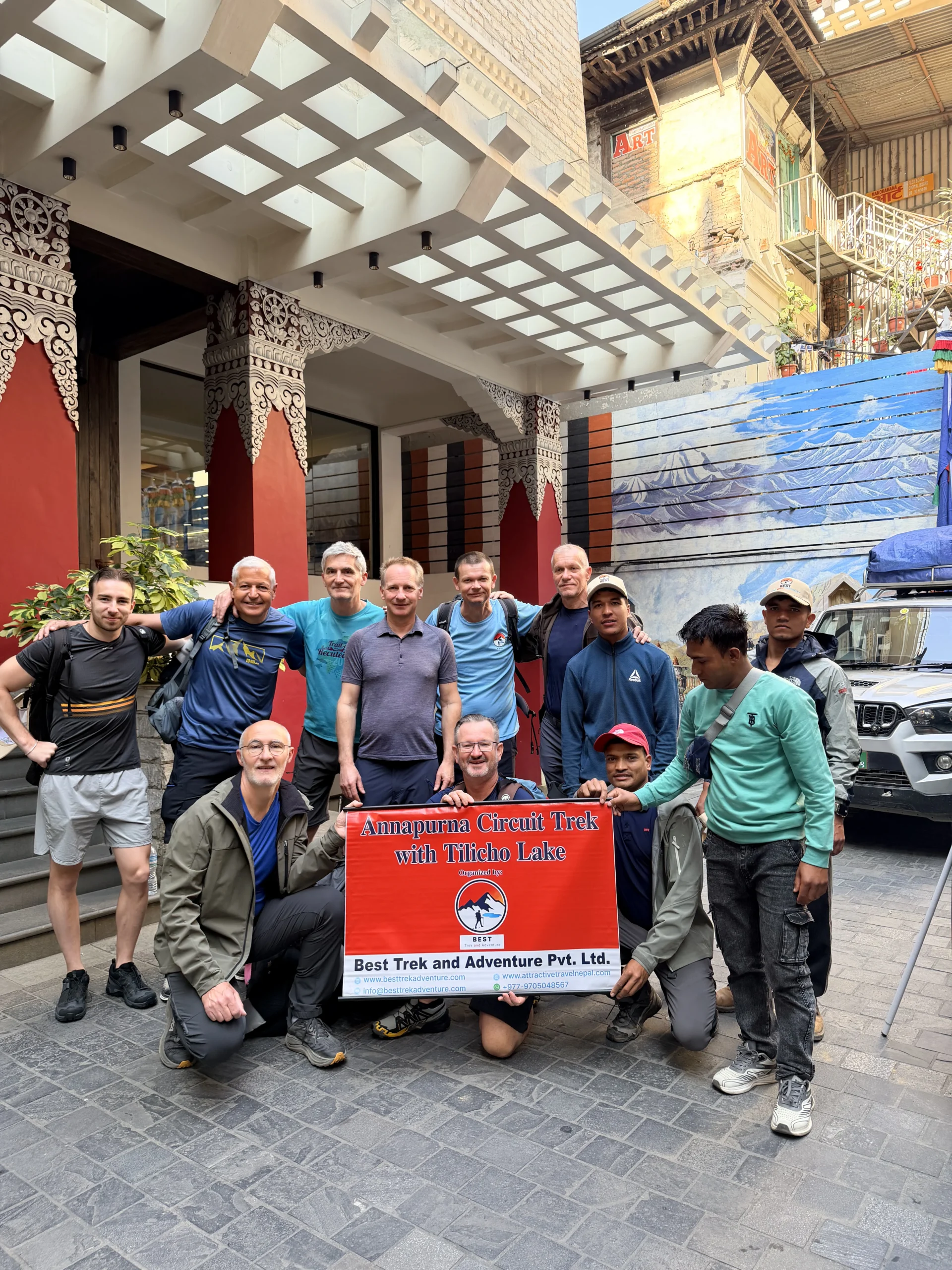
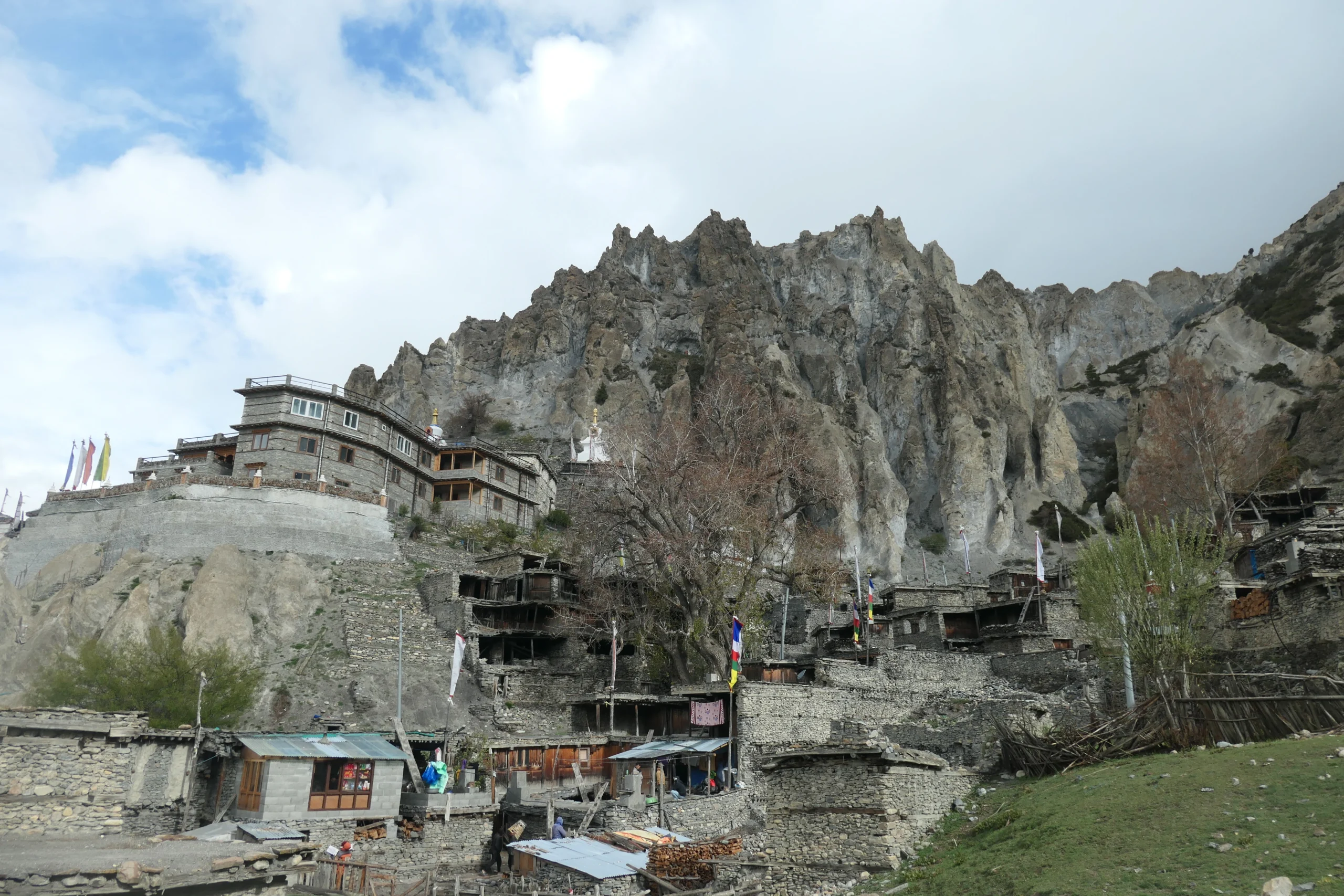
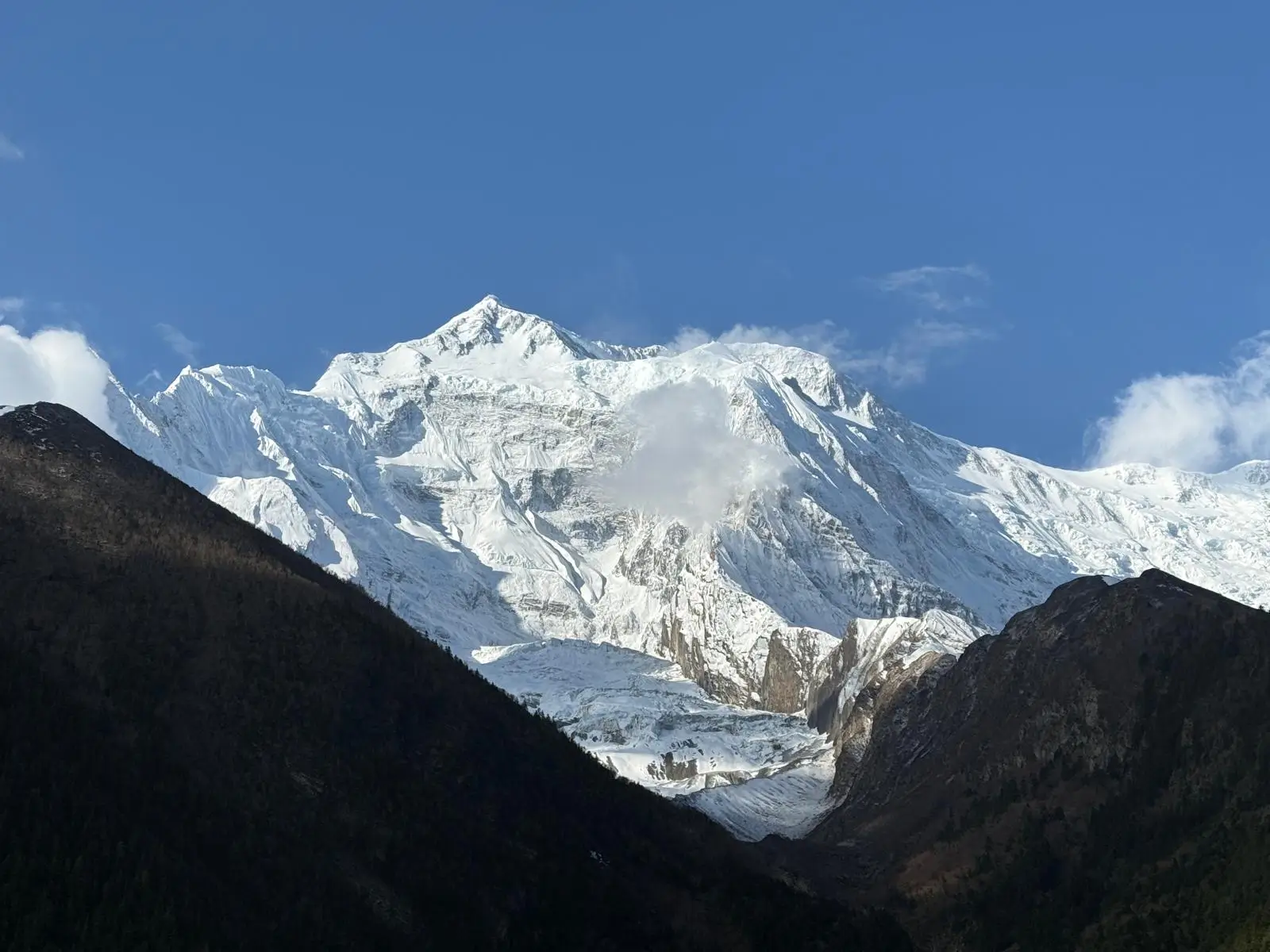
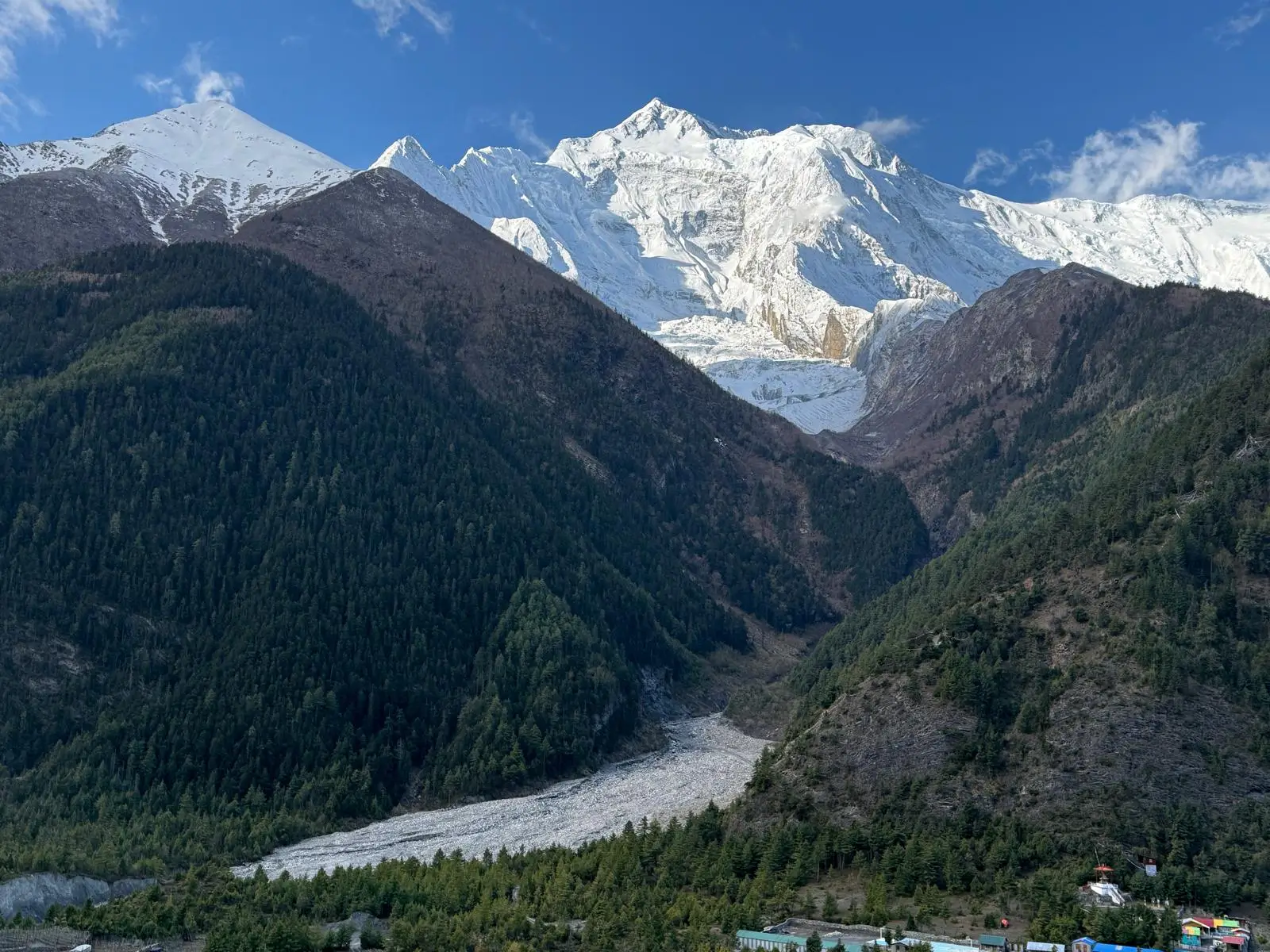
Altitude Sickness and Acclimatization
The Annapurna Circuit Trek with Tilicho Lake and Ice Lake reaches high elevations, with Thorong La Pass at 5,416 m / 17,769 ft as the highest point of the journey. As altitude increases, the air becomes thinner and physical activity becomes more demanding. Proper acclimatization and a gradual ascent are therefore essential. The Annapurna region includes some of Nepal’s most challenging high-altitude trekking terrain, making appropriate preparation particularly important.
How to Prevent Altitude Sickness
The best way to reduce the risk of Acute Mountain Sickness (AMS) is to ascend gradually and give your body enough time to adjust. Walk at a comfortable pace, stay hydrated, eat regular meals, and avoid unnecessary physical exertion. Your trekking guide can monitor your condition and help adjust the pace or itinerary when necessary.
Common Symptoms of AMS
Common symptoms of mild altitude sickness include headache, dizziness, nausea, loss of appetite, fatigue, and difficulty sleeping. These symptoms should not be ignored, particularly as you approach higher elevations. If symptoms become worse or fail to improve, stop ascending and inform your guide immediately.
What to Do if Symptoms Get Worse
If altitude-related symptoms become severe, descending to a lower elevation is one of the most important responses. Serious altitude illnesses such as High Altitude Cerebral Edema (HACE) and High Altitude Pulmonary Edema (HAPE) require immediate medical attention. Never continue ascending when symptoms are worsening.
Medication such as acetazolamide (Diamox) may be used for altitude sickness prevention or treatment in some situations, but it should be taken only according to appropriate medical advice. Medication should never be used as a reason to continue ascending when you are experiencing serious symptoms.
Acclimatization in Manang
The itinerary includes an acclimatization period in Manang at approximately 3,540 m / 11,614 ft before continuing toward the higher sections of the route. The planned hike to Ice Lake at approximately 4,600 m / 15,092 ft allows trekkers to gain elevation during the day before returning to Manang to sleep at a lower altitude.
Medical Assistance Along the Route
Basic medical assistance is available at selected locations along the Annapurna trekking route. Trekkers should also carry appropriate travel insurance covering high-altitude trekking and emergency evacuation. Before departure, it is useful to review the official trekking and safety information provided by the Nepal Tourism Board.
Drinking Water and Hydration
Staying hydrated is especially important during a high-altitude trek. Dehydration can increase fatigue and may make some altitude-related symptoms feel worse. Drink regularly throughout the day and carry sufficient water for each section of the trail.
Safe Drinking Water Options
Water is available at tea houses, lodges, and various points along the Annapurna Circuit. You can use boiled, filtered, or properly treated water depending on availability. Carrying a reusable bottle is recommended because it reduces the amount of plastic waste generated along the trekking route.
The Annapurna Conservation Area is a protected region with extensive trekking infrastructure, including lodges and tea houses along popular routes. You can learn more about the region and its facilities through the Nepal Tourism Board’s Annapurna Conservation Area information.
Water Purification
If you collect water from local sources, always treat it before drinking. Suitable options include water filtration systems, UV purification devices, or water purification tablets. Follow the manufacturer’s instructions carefully when using any purification product.
Bottled and Boiled Water
Tea houses commonly provide boiled or filtered drinking water for an additional charge. Bottled water is also available in many villages, although prices generally increase at higher elevations. Using refillable bottles and treating local water is a more environmentally responsible option.
Electrolytes
Electrolyte powders or oral rehydration solutions can be useful after long periods of walking, particularly when you are sweating heavily. They can help replace fluids and electrolytes lost during physical activity.
Internet and Mobile Connectivity
Mobile and internet connectivity is available in many parts of the Annapurna Circuit, although reliability varies depending on location and altitude. More remote and higher sections may have limited or intermittent connectivity, so you should not rely entirely on an internet connection during the trek.
Tea House Wi-Fi
Many tea houses and lodges offer Wi-Fi for an additional fee. Connection speeds can vary considerably, particularly in remote villages and during busy periods.
Mobile Data and SIM Cards
Travelers can purchase a local Nepalese SIM card in Kathmandu or use an eSIM if their device supports it. Mobile coverage varies throughout the route, so downloading offline maps and saving important travel information before the trek is recommended.
Packing Checklist for Annapurna Circuit Trek
Packing for the Annapurna Circuit Trek with Tilicho Lake and Ice Lake requires preparation for different temperatures, weather conditions, and terrain. Conditions can change considerably between the lower valleys and the high-altitude sections, so layering is the most practical approach.
Essential Clothing
- Sturdy trekking boots with good ankle support
- Trekking pants and comfortable hiking trousers
- Waterproof or windproof trousers
- Moisture-wicking T-shirts or shirts
- Fleece jacket or warm mid-layer
- Down jacket
- Waterproof and windproof outer jacket
- Thermal base layers
- Warm socks and extra underwear
- Warm hat or woolen cap
- Sun hat
- Inner and outer gloves
Trekking Equipment
- 30–40 liter daypack with rain cover
- Duffel bag if using porter services
- Trekking poles
- Four-season sleeping bag
- Sleeping bag liner
- Headlamp with spare batteries
- Reusable water bottles
- Water purification tablets or filtration system
- Sunglasses with good UV protection
- Crampons and gaiters when required by seasonal trail conditions
Personal and Health Items
- Sunscreen and lip balm with SPF
- Personal medications
- Basic first-aid supplies
- Hand sanitizer
- Wet wipes
- Toiletries
- Quick-drying towel
- Flip-flops or lightweight sandals
- Power bank and charging cables
- Passport and important travel documents
What About Extra Luggage?
You do not need to carry all your belongings on the trail. If you are staying in Kathmandu before and after the trek, you can usually leave non-essential luggage at your hotel and take only the items required for the trek. Keep valuables, important documents, medications, and electronic devices with you.
Packing Tip
Avoid overpacking. A lighter bag makes long uphill and downhill sections more comfortable. Pack according to the season and prioritize warm layers, waterproof protection, comfortable footwear, hydration equipment, and essential personal items.
Official Trekking Information
Before starting your journey, it is also useful to check the latest requirements for TIMS and trekking permits. The Nepal Tourism Board’s official TIMS information provides current information on TIMS requirements for the Annapurna Circuit and other trekking routes.
Cost & Date
Trip duration: 15 Days
| Departure | Return | Price | Departure status | |
|---|---|---|---|---|
| 2 October, 2026 | 16 October, 2026 | USD 1670 | Guaranteed | |
| 3 October, 2026 | 17 October, 2026 | USD 1670 | Guaranteed | |
| 4 October, 2026 | 18 October, 2026 | USD 1670 | Guaranteed | |
| 5 October, 2026 | 19 October, 2026 | USD 1670 | Guaranteed | |
| 6 October, 2026 | 20 October, 2026 | USD 1670 | Guaranteed | |
| 7 October, 2026 | 21 October, 2026 | USD 1670 | Guaranteed | |
| 8 October, 2026 | 22 October, 2026 | USD 1670 | Guaranteed | |
| 9 October, 2026 | 23 October, 2026 | USD 1670 | Guaranteed | |
| 10 October, 2026 | 24 October, 2026 | USD 1670 | Guaranteed | |
| 11 October, 2026 | 25 October, 2026 | USD 1670 | Guaranteed | |
| 12 October, 2026 | 26 October, 2026 | USD 1670 | Guaranteed | |
| 13 October, 2026 | 27 October, 2026 | USD 1670 | Guaranteed | |
| 14 October, 2026 | 28 October, 2026 | USD 1670 | Guaranteed | |
| 15 October, 2026 | 29 October, 2026 | USD 1670 | Guaranteed | |
| 16 October, 2026 | 30 October, 2026 | USD 1670 | Guaranteed | |
| 17 October, 2026 | 31 October, 2026 | USD 1670 | Guaranteed | |
| 18 October, 2026 | 1 November, 2026 | USD 1670 | Guaranteed | |
| 19 October, 2026 | 2 November, 2026 | USD 1670 | Guaranteed | |
| 20 October, 2026 | 3 November, 2026 | USD 1670 | Guaranteed | |
| 21 October, 2026 | 4 November, 2026 | USD 1670 | Guaranteed | |
| 22 October, 2026 | 5 November, 2026 | USD 1670 | Guaranteed | |
| 23 October, 2026 | 6 November, 2026 | USD 1670 | Guaranteed | |
| 24 October, 2026 | 7 November, 2026 | USD 1670 | Guaranteed | |
| 25 October, 2026 | 8 November, 2026 | USD 1670 | Guaranteed | |
| 26 October, 2026 | 9 November, 2026 | USD 1670 | Guaranteed | |
| 27 October, 2026 | 10 November, 2026 | USD 1670 | Guaranteed | |
| 28 October, 2026 | 11 November, 2026 | USD 1670 | Guaranteed | |
| 29 October, 2026 | 12 November, 2026 | USD 1670 | Guaranteed | |
| 30 October, 2026 | 13 November, 2026 | USD 1670 | Guaranteed | |
| 31 October, 2026 | 14 November, 2026 | USD 1670 | Guaranteed | |
| 1 November, 2026 | 15 November, 2026 | USD 1670 | Guaranteed | |
| 2 November, 2026 | 16 November, 2026 | USD 1670 | Guaranteed | |
| 3 November, 2026 | 17 November, 2026 | USD 1670 | Guaranteed | |
| 4 November, 2026 | 18 November, 2026 | USD 1670 | Guaranteed | |
| 5 November, 2026 | 19 November, 2026 | USD 1670 | Guaranteed | |
| 6 November, 2026 | 20 November, 2026 | USD 1670 | Guaranteed | |
| 7 November, 2026 | 21 November, 2026 | USD 1670 | Guaranteed | |
| 8 November, 2026 | 22 November, 2026 | USD 1670 | Guaranteed | |
| 9 November, 2026 | 23 November, 2026 | USD 1670 | Guaranteed | |
| 10 November, 2026 | 24 November, 2026 | USD 1670 | Guaranteed | |
| 11 November, 2026 | 25 November, 2026 | USD 1670 | Guaranteed | |
| 12 November, 2026 | 26 November, 2026 | USD 1670 | Guaranteed | |
| 13 November, 2026 | 27 November, 2026 | USD 1670 | Guaranteed | |
| 14 November, 2026 | 28 November, 2026 | USD 1670 | Guaranteed | |
| 15 November, 2026 | 29 November, 2026 | USD 1670 | Guaranteed | |
| 16 November, 2026 | 30 November, 2026 | USD 1670 | Guaranteed | |
| 17 November, 2026 | 1 December, 2026 | USD 1670 | Guaranteed | |
| 18 November, 2026 | 2 December, 2026 | USD 1670 | Guaranteed | |
| 19 November, 2026 | 3 December, 2026 | USD 1670 | Guaranteed | |
| 20 November, 2026 | 4 December, 2026 | USD 1670 | Guaranteed | |
| 21 November, 2026 | 5 December, 2026 | USD 1670 | Guaranteed | |
| 22 November, 2026 | 6 December, 2026 | USD 1670 | Guaranteed | |
| 23 November, 2026 | 7 December, 2026 | USD 1670 | Guaranteed | |
| 24 November, 2026 | 8 December, 2026 | USD 1670 | Guaranteed | |
| 25 November, 2026 | 9 December, 2026 | USD 1670 | Guaranteed | |
| 26 November, 2026 | 10 December, 2026 | USD 1670 | Guaranteed | |
| 27 November, 2026 | 11 December, 2026 | USD 1670 | Guaranteed | |
| 28 November, 2026 | 12 December, 2026 | USD 1670 | Guaranteed | |
| 29 November, 2026 | 13 December, 2026 | USD 1670 | Guaranteed | |
| 30 November, 2026 | 14 December, 2026 | USD 1670 | Guaranteed | |
| 1 December, 2026 | 15 December, 2026 | USD 1670 | Guaranteed | |
| 2 December, 2026 | 16 December, 2026 | USD 1670 | Guaranteed | |
| 3 December, 2026 | 17 December, 2026 | USD 1670 | Guaranteed | |
| 4 December, 2026 | 18 December, 2026 | USD 1670 | Guaranteed | |
| 5 December, 2026 | 19 December, 2026 | USD 1670 | Guaranteed | |
| 6 December, 2026 | 20 December, 2026 | USD 1670 | Guaranteed | |
| 7 December, 2026 | 21 December, 2026 | USD 1670 | Guaranteed | |
| 8 December, 2026 | 22 December, 2026 | USD 1670 | Guaranteed | |
| 9 December, 2026 | 23 December, 2026 | USD 1670 | Guaranteed | |
| 10 December, 2026 | 24 December, 2026 | USD 1670 | Guaranteed | |
| 11 December, 2026 | 25 December, 2026 | USD 1670 | Guaranteed | |
| 12 December, 2026 | 26 December, 2026 | USD 1670 | Guaranteed | |
| 13 December, 2026 | 27 December, 2026 | USD 1670 | Guaranteed | |
| 14 December, 2026 | 28 December, 2026 | USD 1670 | Guaranteed | |
| 15 December, 2026 | 29 December, 2026 | USD 1670 | Guaranteed | |
| 16 December, 2026 | 30 December, 2026 | USD 1670 | Guaranteed | |
| 17 December, 2026 | 31 December, 2026 | USD 1670 | Guaranteed | |
| 18 December, 2026 | 1 January, 2027 | USD 1670 | Guaranteed | |
| 19 December, 2026 | 2 January, 2027 | USD 1670 | Guaranteed | |
| 20 December, 2026 | 3 January, 2027 | USD 1670 | Guaranteed | |
| 21 December, 2026 | 4 January, 2027 | USD 1670 | Guaranteed | |
| 22 December, 2026 | 5 January, 2027 | USD 1670 | Guaranteed | |
| 23 December, 2026 | 6 January, 2027 | USD 1670 | Guaranteed | |
| 24 December, 2026 | 7 January, 2027 | USD 1670 | Guaranteed | |
| 25 December, 2026 | 8 January, 2027 | USD 1670 | Guaranteed | |
| 26 December, 2026 | 9 January, 2027 | USD 1670 | Guaranteed | |
| 27 December, 2026 | 10 January, 2027 | USD 1670 | Guaranteed | |
| 28 December, 2026 | 11 January, 2027 | USD 1670 | Guaranteed | |
| 29 December, 2026 | 12 January, 2027 | USD 1670 | Guaranteed | |
| 30 December, 2026 | 13 January, 2027 | USD 1670 | Guaranteed | |
| 31 December, 2026 | 14 January, 2027 | USD 1670 | Guaranteed | |
| 1 January, 2027 | 15 January, 2027 | USD 1670 | Guaranteed | |
| 2 January, 2027 | 16 January, 2027 | USD 1670 | Guaranteed | |
| 3 January, 2027 | 17 January, 2027 | USD 1670 | Guaranteed | |
| 4 January, 2027 | 18 January, 2027 | USD 1670 | Guaranteed | |
| 5 January, 2027 | 19 January, 2027 | USD 1670 | Guaranteed | |
| 6 January, 2027 | 20 January, 2027 | USD 1670 | Guaranteed | |
| 7 January, 2027 | 21 January, 2027 | USD 1670 | Guaranteed | |
| 8 January, 2027 | 22 January, 2027 | USD 1670 | Guaranteed | |
| 9 January, 2027 | 23 January, 2027 | USD 1670 | Guaranteed | |
| 10 January, 2027 | 24 January, 2027 | USD 1670 | Guaranteed | |
| 11 January, 2027 | 25 January, 2027 | USD 1670 | Guaranteed | |
| 12 January, 2027 | 26 January, 2027 | USD 1670 | Guaranteed | |
| 13 January, 2027 | 27 January, 2027 | USD 1670 | Guaranteed | |
| 14 January, 2027 | 28 January, 2027 | USD 1670 | Guaranteed | |
| 15 January, 2027 | 29 January, 2027 | USD 1670 | Guaranteed | |
| 16 January, 2027 | 30 January, 2027 | USD 1670 | Guaranteed | |
| 17 January, 2027 | 31 January, 2027 | USD 1670 | Guaranteed | |
| 18 January, 2027 | 1 February, 2027 | USD 1670 | Guaranteed | |
| 19 January, 2027 | 2 February, 2027 | USD 1670 | Guaranteed | |
| 20 January, 2027 | 3 February, 2027 | USD 1670 | Guaranteed | |
| 21 January, 2027 | 4 February, 2027 | USD 1670 | Guaranteed | |
| 22 January, 2027 | 5 February, 2027 | USD 1670 | Guaranteed | |
| 23 January, 2027 | 6 February, 2027 | USD 1670 | Guaranteed | |
| 24 January, 2027 | 7 February, 2027 | USD 1670 | Guaranteed | |
| 25 January, 2027 | 8 February, 2027 | USD 1670 | Guaranteed | |
| 26 January, 2027 | 9 February, 2027 | USD 1670 | Guaranteed | |
| 27 January, 2027 | 10 February, 2027 | USD 1670 | Guaranteed | |
| 28 January, 2027 | 11 February, 2027 | USD 1670 | Guaranteed | |
| 29 January, 2027 | 12 February, 2027 | USD 1670 | Guaranteed | |
| 30 January, 2027 | 13 February, 2027 | USD 1670 | Guaranteed | |
| 31 January, 2027 | 14 February, 2027 | USD 1670 | Guaranteed | |
| 1 February, 2027 | 15 February, 2027 | USD 1670 | Guaranteed | |
| 2 February, 2027 | 16 February, 2027 | USD 1670 | Guaranteed | |
| 3 February, 2027 | 17 February, 2027 | USD 1670 | Guaranteed | |
| 4 February, 2027 | 18 February, 2027 | USD 1670 | Guaranteed | |
| 5 February, 2027 | 19 February, 2027 | USD 1670 | Guaranteed | |
| 6 February, 2027 | 20 February, 2027 | USD 1670 | Guaranteed | |
| 7 February, 2027 | 21 February, 2027 | USD 1670 | Guaranteed | |
| 8 February, 2027 | 22 February, 2027 | USD 1670 | Guaranteed | |
| 9 February, 2027 | 23 February, 2027 | USD 1670 | Guaranteed | |
| 10 February, 2027 | 24 February, 2027 | USD 1670 | Guaranteed | |
| 11 February, 2027 | 25 February, 2027 | USD 1670 | Guaranteed | |
| 12 February, 2027 | 26 February, 2027 | USD 1670 | Guaranteed | |
| 13 February, 2027 | 27 February, 2027 | USD 1670 | Guaranteed | |
| 14 February, 2027 | 28 February, 2027 | USD 1670 | Guaranteed | |
| 15 February, 2027 | 1 March, 2027 | USD 1670 | Guaranteed | |
| 16 February, 2027 | 2 March, 2027 | USD 1670 | Guaranteed | |
| 17 February, 2027 | 3 March, 2027 | USD 1670 | Guaranteed | |
| 18 February, 2027 | 4 March, 2027 | USD 1670 | Guaranteed | |
| 19 February, 2027 | 5 March, 2027 | USD 1670 | Guaranteed | |
| 20 February, 2027 | 6 March, 2027 | USD 1670 | Guaranteed | |
| 21 February, 2027 | 7 March, 2027 | USD 1670 | Guaranteed | |
| 22 February, 2027 | 8 March, 2027 | USD 1670 | Guaranteed | |
| 23 February, 2027 | 9 March, 2027 | USD 1670 | Guaranteed | |
| 24 February, 2027 | 10 March, 2027 | USD 1670 | Guaranteed | |
| 25 February, 2027 | 11 March, 2027 | USD 1670 | Guaranteed | |
| 26 February, 2027 | 12 March, 2027 | USD 1670 | Guaranteed | |
| 27 February, 2027 | 13 March, 2027 | USD 1670 | Guaranteed | |
| 28 February, 2027 | 14 March, 2027 | USD 1670 | Guaranteed | |
| 1 March, 2027 | 15 March, 2027 | USD 1670 | Guaranteed | |
| 2 March, 2027 | 16 March, 2027 | USD 1670 | Guaranteed | |
| 3 March, 2027 | 17 March, 2027 | USD 1670 | Guaranteed | |
| 4 March, 2027 | 18 March, 2027 | USD 1670 | Guaranteed | |
| 5 March, 2027 | 19 March, 2027 | USD 1670 | Guaranteed | |
| 6 March, 2027 | 20 March, 2027 | USD 1670 | Guaranteed | |
| 7 March, 2027 | 21 March, 2027 | USD 1670 | Guaranteed | |
| 8 March, 2027 | 22 March, 2027 | USD 1670 | Guaranteed | |
| 9 March, 2027 | 23 March, 2027 | USD 1670 | Guaranteed | |
| 10 March, 2027 | 24 March, 2027 | USD 1670 | Guaranteed | |
| 11 March, 2027 | 25 March, 2027 | USD 1670 | Guaranteed | |
| 12 March, 2027 | 26 March, 2027 | USD 1670 | Guaranteed | |
| 13 March, 2027 | 27 March, 2027 | USD 1670 | Guaranteed | |
| 14 March, 2027 | 28 March, 2027 | USD 1670 | Guaranteed | |
| 15 March, 2027 | 29 March, 2027 | USD 1670 | Guaranteed | |
| 16 March, 2027 | 30 March, 2027 | USD 1670 | Guaranteed | |
| 17 March, 2027 | 31 March, 2027 | USD 1670 | Guaranteed | |
| 18 March, 2027 | 1 April, 2027 | USD 1670 | Guaranteed | |
| 19 March, 2027 | 2 April, 2027 | USD 1670 | Guaranteed | |
| 20 March, 2027 | 3 April, 2027 | USD 1670 | Guaranteed | |
| 21 March, 2027 | 4 April, 2027 | USD 1670 | Guaranteed | |
| 22 March, 2027 | 5 April, 2027 | USD 1670 | Guaranteed | |
| 23 March, 2027 | 6 April, 2027 | USD 1670 | Guaranteed | |
| 24 March, 2027 | 7 April, 2027 | USD 1670 | Guaranteed | |
| 25 March, 2027 | 8 April, 2027 | USD 1670 | Guaranteed | |
| 26 March, 2027 | 9 April, 2027 | USD 1670 | Guaranteed | |
| 27 March, 2027 | 10 April, 2027 | USD 1670 | Guaranteed | |
| 28 March, 2027 | 11 April, 2027 | USD 1670 | Guaranteed | |
| 29 March, 2027 | 12 April, 2027 | USD 1670 | Guaranteed | |
| 30 March, 2027 | 13 April, 2027 | USD 1670 | Guaranteed | |
| 31 March, 2027 | 14 April, 2027 | USD 1670 | Guaranteed | |
| 1 April, 2027 | 15 April, 2027 | USD 1670 | Guaranteed | |
| 2 April, 2027 | 16 April, 2027 | USD 1670 | Guaranteed | |
| 3 April, 2027 | 17 April, 2027 | USD 1670 | Guaranteed | |
| 4 April, 2027 | 18 April, 2027 | USD 1670 | Guaranteed | |
| 5 April, 2027 | 19 April, 2027 | USD 1670 | Guaranteed | |
| 6 April, 2027 | 20 April, 2027 | USD 1670 | Guaranteed | |
| 7 April, 2027 | 21 April, 2027 | USD 1670 | Guaranteed | |
| 8 April, 2027 | 22 April, 2027 | USD 1670 | Guaranteed | |
| 9 April, 2027 | 23 April, 2027 | USD 1670 | Guaranteed | |
| 10 April, 2027 | 24 April, 2027 | USD 1670 | Guaranteed | |
| 11 April, 2027 | 25 April, 2027 | USD 1670 | Guaranteed | |
| 12 April, 2027 | 26 April, 2027 | USD 1670 | Guaranteed | |
| 13 April, 2027 | 27 April, 2027 | USD 1670 | Guaranteed | |
| 14 April, 2027 | 28 April, 2027 | USD 1670 | Guaranteed | |
| 15 April, 2027 | 29 April, 2027 | USD 1670 | Guaranteed | |
| 16 April, 2027 | 30 April, 2027 | USD 1670 | Guaranteed | |
| 17 April, 2027 | 1 May, 2027 | USD 1670 | Guaranteed | |
| 18 April, 2027 | 2 May, 2027 | USD 1670 | Guaranteed | |
| 19 April, 2027 | 3 May, 2027 | USD 1670 | Guaranteed | |
| 20 April, 2027 | 4 May, 2027 | USD 1670 | Guaranteed | |
| 21 April, 2027 | 5 May, 2027 | USD 1670 | Guaranteed | |
| 22 April, 2027 | 6 May, 2027 | USD 1670 | Guaranteed | |
| 23 April, 2027 | 7 May, 2027 | USD 1670 | Guaranteed | |
| 24 April, 2027 | 8 May, 2027 | USD 1670 | Guaranteed | |
| 25 April, 2027 | 9 May, 2027 | USD 1670 | Guaranteed | |
| 26 April, 2027 | 10 May, 2027 | USD 1670 | Guaranteed | |
| 27 April, 2027 | 11 May, 2027 | USD 1670 | Guaranteed | |
| 28 April, 2027 | 12 May, 2027 | USD 1670 | Guaranteed | |
| 29 April, 2027 | 13 May, 2027 | USD 1670 | Guaranteed | |
| 30 April, 2027 | 14 May, 2027 | USD 1670 | Guaranteed | |
| 1 May, 2027 | 15 May, 2027 | USD 1670 | Guaranteed | |
| 2 May, 2027 | 16 May, 2027 | USD 1670 | Guaranteed | |
| 3 May, 2027 | 17 May, 2027 | USD 1670 | Guaranteed | |
| 4 May, 2027 | 18 May, 2027 | USD 1670 | Guaranteed | |
| 5 May, 2027 | 19 May, 2027 | USD 1670 | Guaranteed | |
| 6 May, 2027 | 20 May, 2027 | USD 1670 | Guaranteed | |
| 7 May, 2027 | 21 May, 2027 | USD 1670 | Guaranteed | |
| 8 May, 2027 | 22 May, 2027 | USD 1670 | Guaranteed | |
| 9 May, 2027 | 23 May, 2027 | USD 1670 | Guaranteed | |
| 10 May, 2027 | 24 May, 2027 | USD 1670 | Guaranteed | |
| 11 May, 2027 | 25 May, 2027 | USD 1670 | Guaranteed | |
| 12 May, 2027 | 26 May, 2027 | USD 1670 | Guaranteed | |
| 13 May, 2027 | 27 May, 2027 | USD 1670 | Guaranteed | |
| 14 May, 2027 | 28 May, 2027 | USD 1670 | Guaranteed | |
| 15 May, 2027 | 29 May, 2027 | USD 1670 | Guaranteed | |
| 16 May, 2027 | 30 May, 2027 | USD 1670 | Guaranteed | |
| 17 May, 2027 | 31 May, 2027 | USD 1670 | Guaranteed | |
| 18 May, 2027 | 1 June, 2027 | USD 1670 | Guaranteed | |
| 19 May, 2027 | 2 June, 2027 | USD 1670 | Guaranteed | |
| 20 May, 2027 | 3 June, 2027 | USD 1670 | Guaranteed | |
| 21 May, 2027 | 4 June, 2027 | USD 1670 | Guaranteed | |
| 22 May, 2027 | 5 June, 2027 | USD 1670 | Guaranteed | |
| 23 May, 2027 | 6 June, 2027 | USD 1670 | Guaranteed | |
| 24 May, 2027 | 7 June, 2027 | USD 1670 | Guaranteed | |
| 25 May, 2027 | 8 June, 2027 | USD 1670 | Guaranteed | |
| 26 May, 2027 | 9 June, 2027 | USD 1670 | Guaranteed | |
| 27 May, 2027 | 10 June, 2027 | USD 1670 | Guaranteed | |
| 28 May, 2027 | 11 June, 2027 | USD 1670 | Guaranteed | |
| 29 May, 2027 | 12 June, 2027 | USD 1670 | Guaranteed | |
| 30 May, 2027 | 13 June, 2027 | USD 1670 | Guaranteed | |
| 31 May, 2027 | 14 June, 2027 | USD 1670 | Guaranteed | |
| 1 June, 2027 | 15 June, 2027 | USD 1670 | Guaranteed | |
| 2 June, 2027 | 16 June, 2027 | USD 1670 | Guaranteed | |
| 3 June, 2027 | 17 June, 2027 | USD 1670 | Guaranteed | |
| 4 June, 2027 | 18 June, 2027 | USD 1670 | Guaranteed | |
| 5 June, 2027 | 19 June, 2027 | USD 1670 | Guaranteed | |
| 6 June, 2027 | 20 June, 2027 | USD 1670 | Guaranteed | |
| 7 June, 2027 | 21 June, 2027 | USD 1670 | Guaranteed | |
| 8 June, 2027 | 22 June, 2027 | USD 1670 | Guaranteed | |
| 9 June, 2027 | 23 June, 2027 | USD 1670 | Guaranteed | |
| 10 June, 2027 | 24 June, 2027 | USD 1670 | Guaranteed | |
| 11 June, 2027 | 25 June, 2027 | USD 1670 | Guaranteed | |
| 12 June, 2027 | 26 June, 2027 | USD 1670 | Guaranteed | |
| 13 June, 2027 | 27 June, 2027 | USD 1670 | Guaranteed | |
| 14 June, 2027 | 28 June, 2027 | USD 1670 | Guaranteed | |
| 15 June, 2027 | 29 June, 2027 | USD 1670 | Guaranteed | |
| 16 June, 2027 | 30 June, 2027 | USD 1670 | Guaranteed | |
| 17 June, 2027 | 1 July, 2027 | USD 1670 | Guaranteed | |
| 18 June, 2027 | 2 July, 2027 | USD 1670 | Guaranteed | |
| 19 June, 2027 | 3 July, 2027 | USD 1670 | Guaranteed | |
| 20 June, 2027 | 4 July, 2027 | USD 1670 | Guaranteed | |
| 21 June, 2027 | 5 July, 2027 | USD 1670 | Guaranteed | |
| 22 June, 2027 | 6 July, 2027 | USD 1670 | Guaranteed | |
| 23 June, 2027 | 7 July, 2027 | USD 1670 | Guaranteed | |
| 24 June, 2027 | 8 July, 2027 | USD 1670 | Guaranteed | |
| 25 June, 2027 | 9 July, 2027 | USD 1670 | Guaranteed | |
| 26 June, 2027 | 10 July, 2027 | USD 1670 | Guaranteed | |
| 27 June, 2027 | 11 July, 2027 | USD 1670 | Guaranteed | |
| 28 June, 2027 | 12 July, 2027 | USD 1670 | Guaranteed | |
| 29 June, 2027 | 13 July, 2027 | USD 1670 | Guaranteed | |
| 30 June, 2027 | 14 July, 2027 | USD 1670 | Guaranteed | |
| 1 July, 2027 | 15 July, 2027 | USD 1670 | Guaranteed | |
| 2 July, 2027 | 16 July, 2027 | USD 1670 | Guaranteed | |
| 3 July, 2027 | 17 July, 2027 | USD 1670 | Guaranteed | |
| 4 July, 2027 | 18 July, 2027 | USD 1670 | Guaranteed | |
| 5 July, 2027 | 19 July, 2027 | USD 1670 | Guaranteed | |
| 6 July, 2027 | 20 July, 2027 | USD 1670 | Guaranteed | |
| 7 July, 2027 | 21 July, 2027 | USD 1670 | Guaranteed | |
| 8 July, 2027 | 22 July, 2027 | USD 1670 | Guaranteed | |
| 9 July, 2027 | 23 July, 2027 | USD 1670 | Guaranteed | |
| 10 July, 2027 | 24 July, 2027 | USD 1670 | Guaranteed | |
| 11 July, 2027 | 25 July, 2027 | USD 1670 | Guaranteed | |
| 12 July, 2027 | 26 July, 2027 | USD 1670 | Guaranteed | |
| 13 July, 2027 | 27 July, 2027 | USD 1670 | Guaranteed | |
| 14 July, 2027 | 28 July, 2027 | USD 1670 | Guaranteed | |
| 15 July, 2027 | 29 July, 2027 | USD 1670 | Guaranteed | |
| 16 July, 2027 | 30 July, 2027 | USD 1670 | Guaranteed | |
| 17 July, 2027 | 31 July, 2027 | USD 1670 | Guaranteed | |
| 18 July, 2027 | 1 August, 2027 | USD 1670 | Guaranteed | |
| 19 July, 2027 | 2 August, 2027 | USD 1670 | Guaranteed | |
| 20 July, 2027 | 3 August, 2027 | USD 1670 | Guaranteed | |
| 21 July, 2027 | 4 August, 2027 | USD 1670 | Guaranteed | |
| 22 July, 2027 | 5 August, 2027 | USD 1670 | Guaranteed | |
| 23 July, 2027 | 6 August, 2027 | USD 1670 | Guaranteed | |
| 24 July, 2027 | 7 August, 2027 | USD 1670 | Guaranteed | |
| 25 July, 2027 | 8 August, 2027 | USD 1670 | Guaranteed | |
| 26 July, 2027 | 9 August, 2027 | USD 1670 | Guaranteed | |
| 27 July, 2027 | 10 August, 2027 | USD 1670 | Guaranteed | |
| 28 July, 2027 | 11 August, 2027 | USD 1670 | Guaranteed | |
| 29 July, 2027 | 12 August, 2027 | USD 1670 | Guaranteed | |
| 30 July, 2027 | 13 August, 2027 | USD 1670 | Guaranteed | |
| 31 July, 2027 | 14 August, 2027 | USD 1670 | Guaranteed | |
| 1 August, 2027 | 15 August, 2027 | USD 1670 | Guaranteed | |
| 2 August, 2027 | 16 August, 2027 | USD 1670 | Guaranteed | |
| 3 August, 2027 | 17 August, 2027 | USD 1670 | Guaranteed | |
| 4 August, 2027 | 18 August, 2027 | USD 1670 | Guaranteed | |
| 5 August, 2027 | 19 August, 2027 | USD 1670 | Guaranteed | |
| 6 August, 2027 | 20 August, 2027 | USD 1670 | Guaranteed | |
| 7 August, 2027 | 21 August, 2027 | USD 1670 | Guaranteed | |
| 8 August, 2027 | 22 August, 2027 | USD 1670 | Guaranteed | |
| 9 August, 2027 | 23 August, 2027 | USD 1670 | Guaranteed | |
| 10 August, 2027 | 24 August, 2027 | USD 1670 | Guaranteed | |
| 11 August, 2027 | 25 August, 2027 | USD 1670 | Guaranteed | |
| 12 August, 2027 | 26 August, 2027 | USD 1670 | Guaranteed | |
| 13 August, 2027 | 27 August, 2027 | USD 1670 | Guaranteed | |
| 14 August, 2027 | 28 August, 2027 | USD 1670 | Guaranteed | |
| 15 August, 2027 | 29 August, 2027 | USD 1670 | Guaranteed | |
| 16 August, 2027 | 30 August, 2027 | USD 1670 | Guaranteed | |
| 17 August, 2027 | 31 August, 2027 | USD 1670 | Guaranteed | |
| 18 August, 2027 | 1 September, 2027 | USD 1670 | Guaranteed | |
| 19 August, 2027 | 2 September, 2027 | USD 1670 | Guaranteed | |
| 20 August, 2027 | 3 September, 2027 | USD 1670 | Guaranteed | |
| 21 August, 2027 | 4 September, 2027 | USD 1670 | Guaranteed | |
| 22 August, 2027 | 5 September, 2027 | USD 1670 | Guaranteed | |
| 23 August, 2027 | 6 September, 2027 | USD 1670 | Guaranteed | |
| 24 August, 2027 | 7 September, 2027 | USD 1670 | Guaranteed | |
| 25 August, 2027 | 8 September, 2027 | USD 1670 | Guaranteed | |
| 26 August, 2027 | 9 September, 2027 | USD 1670 | Guaranteed | |
| 27 August, 2027 | 10 September, 2027 | USD 1670 | Guaranteed | |
| 28 August, 2027 | 11 September, 2027 | USD 1670 | Guaranteed | |
| 29 August, 2027 | 12 September, 2027 | USD 1670 | Guaranteed | |
| 30 August, 2027 | 13 September, 2027 | USD 1670 | Guaranteed | |
| 31 August, 2027 | 14 September, 2027 | USD 1670 | Guaranteed | |
| 1 September, 2027 | 15 September, 2027 | USD 1670 | Guaranteed | |
| 2 September, 2027 | 16 September, 2027 | USD 1670 | Guaranteed | |
| 3 September, 2027 | 17 September, 2027 | USD 1670 | Guaranteed | |
| 4 September, 2027 | 18 September, 2027 | USD 1670 | Guaranteed | |
| 5 September, 2027 | 19 September, 2027 | USD 1670 | Guaranteed | |
| 6 September, 2027 | 20 September, 2027 | USD 1670 | Guaranteed |
Annapurna Circuit Trek with Tilicho Lake and Ice Lake FAQS
Expand AllCrossing Thorong La Pass (5,416m / 17,768ft) is rated as strenuous to challenging. It requires no technical mountaineering skills, ropes, or climbing gear under normal conditions. However, the difficulty stems from high altitude, low oxygen levels, sub-zero temperatures, and severe wind chill. Summit day requires an early 3:00–4:00 AM start, lasting 8–10 hours, followed by a steep 1,600m descent to Muktinath. Prior cardiovascular physical conditioning is strongly advised.
Our 15-day itinerary builds in crucial acclimatization days (including side hikes to Ice Lake at 4,600m and rest in Manang) to allow your body to adapt gradually. To minimize AMS risk:
- Pace Yourself: Walk slow and steady (“Bistari, Bistari” in Nepali).
- Hydrate Constantly: Drink 3–4 liters of safe drinking water daily.
- Avoid Dehydrants: Refrain from alcohol, smoking, and sleeping tablets at high altitudes.
- Consider Medication: Speak with your doctor about prophylactic Acetazolamide (Diamox).
- Communicate: Immediately inform your licensed guide of any headache, nausea, or dizziness.
No. Under Nepal’s official tourism safety regulations, all international trekkers are required to hire a licensed guide registered with an authorized agency. Independent, unguided foreign trekking is strictly restricted in conservation areas. You can either book a private custom trek or join one of our fixed group departures.
We arrange and cover all required paperwork prior to your trek:
- ACAP Permit: Annapurna Conservation Area Project permit.
- TIMS Card: Trekkers’ Information Management System card. All checkpoint registrations and administrative fees are handled entirely by your trekking guide.
Teahouses are family-run mountain lodges offering basic, clean, twin-sharing rooms equipped with foam mattresses, pillows, and blankets. Bathrooms are usually shared (western-style or squat toilets). Higher up at Tilicho Base Camp and Thorong Phedi, facilities become very simple due to extreme cold and isolation.
You will be provided three warm, energizing meals daily (Breakfast, Lunch, Dinner) from local teahouse menus.
- Local Dishes: Dal Bhat (lentil soup with rice and vegetables—unlimited refills!), Momo (dumplings), and Thukpa (noodle soup).
- International Dishes: Pasta, fried rice, porridge, pancakes, eggs, and yak-cheese pizza.
- Hot Showers: Gas or solar-heated showers are available at lower elevations for a small fee ($2–$4 USD). Hot water becomes limited or unavailable near base camps.
- Charging Devices: Electronic device charging (phones, camera batteries, power banks) is available via hydro or solar power for a fee ($2–$5 USD per device).
- Wi-Fi: Available at most lodges up to Manang, though speeds drop significantly above 3,500m. We recommend purchasing an Ncell or NTC SIM card in Kathmandu for mobile data.
Prices are based on twin-sharing accommodation. If you travel solo and want a private single room in Kathmandu/Pokhara, and private teahouse rooms during the trek, a Single Supplement Fee applies.
Note: During peak season at high camps (Tilicho Base Camp & Thorong Phedi), room availability is extremely tight, and room-sharing may be required regardless of single supplement status.
No. Personal items like bottled water, hot drinks, Wi-Fi, laundry, alcoholic beverages, and souvenir shopping are extra. Additionally, tipping your guide and porters at the end of the trip is traditional practice in Nepal to show appreciation for their hard work (we suggest budgeting roughly 10%–15% of total trek cost toward group staff tips).
Our porters carry up to 12–15 kg (26–33 lbs) per trekker in the heavy-duty duffel bag we provide. You will carry a lightweight 20–30L daypack during walking hours containing your daily essentials: water, camera, extra jacket, sunblock, and personal valuables. Excess travel luggage can be safely stored at your hotel in Kathmandu or Pokhara for free.
Yes, valid travel and medical insurance is mandatory. Your policy must specifically cover high-altitude trekking up to 5,500 meters and include emergency helicopter evacuation, medical treatment, and trip cancellation. Standard travel insurance usually caps altitude limits at 3,000m, so double-check your policy terms prior to departure.
- Autumn (September – November): Stable weather, warm days, crisp alpine air, and exceptional crystal-clear mountain views.
- Spring (March – May): Warmer daylight hours, longer days, and brilliant rhododendron blooms covering lower elevation forests.
Yes, charging facilities are available at almost all teahouses along the Annapurna Circuit. Lower-altitude lodges run on grid electricity, while higher-altitude teahouses rely on hydroelectricity or solar power.
Teahouses charge a small nominal fee ($2–$5 USD) to charge devices like smartphones, camera batteries, and high-capacity power banks. Because battery power drains significantly faster in cold sub-zero temperatures, we strongly recommend carrying a 10,000mAh–20,000mAh power bank and keeping electronic devices inside your sleeping bag at night to conserve battery life.
Your safety is our absolute priority. Our licensed trekking guides are fully trained in wilderness first aid and high-altitude emergency protocols. They carry comprehensive first-aid kits and digital pulse oximeters to monitor your oxygen levels and heart rate daily.
If you show symptoms of severe Acute Mountain Sickness (AMS) or sustain an injury, the primary action is an immediate, supported descent to a lower elevation with a crew member. In critical situations where rapid evacuation is needed, our emergency contact team coordinates swift helicopter rescue and medical evacuation directly to a hospital in Pokhara or Kathmandu, interfacing directly with your travel insurance provider.
We can easily accommodate vegetarian, vegan, gluten-free, and dairy-free diets throughout the entire trek.
Teahouse menus in the Annapurna region are exceptionally diverse and naturally lean heavily toward plant-based cooking.
- Vegetarian: Widely available everywhere (we actually recommend eating vegetarian meals above Chame for optimal health and hygiene).
- Vegan: Traditional staples like Dal Bhat (lentil soup with rice and cooked vegetables), vegetable noodle soups, fried rice/noodles, and oat porridge made with water are readily available. Simply let your guide know so they can request meals cooked without ghee or butter.
- Gluten-Free: Options such as Dal Bhat, boiled or fried potatoes, rice dishes, eggs, and traditional buckwheat dishes (Dhindo) are available at all lodges. If you have severe celiac disease, we advise bringing certified gluten-free snack bars from Kathmandu.
Traveler Reviews
Explore authentic feedback from our past adventurers with Best Treks and Adventure, sourced from TripAdvisor, Google, Facebook, and Trustpilot.

Ralfi Lahor (Spain)
Amazing Kathmandu 7 UNESCO World Heritage Sites Day Tour
Amazing Kathmandu 7 UNESCO World Heritage Sites Day Tour
We had a wonderful experience exploring the 7 UNESCO World Heritage Sites in Kathmandu Valley with Best Trek and Adventure. This Kathmandu day tour was a perfect way to discover the history, culture, architecture, and spiritual traditions of Nepal in a single day. Our tour guide Prakash was the best of the best guide for ever to us.
Our private Kathmandu sightseeing tour included Kathmandu Durbar Square, Swayambhunath (Monkey Temple), Boudhanath Stupa, Pashupatinath Temple, Patan Durbar Square, Bhaktapur Durbar Square, and Changu Narayan Temple. Every UNESCO World Heritage Site was unique and fascinating, with beautiful temples, ancient palaces, stupas, traditional Newari architecture, and incredible cultural heritage.
Our guide was friendly, knowledgeable, and helpful throughout the tour. He explained the history and religious importance of each place clearly and also gave us enough time to enjoy the surroundings and take photographs.
We highly recommend Best Trek and Adventure Pvt. Ltd. for anyone looking for a Kathmandu UNESCO World Heritage Sites tour, Kathmandu Valley sightseeing tour, or private Kathmandu day tour. The organization, transportation, guide service, and overall experience were excellent. It was truly a lifetime memorable trip in Kathmandu, Nepal. We would happily recommend Best Trek and Adventure to other travelers visiting Nepal. Namaste!
Rob Lannister (Switzerland )
Best Trek and Adventure is the best agency in Nepal
It was great time for Manaslu Circuit with Tsum Valley Trek with Best Trek and Adventure. Our guide Dinesh was great, polite, on-time and knowledgeable as well many years experienced. We are 100% satisfy and value of money with this agency and whole team. Prakash, owner of agency was responsible, organized and quick answer. So no need to search another agency then Best Trek and Adventure for your memorable trip to Nepal. Thank you! Namaste!
Ran Royan (Switzerland )
An excellent Annapurna Circuit Trek
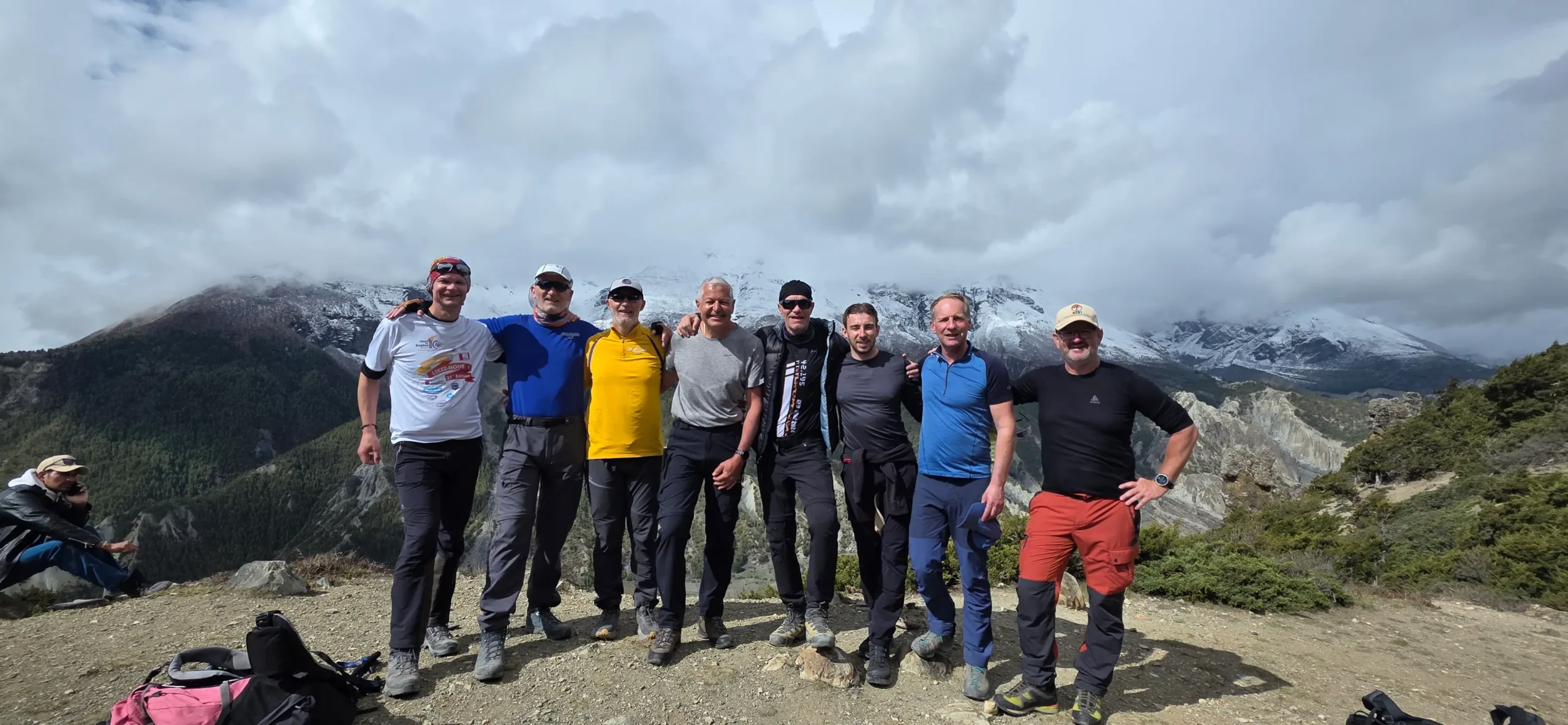
We had perfect trip to Annapurna Circuit Trek include Tilicho Lake. Me and my 7 friends did this 15 days trip include Kathmandu and Pokhara Tour.
We had confirmed this trip almost 6 months before. They were responsive. They answer all our emails within 2 hours. When we had mate with their team also really helpful, experienced and kind. Even for hiking 🥾 to Annapurna Circuit we didn’t expect that kind of foods, services and teahouses but they had provided us great services. If you are planning any trip to Nepal. Feel free to contact this company and book this trip for your great trip. Highly recommend this agency Best Trek and Adventure for your any kind of trip. Dhanyabad. Namaste.
Ryan Roger (France)
Annapurna Circuit Trek
We had great time for Annapurna Circuit Trek with Best Trek and Adventure. Our guide Dinesh was an excellent . We also did Kathmandu and Pokhara tour.
Team member of this agency are really on time and responsive. They reply our all questions with in couple of hour. Highly recommend this agency and team for your any kind of trip. Thank you!
Ryan Roger (France)
Annapurna Circuit Trek
We had great time for Annapurna Circuit Trek with Best Trek and Adventure. Our guide Dinesh was an excellent . We also did Kathmandu and Pokhara tour.
Team member of this agency are really on time and responsive. They reply our all questions with in couple of hour. Highly recommend this agency and team for your any kind of trip. Thank you!
Add a Review
Why choose Us
- An Excellent reviews and High Star Rating.
- Organized and Customizable Itinerary.
- Affordable Price.
- Focus for Eco-Friendly Tourism
- Well-Qualified Guides and Workers.