Seven Provinces of Nepal – Major Attractions, Culture, and Best Places to Visit
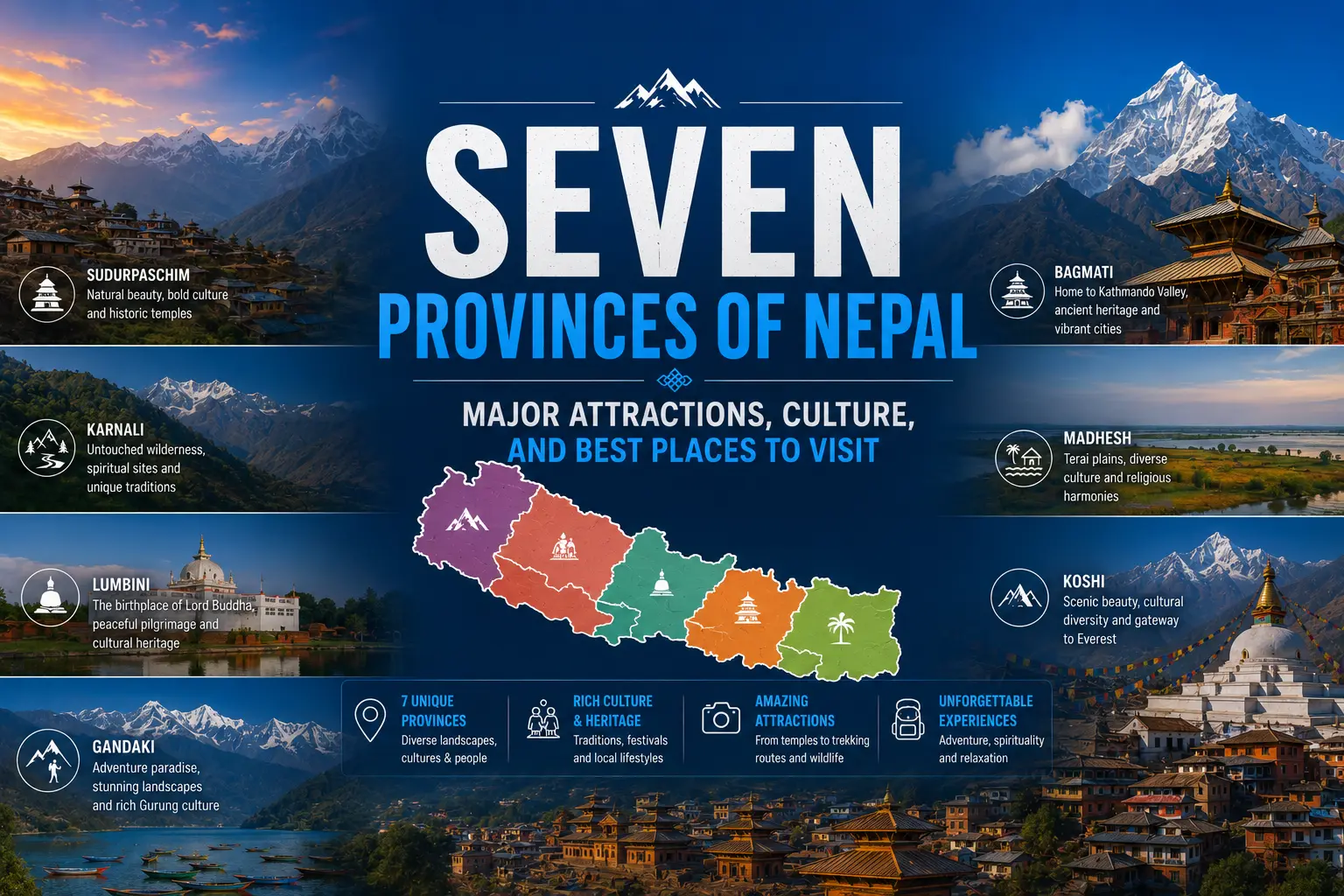
Nepal is a small country in South Asia, but it is full of amazing places, rich traditions, and beautiful natural wonders. From the world’s highest mountains to peaceful forests, ancient temples, colorful festivals, and quiet villages, every part of the country has something special to offer. To make it easier to manage and develop the nation, Nepal is divided into the Seven Provinces of Nepal. Each province has its own identity, culture, history, and natural beauty, making every journey feel different and memorable.
The Seven Provinces of Nepal are home to many ethnic communities that have lived together for generations. Their unique customs, traditional clothing, local foods, languages, music, and festivals create a rich cultural experience for visitors. Travelers can visit sacred pilgrimage sites, explore UNESCO World Heritage Sites, walk through charming hill towns, or enjoy warm hospitality in remote mountain villages. Every province tells its own story and offers a chance to learn more about the people and traditions of Nepal.
Nature also changes from one province to another. Some areas are covered with snow-capped Himalayan peaks, while others have green hills, peaceful lakes, dense jungles, and fertile plains. Wildlife lovers can explore national parks filled with rare animals, while adventure seekers can enjoy trekking, hiking, rafting, mountain climbing, and other outdoor activities. These changing landscapes make the Seven Provinces of Nepal one of the most diverse travel destinations in the world.
This guide introduces the major attractions, cultural highlights, and best places to visit in each of the Seven Provinces of Nepal. Whether you dream of trekking in the Himalayas, visiting ancient temples, spotting wildlife, or experiencing local traditions, each province offers unforgettable experiences that help you discover the true beauty and spirit of Nepal.
Koshi Province: Home of Mount Everest and Rich Biodiversity
Koshi Province is one of the most beautiful and diverse regions among the Seven Provinces of Nepal. Located in eastern Nepal, it is known for its towering Himalayan peaks, peaceful tea gardens, rich wildlife, and vibrant local cultures. This province is a place where nature and tradition come together, offering unforgettable experiences for trekkers, nature lovers, photographers, and cultural travelers.
One of the biggest highlights of Koshi Province is Sagarmatha National Park, a UNESCO World Heritage Site that protects the world’s highest mountain, Mount Everest. Thousands of trekkers visit this region every year to complete the famous Everest Base Camp Trek. Along the trail, Namche Bazaar welcomes visitors with cozy lodges, mountain cafés, local markets, and breathtaking views of snow-covered peaks. It is also an important cultural center where visitors can learn about the Sherpa people and their mountain lifestyle.
Beyond the Everest region, the beautiful Barun Valley offers peaceful trekking routes surrounded by waterfalls, forests, and rare Himalayan plants. In the southern plains, Koshi Tappu Wildlife Reserve is a paradise for birdwatchers and wildlife enthusiasts. It is home to hundreds of bird species, wild water buffalo, deer, and many other animals. On the eastern hills, the green Ilam Tea Gardens create a relaxing landscape where visitors can walk through rolling tea fields and enjoy fresh mountain air.
The Sherpa, Rai, and Limbu communities give Koshi Province a rich cultural identity through their traditions, festivals, music, dances, and warm hospitality. Visitors can experience authentic village life, taste local dishes, and learn about customs that have been passed down for generations.
Among the Seven Provinces of Nepal, Koshi Province offers something for every traveler. Trekking, hiking, wildlife watching, photography, tea garden tours, and cultural experiences are popular activities throughout the year. Spring from March to May and autumn from September to November are the best seasons to visit, as the weather is clear and the mountain views are at their finest. Visitors exploring the Seven Provinces of Nepal often begin their journey here because of its world-famous trekking routes and incredible natural beauty.
Madhesh Province: Spiritual Heritage and Vibrant Traditions
Madhesh Province is one of the most culturally rich regions among the Seven Provinces of Nepal. Located in the southern plains along the border with India, this province is known for its deep spiritual roots, colorful festivals, warm hospitality, and beautiful traditions. It is a wonderful destination for travelers who want to experience Nepal beyond the mountains and discover its living culture and religious heritage.
The heart of Madhesh Province is Janakpur, one of Nepal’s most important pilgrimage cities. It is believed to be the birthplace of Goddess Sita, making it a sacred place for Hindus from around the world. The beautiful Janaki Temple is the city’s main attraction, with its grand white architecture and peaceful atmosphere. Every year, thousands of pilgrims gather here during festivals like Vivah Panchami and Ram Navami to celebrate the story of Lord Ram and Goddess Sita. Another sacred site is Dhanushadham, which is linked to the ancient Ramayana and holds great religious importance. Gadhimai Temple is also a well-known pilgrimage destination that attracts many devotees throughout the year.
Madhesh Province is also famous for its vibrant Mithila culture. Visitors can admire colorful Mithila paintings, which are created with natural colors and tell stories from mythology, daily life, and nature. Local women have preserved this unique art form for generations, making it an important part of the province’s identity. Traditional music, folk dances, and community celebrations bring every festival to life and allow visitors to experience the region’s joyful spirit.
Food is another reason many people enjoy visiting this province. Travelers can taste delicious local dishes such as dhikri, taruwa, anarsa, sel roti, and a variety of sweets prepared during festivals and family gatherings. The warm welcome from local communities makes every meal feel special.
Among the Seven Provinces of Nepal, Madhesh Province stands out for its strong spiritual traditions, rich history, and colorful cultural experiences. Pilgrims, history lovers, photographers, and cultural travelers visit this region to explore sacred temples, witness vibrant festivals, enjoy authentic local cuisine, and connect with the timeless traditions that continue to shape everyday life.
Bagmati Province: Nepal’s Cultural and Historical Heart
Bagmati Province is one of the most visited and diverse regions among the Seven Provinces of Nepal. It is home to Nepal’s capital city, Kathmandu, where ancient history, living traditions, and modern life come together. This province offers a perfect mix of cultural heritage, religious landmarks, wildlife, and mountain adventures, making it a favorite destination for travelers from around the world.
The Kathmandu Valley is famous for its UNESCO World Heritage Sites, which reflect Nepal’s rich history and artistic beauty. Pashupatinath Temple is one of the holiest Hindu temples dedicated to Lord Shiva and welcomes thousands of pilgrims every year. Nearby, Boudhanath Stupa stands as one of the largest Buddhist stupas in the world, creating a peaceful space filled with prayer flags, spinning prayer wheels, and chanting monks. Swayambhunath, also known as the Monkey Temple, sits on a hill overlooking Kathmandu and offers beautiful city views along with deep spiritual importance. Bhaktapur Durbar Square is another must-visit attraction where visitors can admire ancient palaces, temples, wood carvings, and traditional Newari architecture that has been preserved for centuries.
Beyond the cities, Bagmati Province also offers incredible natural attractions. Chitwan National Park is one of Nepal’s best wildlife destinations, where visitors can enjoy jeep safaris, canoe rides, birdwatching, and the chance to see one-horned rhinos, Bengal tigers, crocodiles, and many other animals. Langtang National Park attracts trekkers with its beautiful mountain trails, glaciers, forests, and traditional Tamang villages, making it one of the best trekking regions in the country.
The local Newari community adds even more charm to the province through its rich culture, colorful festivals, delicious traditional food, and skilled craftsmanship. Walking through old towns allows visitors to experience a lifestyle that has been carefully preserved for generations.
Among the Seven Provinces of Nepal, Bagmati Province is a place where history, religion, wildlife, and adventure exist side by side. Travelers can explore ancient temples in the morning, enjoy cultural experiences during the day, and head into forests or mountain trails to discover another side of Nepal’s natural beauty.
Gandaki Province: Mountains, Lakes, and Adventure
Gandaki Province is one of the most beautiful destinations among the Seven Provinces of Nepal. It is a place where snow-covered mountains, peaceful lakes, green hills, and welcoming villages create unforgettable travel experiences. Whether you are looking for a relaxing holiday, a spiritual journey, or an exciting trekking adventure, Gandaki Province has something special for every visitor.
Pokhara is the heart of the province and one of Nepal’s most loved cities. Surrounded by the Annapurna and Machhapuchhre mountain ranges, Pokhara is famous for its calm atmosphere and stunning scenery. Fewa Lake is the city’s main attraction, where visitors can enjoy boating while watching the reflection of the mountains on the water. The lakeside area is also filled with cozy cafés, local shops, and beautiful walking paths that make every visit enjoyable.
Gandaki Province is also known as the gateway to some of Nepal’s most famous trekking routes. The Annapurna Base Camp Trek takes travelers through beautiful forests, mountain villages, and breathtaking Himalayan landscapes before reaching the base of Annapurna I. The Annapurna Circuit is one of the world’s classic trekking routes, offering diverse scenery, high mountain passes, and rich cultural experiences. Mardi Himal Trek is perfect for those seeking a quieter trail with close-up mountain views, while Poon Hill is famous for its unforgettable sunrise over the Annapurna and Dhaulagiri ranges. Pilgrims from Nepal and around the world also visit the sacred Muktinath Temple, a holy site respected by both Hindus and Buddhists.
The Gurung and Magar communities have lived in this region for generations. Their traditional villages, warm hospitality, local festivals, and unique customs allow visitors to experience the rich cultural heritage of the Himalayas. Staying in these villages adds a personal and meaningful connection to every journey.
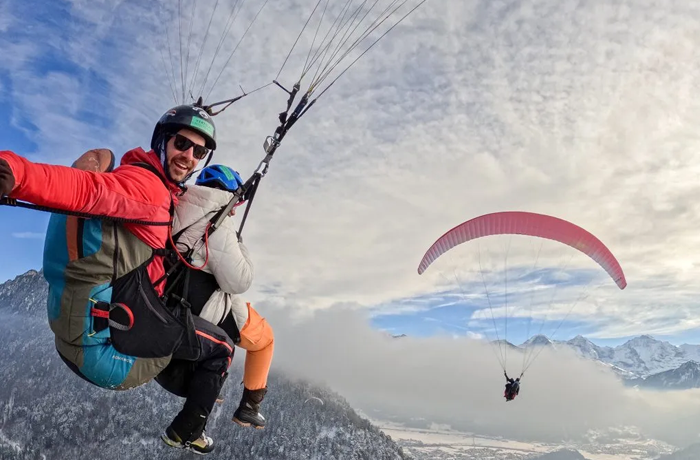
Among the Seven Provinces of Nepal, Gandaki Province is also a center for adventure sports. Visitors can enjoy paragliding, zip-lining, bungee jumping, mountain biking, rafting, and ultralight flights while surrounded by spectacular mountain scenery. The perfect combination of nature, culture, spirituality, and adventure makes Gandaki Province one of the most rewarding places to explore in the Seven Provinces of Nepal.
Lumbini Province: Birthplace of Lord Buddha
Lumbini Province is one of the most peaceful and meaningful destinations among the Seven Provinces of Nepal. It is known around the world as the birthplace of Lord Buddha, the founder of Buddhism. Every year, thousands of pilgrims, monks, and travelers visit this province to experience its spiritual atmosphere, explore ancient historical sites, and enjoy the natural beauty of western Nepal. Along with its religious importance, Lumbini Province also offers rich wildlife, vibrant local culture, and warm hospitality.
The most important attraction is the Lumbini Sacred Garden, a UNESCO World Heritage Site that marks the birthplace of Lord Buddha. The peaceful gardens are filled with monasteries built by different countries, quiet walking paths, meditation areas, and beautiful ponds that create a calm environment for visitors. At the center of the sacred site stands the Maya Devi Temple, built over the exact place where Queen Maya Devi gave birth to Prince Siddhartha. Many pilgrims spend time here in prayer and reflection, making it one of the most important Buddhist pilgrimage sites in the world.
A short distance from Lumbini lies Tilaurakot, believed to be the ancient capital of the Shakya Kingdom where Prince Siddhartha spent his early life before beginning his spiritual journey. Visitors can explore the archaeological remains and imagine the history that shaped one of the world’s greatest teachers.
Nature lovers can also enjoy Bardiya National Park and Banke National Park, two beautiful protected areas that are home to Bengal tigers, one-horned rhinos, elephants, crocodiles, deer, and hundreds of bird species. Jungle safaris, birdwatching, and nature walks offer a different side of the province beyond its spiritual landmarks.
The Tharu community adds cultural richness to Lumbini Province through its traditional dances, unique mud houses, colorful festivals, and delicious local cuisine. Visitors can learn about their way of life and experience genuine hospitality during village tours.
Among the Seven Provinces of Nepal, Lumbini Province offers a rare combination of spirituality, history, wildlife, and culture. It welcomes people from different faiths and backgrounds who come to discover the teachings of Lord Buddha while exploring the natural and cultural treasures that make this region truly special.
Karnali Province: Nepal’s Hidden Himalayan Treasure
Karnali Province is one of the most remote and untouched regions among the Seven Provinces of Nepal. Far from busy cities and crowded tourist areas, this province offers peaceful landscapes, ancient traditions, and breathtaking Himalayan scenery. It is a destination for travelers who want to experience the true beauty of nature and connect with local communities that have preserved their culture for generations. Every journey through Karnali feels like stepping into a different world where time moves slowly and every trail tells a story.
One of the greatest attractions in Karnali Province is Rara Lake, the largest lake in Nepal. Surrounded by pine forests and snow-covered mountains, its clear blue water creates a peaceful setting that leaves a lasting impression on every visitor. The quiet environment, fresh mountain air, and changing colors of the lake throughout the day make it one of the most beautiful natural destinations in the Seven Provinces of Nepal.
Another remarkable place is Shey Phoksundo National Park, Nepal’s largest national park. It is famous for the stunning turquoise waters of Phoksundo Lake, dramatic cliffs, waterfalls, and rare wildlife such as the snow leopard, blue sheep, and Himalayan musk deer. Nearby, the remote region of Upper Dolpo offers one of Nepal’s most rewarding trekking experiences. The trails pass through high mountain passes, ancient monasteries, and traditional villages where Tibetan-influenced culture remains an important part of everyday life.
History lovers can also visit Sinja Valley, the ancient capital of the Khasa Kingdom. This historic area is believed to be one of the birthplaces of the Nepali language and offers fascinating archaeological sites surrounded by beautiful mountain landscapes.
The remote villages of Karnali welcome visitors with simple lifestyles, warm hospitality, and strong cultural traditions. Local festivals, prayer flags, stone houses, and Buddhist monasteries reflect the deep spiritual connection people have with the Himalayas.
Among the Seven Provinces of Nepal, Karnali Province is a dream destination for trekkers, photographers, wildlife lovers, and anyone seeking a peaceful adventure in nature. Its untouched wilderness, rich history, and authentic mountain culture create unforgettable experiences that cannot be found anywhere else in Nepal.
Sudurpashchim Province: Nature, Wildlife, and Far-West Culture
Sudurpashchim Province is one of the least explored regions among the Seven Provinces of Nepal, yet it is filled with natural beauty, spiritual sites, and unique cultural traditions. Located in the far-western part of the country, this province offers peaceful mountain landscapes, rich wildlife, ancient temples, and welcoming local communities. It is an ideal destination for travelers who want to discover a quieter side of Nepal away from the usual tourist routes.
One of the province’s most famous attractions is Khaptad National Park. Known for its green meadows, dense forests, and peaceful hills, the park is home to many species of birds, deer, leopards, and Himalayan plants. It is also an important spiritual place because Khaptad Baba, a respected Hindu saint, spent many years meditating here. Visitors can enjoy hiking, birdwatching, nature walks, and breathtaking views while exploring this beautiful protected area.
Another natural treasure is Shuklaphanta National Park, one of Nepal’s best wildlife destinations. The park is famous for its large grasslands and is home to Bengal tigers, one-horned rhinos, wild elephants, swamp deer, and hundreds of bird species. Wildlife lovers and photographers often visit to experience the rich biodiversity that makes this part of the Seven Provinces of Nepal so special.
For pilgrims and trekkers, Badimalika Temple is an important religious site located high in the mountains. Reaching the temple involves a scenic trek through alpine meadows and remote villages, making the journey as memorable as the destination itself. Adventure travelers can also explore the Api Nampa Conservation Area, which offers stunning Himalayan peaks, glaciers, forests, and traditional mountain settlements. The region is perfect for trekking, camping, and experiencing untouched wilderness.
Sudurpashchim Province is also rich in local traditions, festivals, music, and cultural celebrations. Visitors have the chance to meet friendly local communities, enjoy traditional food, and learn about customs that have been preserved for generations. Among the Seven Provinces of Nepal, this province stands out for its peaceful atmosphere, authentic culture, and hidden natural wonders, making every journey feel personal and rewarding.
Conclusion
The Seven Provinces of Nepal show the true beauty and diversity of the country. Each province has its own unique landscapes, traditions, history, and attractions that create unforgettable travel experiences. From the snowy peaks of Koshi and Gandaki to the sacred sites of Madhesh and Lumbini, from the cultural treasures of Bagmati to the peaceful wilderness of Karnali and Sudurpashchim, every journey offers something meaningful to discover.
Many travelers visit Nepal for famous destinations like Everest Base Camp or Pokhara, but exploring different provinces allows you to experience much more. You can walk through ancient cities, meet welcoming local communities, enjoy colorful festivals, visit national parks filled with wildlife, and trek across some of the world’s most beautiful mountain trails. Every province tells a different story and helps visitors understand the rich culture and natural heritage that make Nepal so special.
Whether you are planning your first visit or returning for another adventure, the Seven Provinces of Nepal offer countless opportunities to create lasting memories. From spiritual pilgrimages and cultural tours to trekking, wildlife safaris, and peaceful village experiences, there is something for every type of traveler. As you plan your journey, take time to explore beyond the well-known places and discover the hidden beauty, warm hospitality, and unforgettable experiences waiting across the Seven Provinces of Nepal.
Make an Inquiry


 June 2, 2026
A Beginner’s Guide to Flora and Fauna of Nepal
Introduction to Flora and Fauna of Nepal The Flora and Fauna of Nepal refers to all the plants and animals...
 March 10, 2026
Experience Everest in a Day – Everest Base Camp Helicopter Tour With Landing
Why Choose an Everest Base Camp Helicopter Tour? Many travelers dream of seeing Mount Everest, the tallest mountain in the...
 February 10, 2026
Kathmandu Day Tour – Visit Swayambhunath, Patan, Pashupatinath & Boudhanath
Kathmandu Day Tour Overview: Explore Culture, History, and Spiritual Life A Kathmandu Day Tour is a simple and well-planned way...


