A Beginner’s Guide to Flora and Fauna of Nepal
Introduction to Flora and Fauna of Nepal
The Flora and Fauna of Nepal refers to all the plants and animals found in Nepal. In simple words, flora means all types of plants, trees, flowers, and grasses, while fauna means all kinds of animals, birds, and insects. Nepal is a very special country because it has a wide range of nature in a small area. This makes the Flora and Fauna of Nepal very rich and unique compared to many other countries.
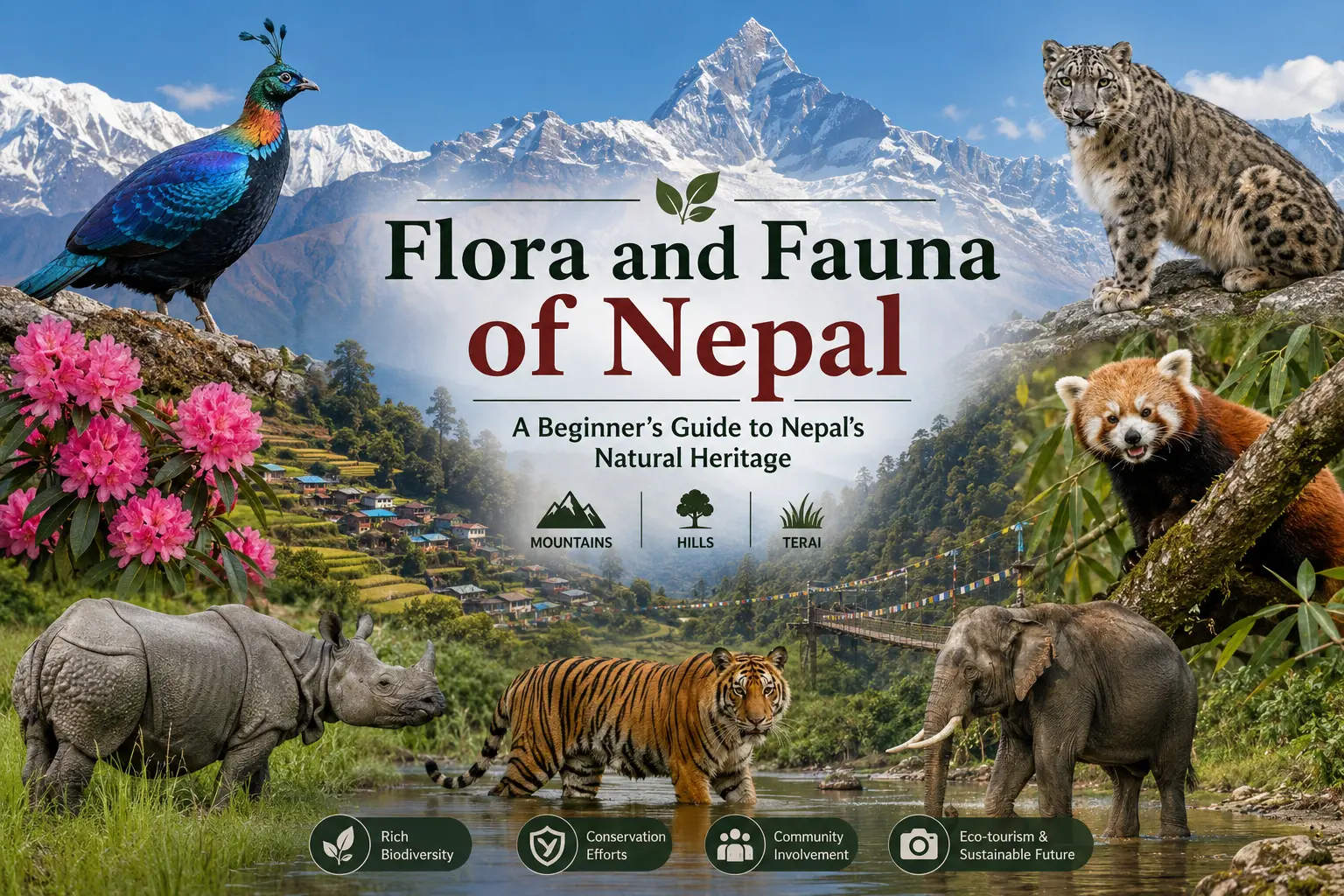
One of the main reasons Nepal has such rich nature is its geography. Nepal has three main natural regions: the high mountains, the hilly region, and the flat land called the Terai. Each region has different weather, soil, and height. Because of this, different types of plants and animals live in different places. For example, the mountain region is cold and snowy, so only strong plants like pine trees and animals like snow leopards can survive there. The hilly region has green forests and flowers, while the Terai region is warm and has dense forests with many wild animals like rhinos and elephants.
The Flora and Fauna of Nepal is also rich because of the country’s climate variety. In a short distance, you can move from hot plains to cold snowy mountains. This allows many different ecosystems to exist in one country. That is why Nepal is known as a small country with very big natural diversity. Trekking routes in Nepal also show this beauty clearly. While walking in trails like Annapurna or Everest region, trekkers can see changing forests, plants, and wildlife along the way.
Another important point is that Nepal is home to many rare and endangered species. Some animals and plants cannot be found easily in other parts of the world. The Flora and Fauna of Nepal includes special animals like the red panda, Himalayan monal, and one-horned rhinoceros. These species make Nepal very important for global biodiversity. Many travelers visit Nepal not only for mountains but also to experience this natural beauty.
People in Nepal also depend on nature for their daily life. Forests provide wood, herbs, and clean air. Animals and plants help maintain balance in the environment. That is why the Flora and Fauna of Nepal is not only important for tourism but also for local communities living in villages and trekking areas.
Nepal’s nature is also connected with culture and traditions. Many plants and animals are respected in local beliefs. Rhododendron flowers, for example, are found in many hill forests and are also a symbol of national pride. This shows how deeply nature is connected with life in Nepal.
The Flora and Fauna of Nepal makes the country a natural paradise for trekkers, researchers, and nature lovers. Every region offers a different experience, from green forests to snowy peaks, all filled with unique life forms.
Different Climate Zones and Their Nature
Nepal is a small country, but it has very different weather and land types. Because of this, the Flora and Fauna of Nepal changes from one place to another. Nepal has three main regions: the Mountain region, the Hill region, and the Terai region. Each region has its own climate, plants, and animals, which makes the country very rich in nature.
In the Mountain region, the weather is very cold and snowy most of the year. The land is high above sea level, so only strong plants and animals can survive here. Trees like pine, juniper, and other cold-resistant plants grow in this area. The animal life is also special. You can find rare animals like the snow leopard, Himalayan tahr, and blue sheep. The Flora and Fauna of Nepal in this region is adapted to harsh cold weather and strong winds. Trekking routes like Everest and Upper Mustang show this cold natural beauty clearly.
In the Hill region, the climate is moderate, not too hot and not too cold. This area is full of green forests, rivers, and terraced farms. The hills are one of the most beautiful parts of Nepal. Here you can see rhododendron forests, which bloom in bright red and pink colors during spring. Oak and pine trees are also common. Animals like deer, wild boar, monkeys, and many types of birds live in this region. The Flora and Fauna of Nepal in the hills is very colorful and diverse, making it a great place for trekking routes like Annapurna and Langtang.
The Terai region is the flat land in the southern part of Nepal. The climate here is hot and humid. This region has dense forests and fertile land. Large trees like sal, sissoo, and bamboo grow here. The Terai is also home to many famous wild animals such as the one-horned rhinoceros, Bengal tiger, elephants, and crocodiles. Many national parks like Chitwan and Bardia protect the Flora and Fauna of Nepal found in this region.
Each region of Nepal offers a different natural experience. When trekking or traveling from the lowlands to the high mountains, you can clearly see how the plants and animals change. This variety is what makes the Flora and Fauna of Nepal so unique in the world. It is rare to find such different ecosystems in such a small distance.
The change in climate zones also affects the lifestyle of people living there. In the mountains, people depend on yaks and hardy crops. In the hills, farming and forests are important. In the Terai, agriculture and forest resources support daily life. This close connection between humans and nature is part of the Flora and Fauna of Nepal, making it not only about wildlife but also about life and culture.
Famous Flora (Plants) of Nepal
The Flora and Fauna of Nepal is very rich, and plants play a very important role in this natural beauty. Nepal has many types of plants because of its different climates and geography. From cold mountains to warm Terai forests, you can find a wide variety of trees, flowers, and herbs. These plants are not only beautiful but also very useful for people, animals, and the environment.
One of the most famous plants in Nepal is the rhododendron. It is also the national flower of Nepal. Rhododendron flowers are found mostly in the hill and mountain regions. During spring, these flowers bloom in red, pink, and white colors, making the forests look very bright and attractive. Trekking routes in places like Annapurna and Langtang are well known for rhododendron forests. The Flora and Fauna of Nepal becomes more special because of this beautiful flower, which attracts many trekkers and nature lovers every year.
Another very important tree is the sal tree. Sal is mostly found in the Terai region of Nepal. It is one of the strongest and most useful trees in the country. The wood of the sal tree is used for building houses, furniture, and many daily needs. Sal forests also support many animals by providing shelter and food. Because of its importance, the sal tree is a key part of the Flora and Fauna of Nepal, especially in lowland forest ecosystems like Chitwan and Bardia.
Bamboo is another common plant found in different parts of Nepal, especially in the hills and Terai. Bamboo grows quickly and is very useful for making baskets, houses, and simple tools. Many local communities depend on bamboo for their daily life. It also helps in soil protection and keeping the environment stable. Along with bamboo, Nepal also has many medicinal herbs found in high mountain areas. These herbs are used in traditional medicine to treat different health problems. Herbs like Yarsagumba and Jatamansi are very famous in the Himalayan region. These natural medicines make the Flora and Fauna of Nepal very important for both local and global use.
Different plants are found in different regions of Nepal. Rhododendron is common in hills and mountains, sal trees grow in the Terai, and bamboo can be seen in both hill and lowland areas. Medicinal herbs are mostly found in high-altitude regions. This wide variety shows how diverse the Flora and Fauna of Nepal really is. Each plant plays a special role in maintaining balance in nature.
Plants in Nepal are not only useful but also add beauty to the landscape. Forests filled with green trees, colorful flowers, and wild herbs make trekking in Nepal very special. Many trekking trails pass through these natural forests, allowing travelers to experience the beauty of the Flora and Fauna of Nepal closely.
These plants also support animals by providing food and shelter. Without plants, many animals in Nepal would not survive. This strong connection between plants and animals is a key part of the Flora and Fauna of Nepal, showing how nature works together in harmony.
Famous Fauna (Wild Animals) of Nepal
The Flora and Fauna of Nepal is very rich, and wild animals are an important part of it. Nepal is home to many rare and beautiful animals because of its different climates and natural habitats. From hot jungles in the Terai to cold mountains in the Himalayas, different animals live in different regions. This makes the Flora and Fauna of Nepal very special for nature lovers and trekkers.
One of the most famous animals in Nepal is the one-horned rhinoceros. It is mostly found in the Terai region, especially in Chitwan National Park and Bardia National Park. This large animal has thick skin and one strong horn. It is protected by law because its number is decreasing due to poaching and habitat loss. The one-horned rhino is a proud part of the Flora and Fauna of Nepal, showing how important conservation is in Nepal.
Another powerful animal is the Bengal tiger. It also lives in the dense forests of the Terai. Tigers are very rare and shy animals, and they need large forest areas to survive. Nepal has made strong efforts to protect tigers in national parks. Because of this, their population is slowly increasing. The Bengal tiger is one of the top predators in the Flora and Fauna of Nepal, keeping the forest ecosystem balanced.
In the cold Himalayan region, the snow leopard is one of the most special animals. It lives in high mountains where the weather is very cold and the land is rocky. Snow leopards are very hard to see because they are shy and live in remote areas. They are also endangered and protected by conservation programs. The snow leopard is a very important part of the Flora and Fauna of Nepal, representing the wild beauty of the mountains.
Another unique animal found in the Himalayan forests is the red panda. It is small, cute, and mostly lives in bamboo forests. Red pandas are found in eastern Nepal in places like Ilam and Langtang. They are also endangered due to habitat loss. The red panda adds charm to the Flora and Fauna of Nepal, especially in forest trekking routes.
The Himalayan monal is the national bird of Nepal. It is known for its bright and colorful feathers. This bird is found in high mountain forests and alpine areas. It is often seen during trekking in regions like Annapurna. The Himalayan monal is a beautiful symbol of the Flora and Fauna of Nepal, showing the rich birdlife of the country.
Each of these animals lives in a specific region based on climate and food availability. From rhinos in the Terai to snow leopards in the mountains, Nepal has a wide range of wildlife. This diversity makes the Flora and Fauna of Nepal very important for global biodiversity.
Many of these animals are protected in national parks and conservation areas. Nepal has strong wildlife protection laws to save endangered species. This protection helps maintain the balance of the Flora and Fauna of Nepal, ensuring that future generations can also experience this natural heritage.
Importance and Protection of Nature in Nepal
The Flora and Fauna of Nepal is very important for people, animals, and the whole environment. It includes all the plants, trees, forests, and wild animals found across the country. These natural resources help keep the environment balanced and healthy. Nepal is a country where nature plays a big role in daily life, especially in trekking regions where forests, rivers, and wildlife are closely connected with human life.
One of the main reasons the Flora and Fauna of Nepal is important is because it helps maintain balance in nature. Plants produce oxygen, which humans and animals need to breathe. Forests also help in bringing rain and keeping the climate stable. Animals are also part of this balance because they help in spreading seeds and controlling the food chain. Without this balance, the natural system would not work properly.
Tourism is another important reason why the Flora and Fauna of Nepal matters so much. Many people visit Nepal for trekking and wildlife experiences. Trekkers come to see green forests, rare animals, and beautiful landscapes. Places like Everest, Annapurna, and Chitwan are famous because of their natural beauty. This brings income for local people and supports the economy of Nepal.
However, the Flora and Fauna of Nepal is facing many threats. One of the biggest problems is deforestation. Trees are cut for firewood, farming, and construction. This reduces forest areas and affects animals that depend on them. Another serious issue is poaching, where wild animals are illegally hunted. Animals like rhinos and tigers are especially at risk. Climate change is also a growing threat. It is changing weather patterns and affecting both plants and animals in mountain and forest regions.
To protect nature, Nepal has created many national parks and conservation areas. Places like Chitwan National Park, Sagarmatha National Park, and Bardia National Park are important for protecting wildlife and forests. These protected areas help save endangered animals and preserve natural habitats. The Flora and Fauna of Nepal is carefully managed in these regions to ensure that wildlife can survive safely.
There are also conservation programs and community efforts in Nepal. Local people are involved in protecting forests and wildlife. They help stop illegal hunting and support eco-tourism activities. This community involvement is very important for keeping the Flora and Fauna of Nepal safe for the long term.
Education also plays a key role in protection. When people understand the importance of nature, they take better care of it. Schools, trekking guides, and conservation groups teach people about how to protect forests and animals. This awareness helps reduce harmful activities and encourages responsible tourism.
Protecting nature is not only about saving animals and plants, but also about protecting human life. Clean air, fresh water, and stable weather all depend on healthy ecosystems. The Flora and Fauna of Nepal supports life in many ways, from providing resources to supporting tourism and culture.
Every small action, like not cutting trees unnecessarily or respecting wildlife during trekking, helps protect the natural beauty of Nepal.
Make an Inquiry




 March 31, 2026
Crossing Cho La Pass – A Complete Guide for Three Passes Trek in Nepal
Where is Cho La Pass in the Everest Three Passes Trek? Cho La Pass is one of the high mountain...
 February 3, 2026
Lukla – The Gateway to Everest Treks in Nepal
Where Is Lukla and Why It Is So Important for Everest Treks Lukla is a small mountain town located in...


