Is Nepal Safe to Travel and Trek After the August 2026 Floods? Latest Travel & Trekking Update
Introduction
Last Updated: August 31, 2026
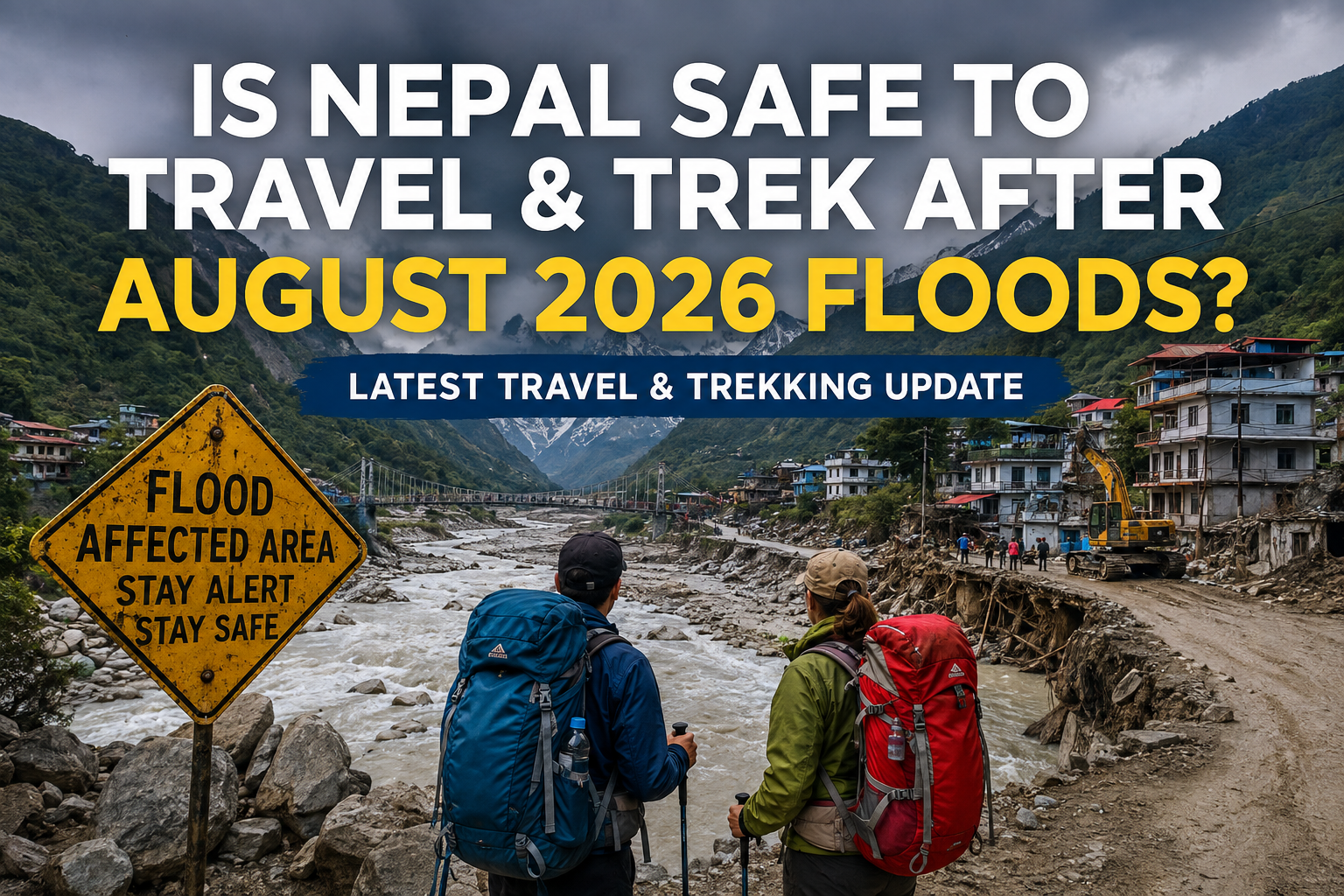
The devastating flash floods that struck parts of Nepal on August 26, 2026, have raised understandable concerns among travelers planning holidays, trekking trips and mountain adventures. Images of damaged roads, bridges, settlements and river corridors have led many people to ask an important question: Is Nepal safe to travel and trek after the August 2026 floods? The short answer is that Nepal should not be considered unsafe as a whole simply because some areas have been severely affected. The situation is highly location-specific. Rasuwa and parts of the Bhote Koshi and Trishuli river corridors have suffered major damage, while Nepal’s tourism destinations are spread across a large and geographically diverse country.
However, the situation is still developing. Rescue, recovery, road repairs and assessments are continuing in the affected areas. Travelers should therefore check the latest conditions for their specific destination and trekking route before departure. This guide explains the Nepal floods of 2026, the current travel situation, trekking safety considerations, affected regions and what travelers should know before visiting Nepal.
Important Travel Update: Conditions following the August 2026 floods are changing. Travelers should confirm current road, trail, weather and transportation conditions for their specific destination before departure.
Is Nepal Safe to Travel After the August 2026 Floods?
Nepal remains a large and geographically diverse destination, and the August floods did not affect every tourist destination in the country in the same way. The most serious impacts were concentrated along river corridors in parts of central Nepal, particularly around Rasuwa, Nuwakot, Dhading, Gorkha, Chitwan and Tanahun. The World Health Organization reported that the government declared 15 municipalities in affected districts as disaster crisis-affected areas for three months.
For travelers, this means that safety needs to be assessed according to the destination and route, rather than treating the entire country as one affected zone. If your itinerary passes through a flood-affected road corridor, bridge or trekking gateway, conditions may change quickly. Alternative routes, delays or postponements may be necessary while infrastructure is repaired.
Current Nepal Travel Situation
Nepal’s tourism and aviation infrastructure continues to operate, and official immigration information at Tribhuvan International Airport shows ongoing international passenger activity after the floods. At the same time, some roads and infrastructure in disaster-affected areas have been seriously damaged. The Nepal Tourism Board reported that tourists were among those affected in the Rasuwa area, while roads and bridges around Timure and Syafrubesi were damaged. Travelers should therefore distinguish between arriving in Nepal and traveling to a particular flood-affected area. The two are not necessarily the same.
Which Areas Were Affected by the Floods?
According to the WHO’s initial assessment, the August 26 flash floods affected communities along the Bhote Koshi and Trishuli river corridors, including areas of Rasuwa, Nuwakot, Dhading and Chitwan, as well as Gorkha and Tanahun in Gandaki Province. Rasuwa was among the most severely affected areas. The disaster caused extensive damage to settlements, roads, bridges, power infrastructure and other facilities around the Bhote Koshi corridor. Because the situation remains fluid, travelers should avoid assuming that a road or route is open simply because it was operating normally before the disaster.
What Happened During the Nepal Floods in August 2026?
On August 26, 2026, a sudden and destructive flood struck the Nepal-Tibet border region. Initial reporting linked the event to an ice-rock or glacial collapse and temporary blockage in the upper Lhende River system. The resulting surge moved rapidly into the Bhote Koshi corridor and downstream river systems. The disaster developed extremely quickly, leaving communities and travelers with very little time to respond.
Major Flood-Affected Areas
Rasuwa was at the center of the disaster, particularly around the northern border and Bhote Koshi corridor. Floodwaters and debris then affected downstream areas connected to the Trishuli river system. The WHO has identified affected areas in Rasuwa, Nuwakot, Dhading, Chitwan, Gorkha and Tanahun.
Damage to Roads, Bridges and Infrastructure
The floods caused extensive destruction to transportation and other infrastructure. Reports have described damage to roads, bridges, settlements, electricity infrastructure and hydropower facilities. This is particularly important for travelers because Nepal’s trekking routes often depend on mountain roads to reach trailheads. A trekking trail itself may remain intact while the road leading to the trailhead is temporarily unusable. For this reason, road access should be checked separately from trail conditions before starting a trek.
Impact on Local Communities and Tourism
The disaster has had a serious human and economic impact. Rescue operations have involved Nepal’s security forces, local authorities, humanitarian organizations and international support teams. The tourism sector has also been directly affected, particularly because the Rasuwa corridor is connected to trekking and pilgrimage travel. The Nepal Tourism Board reported hundreds of tourists initially losing contact in the affected area, including foreign and Nepali travelers. As recovery continues, the priority remains the safety of affected communities and the search for missing people.
Nepal Travel Update: Are Tourist Destinations Open?
Nepal has many different tourism regions, and conditions should be checked individually rather than making a single judgment about the entire country.
Kathmandu, Pokhara, Chitwan and Lumbini
These destinations are geographically separate from the main Rasuwa disaster corridor, although downstream areas such as Chitwan have also been involved in the wider flood response. Kathmandu remains Nepal’s main international gateway, and official airport immigration records show continued passenger processing after the disaster. Travelers visiting Kathmandu should nevertheless remain alert to weather-related road disruptions, especially during the monsoon season. Pokhara, Lumbini and other destinations should likewise be assessed according to current local road and weather conditions rather than based solely on news from Rasuwa.
Everest and Annapurna Regions
The Everest and Annapurna regions are geographically separate from the main Rasuwa-Bhote Koshi disaster corridor. This does not mean that trekking conditions can be guaranteed without checking. Mountain weather, landslides and transportation disruptions can occur independently of the August flood event. Travelers planning Everest or Annapurna treks should therefore confirm current flight, road, trail and weather conditions immediately before departure.
Is Nepal Safe for Trekking After the Floods?
Nepal trekking is still possible, but route-specific safety checks are essential. The August floods mainly affected particular river corridors and infrastructure rather than every Himalayan trekking route. However, the monsoon season itself brings additional risks, including landslides, swollen rivers, slippery trails and road blockages. A trek that is geographically far from the flood zone may have very different conditions from a trek whose access road passes through an affected district.
Trekking Trail and Road Conditions
One of the most important lessons after the floods is that trail condition and road condition are not the same thing. A trekking route may be physically intact while the road used to reach its starting point has been damaged. Conversely, a road may be open while a particular section of trail has suffered a landslide.
Before departure, trekkers should confirm:
- Access roads to the trailhead
- Bridges and river crossings
- Current trail conditions
- Availability of teahouses
- Weather forecasts
- Local authority notices
- Transportation arrangements
Weather, Landslides and Mountain Safety
The August floods occurred during Nepal’s monsoon season, when heavy rainfall can increase the risk of landslides and flooding Even after floodwaters recede, unstable slopes and damaged bridges can remain dangerous. Travelers should not enter recently affected areas simply because water levels appear lower. For high-altitude trekking, weather can also change rapidly. Proper equipment, experienced guides and flexible itineraries remain important.
Nepal Trekking Safety: What Trekkers Should Know
Check Current Route Conditions
Do not rely only on information published several weeks or months earlier. Ask your trekking agency, guide or local authorities about the current condition of your exact route.
Travel With an Experienced Guide
A knowledgeable local guide can monitor changing conditions, identify alternative routes and communicate with local communities. Nepal Tourism Board also maintains Tourist Police posts in major tourist areas, including Lukla, Pokhara, Chitwan, Rasuwa and other trekking destinations.
Prepare for Changing Weather
During the monsoon and transition periods, weather can affect roads, flights and mountain trails with little warning. Allow extra time in your itinerary rather than scheduling important international connections immediately after a mountain journey.
Get Travel Insurance
Travel insurance is particularly important for trekking in Nepal. Your policy should cover the activities and altitude involved in your itinerary and provide appropriate emergency assistance. For remote or high-altitude routes, travelers should understand the conditions of their evacuation coverage before beginning the trek.
Is Everest Base Camp Trek Safe After the Floods?
The Everest Base Camp Trek is located in the Khumbu region, far from the main Rasuwa-Bhote Koshi flood corridor. The August floods therefore should not automatically be interpreted as meaning that the Everest Base Camp route has been destroyed or closed. However, Everest travel involves flights or road connections to the trek’s starting point, and mountain weather can cause separate disruptions.
Everest Region and Lukla Update
Travelers heading to Everest should confirm the status of their Kathmandu–Lukla flight, alternative road or air arrangements, trail conditions and weather forecast close to departure. If conditions change, a good trekking operator should be able to adjust transportation and itinerary plans.
Is Annapurna Trekking Safe After the Floods?
The Annapurna region is also separate from the main Rasuwa disaster area. Popular routes such as the Annapurna Circuit, Annapurna Base Camp and Mardi Himal Trek have their own transportation and weather considerations. Travelers should therefore evaluate the specific route rather than assuming that conditions in central Nepal apply equally to the Annapurna region.
Annapurna Region and Access Update
Before beginning an Annapurna trek, check:
- Road access from Kathmandu or Pokhara
- Conditions at the trailhead
- Current rainfall and landslide warnings
- Trail and bridge conditions
- Accommodation availability
- Local guidance
This is especially important during periods of heavy rain.
What About Other Trekking Regions?
Nepal’s trekking network extends far beyond Rasuwa.
Langtang, Manaslu, Mustang and Dolpo
The Langtang and Gosaikunda areas require particular attention because Rasuwa was one of the districts directly affected by the August floods. The Nepal Tourism Board identifies Gosainkunda as part of the Langtang trekking area, and access has historically involved roads through Rasuwa. Travelers planning Langtang or Gosaikunda should therefore obtain the latest access and trail information before traveling. Manaslu, Mustang and Dolpo are geographically different trekking regions, but each has its own road, weather and trail considerations. Current conditions should always be confirmed for the exact itinerary.
Should You Cancel Your Nepal Trip?
The answer depends on where you are going, when you are traveling and how your route is affected. A traveler visiting Kathmandu, Pokhara or another destination that is operating normally does not necessarily face the same situation as someone planning to travel directly through the flood-affected Rasuwa corridor.
When to Consider Postponing
Consider postponing or changing your itinerary if:
- Your route passes through a disaster-affected area
- The access road or bridge is damaged
- Local authorities advise against travel
- Severe weather is continuing
- Your trekking agency cannot confirm safe access
- Your insurance or emergency arrangements are inadequate
When You Can Continue Your Trip
If your destination and trekking route have been checked and confirmed operational, you may be able to continue your Nepal journey with appropriate precautions. Keep your itinerary flexible and allow additional time for transportation.
How to Travel Safely in Nepal After the Floods
Check Official Updates
Conditions can change quickly during disaster recovery. Check information from the Nepal Tourism Board, local authorities, your embassy and your trekking agency before traveling.
Keep Your Itinerary Flexible
Avoid creating a schedule with no extra time between trekking, domestic flights and international departures.
Follow Local Safety Advice
If authorities, guides or local communities advise travelers to avoid a road, bridge, river crossing or trail, follow that advice.
Carry Essential Emergency Information
Keep your passport, insurance information, emergency contacts and important travel documents accessible. Nepal Tourism Board lists 1144 as the Tourist Police toll-free hotline, while police assistance can be reached at 100.
Nepal Tourism Update 2026: What Travelers Can Expect
Nepal’s tourism industry has faced a major shock in the areas directly affected by the floods, particularly in communities dependent on transportation, trekking, pilgrimage and cross-border trade. Recovery will take time. Roads, bridges, hydropower infrastructure and local facilities in the affected corridors need assessment and reconstruction. At the same time, Nepal’s tourism geography is much larger than the affected flood zone. Travelers should therefore avoid judging every trekking region based on conditions in one district. The coming weeks are likely to remain important for monitoring road repairs, trail assessments and weather conditions.
Frequently Asked Questions
Is Nepal safe to travel after the August 2026 floods?
Nepal is not uniformly affected by the floods. Some districts suffered severe damage, while other tourism destinations are geographically separate. Travelers should check the latest conditions for their specific destination before departure.
Is Nepal safe for trekking in 2026?
Trekking remains possible in Nepal, but safety depends on the region, route, weather and access conditions. Routes affected by flooding, landslides or damaged infrastructure require additional caution.
Which areas of Nepal were affected by the August 2026 floods?
Initial assessments identified significant impacts in Rasuwa, Nuwakot, Dhading, Chitwan, Gorkha and Tanahun.
Is Everest Base Camp Trek safe after the floods?
The Everest region is geographically separate from the main Rasuwa-Bhote Koshi flood corridor. Nevertheless, trekkers should check current flight, trail and weather conditions before departure.
Is Annapurna Base Camp Trek safe?
The Annapurna region was not the main focus of the August flood disaster. However, monsoon-related landslides and road conditions can still affect travel, so current local information should be checked.
Are roads in Nepal safe after the floods?
Road conditions vary considerably. Some roads in affected districts have suffered serious damage, while roads elsewhere may be operating normally. Always confirm the condition of your specific route.
Is Kathmandu safe for tourists?
Kathmandu is outside the main Rasuwa flood corridor and remains Nepal’s principal international gateway. Travelers should still monitor weather and local transportation conditions.
Should I cancel my Nepal trekking trip?
Not necessarily. The decision should depend on your specific trekking region and current route conditions. If your route passes through a seriously affected area, postponing or changing the itinerary may be appropriate.
When is the best time to trek in Nepal after the floods?
The best timing depends on the recovery of individual routes as well as seasonal weather. Travelers should prioritize current route assessments rather than relying only on the calendar.
Is Nepal open for tourists after the August 2026 floods?
Yes, Nepal remains open to international travelers, but conditions vary by destination. Travelers should check current road, trekking route, weather and transportation updates before starting their journey.
Is it safe to visit Nepal during the monsoon season?
Travel during the monsoon season can be possible, but heavy rainfall may increase the risk of landslides, flooding, road disruptions and flight delays in some areas. Travelers should check current weather and route conditions before departure.
Is Nepal Safe for International Travelers After the August 2026 Floods?
Yes, international travelers can still visit Nepal, but conditions may vary by destination following the August 2026 floods. Major tourist areas and trekking regions may remain accessible, while some roads, bridges, and local routes could experience temporary disruptions.
Conclusion: Is Nepal Safe to Travel and Trek After the August 2026 Floods?
Nepal remains open to travelers, but conditions vary by region. The August 2026 floods caused serious damage in parts of central Nepal, particularly around Rasuwa and the Bhote Koshi–Trishuli corridors, while many other tourist and trekking destinations remain separate from the most affected areas.
If you are planning to travel or trek in Nepal, check the latest road, trail, weather and transportation conditions for your specific destination before departure. Travelers heading toward affected areas should remain flexible and be prepared for route changes or delays. With proper planning, updated local information and responsible travel decisions, visitors can continue to explore Nepal while supporting communities recovering from the disaster.
Planning a trek or adventure in Nepal? Contact Best Trek & Adventure to check your route and plan your journey with local support.
Make an Inquiry