5 Best Affordable Trekking in Nepal – Beautiful Himalayan Trails on a Budget
Introduction
Nepal is known around the world for its high mountains, beautiful villages, and famous trekking routes. Many travelers dream of walking through the Himalayas, but some believe that a mountain adventure must be expensive. The good news is that this is not always true. With the right route and planning, Affordable Trekking in Nepal can be a realistic choice for travelers who want to experience the mountains without spending too much.
The total cost of a trek depends on several things. Accommodation is one of the main expenses. Most popular trekking routes have simple teahouses and lodges where trekkers can sleep, eat, and rest. These places are usually much more affordable than hotels in cities. Food costs can increase as you walk higher because supplies have to be carried by road, porter, or mule. Choosing local meals such as dal bhat, noodles, soup, and momos can help keep daily expenses under control.
Permits are another cost to consider. Some trekking areas require conservation area permits, national park entry fees, or special permits. The amount depends on the trekking region and the route you choose. Transportation can also make a difference. Treks that start close to Kathmandu or Pokhara may require less money for transport compared with remote Himalayan journeys.
Hiring a guide or porter is another important part of the budget. While some experienced trekkers may choose to travel independently on suitable routes, a local guide can make the journey easier and safer. Guides also bring local knowledge that can turn a simple walk into a deeper experience. They can introduce you to local families, explain mountain traditions, and help when weather or trail conditions change.
Nepal has many trekking routes that offer excellent mountain experiences at a reasonable cost. The famous Everest Base Camp Trek is not the only way to enjoy the Himalayas. Shorter and less crowded routes can provide stunning views while requiring fewer trekking days and lower overall expenses.
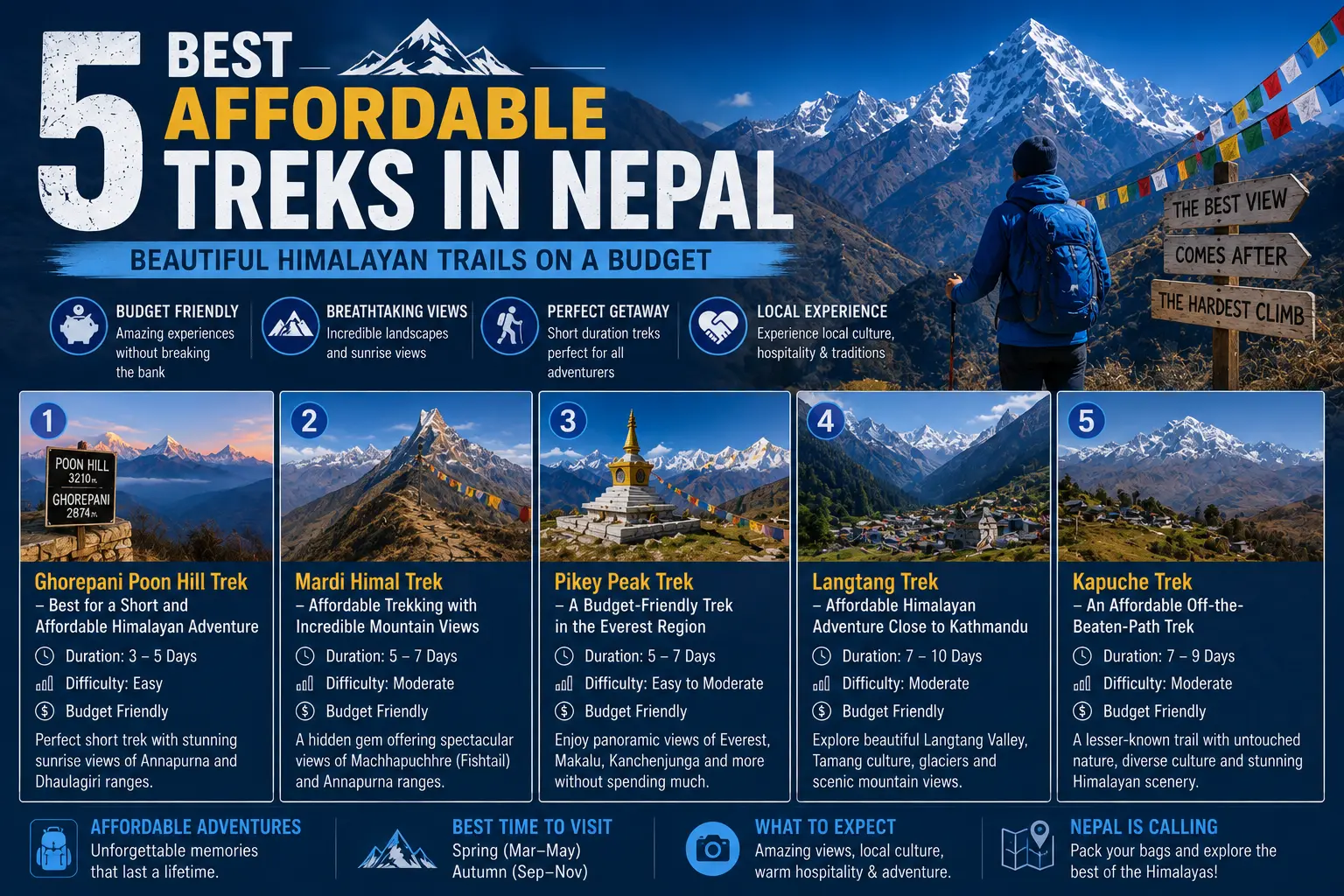
In this guide, we look at five beautiful options for Affordable Trekking in Nepal. The Ghorepani Poon Hill Trek is a popular choice for travelers looking for a shorter Himalayan experience with spectacular sunrise views. The Mardi Himal Trek offers close views of Machhapuchhre and the Annapurna range while passing through peaceful mountain settlements.
The Pikey Peak Trek provides an opportunity to explore the lower Everest region and enjoy views of Mount Everest without the longer journey and higher cost of the classic Everest Base Camp route. The Langtang Trek is another practical choice, especially for travelers who want a Himalayan experience relatively close to Kathmandu. It combines mountain scenery with rich Tamang culture and traditional villages.
The Kapuche Trek offers something different. It takes travelers toward Kapuche Lake, one of the world’s lowest-altitude glacial lakes, through a quieter part of the Annapurna region. Its peaceful trails, local communities, and dramatic mountain surroundings make it an interesting choice for those seeking a less crowded journey.
The beauty of Affordable Trekking in Nepal is not only about saving money. It is also about choosing a route that matches your time, interests, fitness level, and travel style. A shorter trek can mean more time enjoying village life, talking with local people, watching the changing mountain light, and experiencing the quiet rhythm of the Himalayas without rushing from one famous destination to another.
Ghorepani Poon Hill Trek – Best for a Short and Affordable Himalayan Adventure
The Ghorepani Poon Hill Trek is one of the most popular short treks in Nepal and a great choice for travelers who want to experience the Himalayas without spending a large amount of money. The trail passes through traditional villages, green forests, stone steps, and beautiful mountain landscapes. Because the trek is relatively short and does not require expensive equipment or special climbing skills, it is often considered one of the best options for Affordable Trekking in Nepal.
One of the main reasons this trek is budget-friendly is its short duration. Depending on the starting point and itinerary, the trek usually takes around 3 to 5 days. The route can easily be combined with a stay in Pokhara, which is the main gateway to the Annapurna region. Shorter trekking days also mean fewer nights in the mountains, helping reduce the overall cost of accommodation and food.
The highlight of the journey is Poon Hill, located at an altitude of about 3,210 meters. Many trekkers wake up early and walk to the viewpoint before sunrise. As the first light reaches the mountains, peaks such as Dhaulagiri, Annapurna South, Annapurna I, Machhapuchhre, and Nilgiri begin to appear above the surrounding hills. Watching the mountains slowly change color is one of those simple moments that can stay in your memory long after the trek is over.
Accommodation is another reason why the Ghorepani Poon Hill Trek is suitable for budget travelers. You will find comfortable teahouses and small lodges along the route. Rooms are generally simple, with beds and blankets, while bathrooms may be shared in some places. Meals are available at the teahouses, with dal bhat, noodles, momos, soup, eggs, and other local and basic dishes commonly found on the menu.
For a basic 3 to 5-day trek, a reasonable budget may be around USD 400 to USD 800 per person, depending on the itinerary, transportation, guide or porter service, accommodation choices, permits, and personal spending. Travelers using a guide or porter should allow additional money for their services. Prices can also vary between seasons and individual trekking companies.
The best seasons for the Ghorepani Poon Hill Trek are spring, from March to May, and autumn, from September to November. These months usually offer clearer mountain views and pleasant trekking conditions. October and April are particularly popular, although the trails can be busier. Winter can also be beautiful, but mornings and nights are cold, while the monsoon months from June to August can bring rain, clouds, and slippery trails.
This trek is suitable for first-time trekkers, couples, families with older children, solo travelers, and people with limited time in Nepal. You do not need previous high-altitude trekking experience, although the many stone steps can make some sections physically demanding. Regular walking and basic fitness can make the journey much more comfortable.
For travelers looking for Affordable Trekking in Nepal, Ghorepani Poon Hill offers a balanced experience. It brings together mountain views, village life, local food, forest trails, and the famous Himalayan sunrise in just a few days, making it possible to enjoy a meaningful mountain journey without a long and expensive itinerary.
Mardi Himal Trek – Affordable Trekking with Incredible Mountain Views
The Mardi Himal Trek is a beautiful short trek in the Annapurna region and one of the best choices for travelers who want dramatic Himalayan views without spending a large amount of money. The trail takes you through quiet forests, small mountain villages, open grasslands, and high ridges with views of some of Nepal’s most famous peaks. For travelers interested in Affordable Trekking in Nepal, Mardi Himal offers a good balance between cost, scenery, trekking time, and adventure.
One of the biggest advantages of the Mardi Himal Trek is that you can enjoy a high mountain experience within a relatively short itinerary. Most trekkers complete the journey in around 5 to 7 days, depending on the starting point, walking pace, and whether they trek to Mardi Himal Base Camp. The route does not require technical climbing skills, but some sections are steep and the trail becomes more demanding as you gain altitude. A reasonable level of fitness and regular walking practice will make the trek more enjoyable.
The mountain scenery is a major reason people choose Mardi Himal. As you climb higher, the forest gradually opens into wide mountain landscapes. The impressive Machhapuchhre, also known as Fishtail Mountain, becomes a constant presence on the trail. You can also see Annapurna South, Hiunchuli, Annapurna I, and other peaks of the Annapurna range. Early morning is often the best time for mountain views, when the sky is clearer and the first sunlight touches the snowy peaks.
Accommodation along the route is mainly provided by small teahouses and lodges. Rooms are usually simple, with beds and blankets, while bathrooms can be shared. The cost of a basic room may be around USD 5 to USD 15 per night, although prices can vary by location and season. Food is generally available at the teahouses, and dal bhat is a popular choice because it is filling and provides energy for long walking days. Other common meals include noodles, momos, pasta, eggs, soup, and fried rice.
Transportation is also relatively simple. Pokhara is the main starting point for the Mardi Himal Trek. From Pokhara, trekkers usually take a local bus, shared jeep, or private vehicle toward the trailhead, commonly through places such as Kande, Phedi, or other starting points depending on the itinerary. The road journey is an additional cost, but the short distance from Pokhara helps keep transportation expenses manageable.
A typical 5 to 7-day Mardi Himal Trek may cost around USD 400 to USD 800 per person. The final price depends on the trekking route, transportation, accommodation, food, guide or porter services, permits, and personal expenses. Travelers trekking independently may spend less, while a private guided trek will cost more.
The best seasons for Mardi Himal are spring, from March to May, and autumn, from September to November. These months generally provide good visibility, comfortable daytime temperatures, and colorful landscapes. March and April bring blooming rhododendrons, while October and November often offer crisp mountain views.
Mardi Himal is suitable for first-time trekkers, couples, solo travelers, and anyone looking for a quieter alternative to some of Nepal’s busier trekking routes. The combination of short duration, reasonable costs, peaceful trails, and spectacular Annapurna views makes it a strong option for Affordable Trekking in Nepal.
Pikey Peak Trek – A Budget-Friendly Trek in the Everest Region
The Pikey Peak Trek is a wonderful choice for travelers who want to experience the Everest region without taking the longer and more expensive journey to Everest Base Camp. Located in the lower Solukhumbu region, Pikey Peak offers beautiful Himalayan scenery, peaceful trails, traditional Sherpa villages, and a close connection with local mountain life. It is one of the lesser-known routes in the Everest region, making it a strong option for Affordable Trekking in Nepal.
One of the main reasons Pikey Peak can be more affordable than the Everest Base Camp Trek is its shorter duration. A typical Pikey Peak itinerary takes around 5 to 8 days, depending on the starting and ending points. The trek does not require as many days at high altitude, which can reduce the total cost of accommodation, food, transportation, and guide services. The lower number of trekkers also gives the route a quieter and more personal feeling.
The mountain views are one of the biggest rewards of the trek. From Pikey Peak, trekkers can enjoy impressive views of Mount Everest along with other Himalayan peaks such as Makalu, Lhotse, Kanchenjunga, Numbur, Mera Peak, and several peaks of the Khumbu region. Sunrise and sunset from the higher viewpoints can be especially beautiful. On a clear morning, the mountains appear across the horizon, creating a memorable experience without the crowds found on some of Nepal’s more famous trails.
The trek also offers a meaningful cultural experience. The Solukhumbu area is home to Sherpa communities, and the trail passes through traditional villages, monasteries, prayer flags, stone houses, and farmland. Spending the night in small villages allows trekkers to see a quieter side of mountain life. Local people are often involved in tourism, farming, and animal raising, and staying in family-run lodges gives visitors a chance to experience their warm hospitality.
Accommodation on the Pikey Peak route is mainly in simple teahouses and local lodges. Rooms are basic, but they provide a comfortable place to rest after a day of walking. Meals usually include dal bhat, noodles, momos, potatoes, rice, soup, eggs, and other simple dishes. Dal bhat is especially useful for trekkers because it is filling and provides energy for long walking days. Since supplies become more expensive in remote areas, food prices generally increase as you gain altitude.
A typical 5 to 8-day Pikey Peak Trek may cost around USD 400 to USD 800 per person. The actual cost depends on transportation, itinerary, permits, accommodation, meals, guide or porter services, and personal expenses. Traveling with a local guide may increase the cost, but it can also make the journey easier and provide deeper insight into Sherpa culture and the surrounding region.
The best time to visit Pikey Peak is during spring, from March to May, and autumn, from September to November. These seasons usually offer stable weather and clearer mountain views. Spring also brings colorful rhododendron forests, while autumn often provides crisp skies and excellent Himalayan visibility.
For travelers who want Everest-region scenery, Sherpa culture, and a peaceful Himalayan journey without the length and cost of Everest Base Camp, Pikey Peak is an excellent choice. It shows why Affordable Trekking in Nepal can still offer powerful mountain views and genuine local experiences.
Langtang Trek – Affordable Himalayan Adventure Close to Kathmandu
The Langtang Trek is one of the most convenient ways to experience the Himalayan landscape of Nepal without traveling deep into the country. Located north of Kathmandu near the Tibetan border, the Langtang Valley offers snowy mountains, peaceful villages, forests, rivers, and traditional mountain culture. Its relatively short travel distance, manageable trekking duration, and simple teahouse accommodation make it a popular choice for travelers looking for Affordable Trekking in Nepal.
One of the biggest advantages of the Langtang Trek is its location. The journey usually begins with a drive from Kathmandu to Syabrubesi, the main gateway to the Langtang Valley. The road journey takes several hours, depending on road and traffic conditions, but it is much shorter than the travel required for many remote Himalayan treks. This helps reduce transportation costs and also means travelers can spend more of their trip walking through the mountains rather than sitting on long journeys.
The trek usually takes around 7 to 10 days, depending on the itinerary and walking pace. The main trail follows the Langtang River through forests and traditional settlements before reaching the higher parts of the valley. As you climb, the landscape gradually changes from green forests to open mountain terrain. The journey to Kyanjin Gompa is one of the main highlights. This beautiful settlement sits surrounded by high peaks and is often used as the final overnight stop before exploring nearby viewpoints and mountain areas.
The mountain scenery becomes more impressive with every walking day. Trekkers can see peaks such as Langtang Lirung, Langtang Ri, Dorje Lakpa, Yala Peak, and other Himalayan mountains. The area also has beautiful glaciers, waterfalls, alpine meadows, and rocky landscapes. For many travelers, reaching Kyanjin Gompa and looking across the valley toward the snow-covered mountains becomes one of the most emotional moments of the journey.
Culture is another important part of the Langtang experience. The valley is home to Tamang communities with a rich Himalayan tradition. Along the trail, trekkers pass through villages where prayer flags, Buddhist stupas, mani walls, monasteries, and traditional houses are part of everyday life. Staying in local teahouses gives visitors an opportunity to meet local families and learn more about their way of life. The hospitality of people in the valley often becomes just as memorable as the mountain views.
Accommodation is generally simple and affordable. Most villages have teahouses and small lodges offering basic rooms and meals. Dal bhat, noodles, momos, fried rice, potatoes, eggs, and soups are common choices. As in other Himalayan regions, food and accommodation prices tend to increase at higher elevations because supplies are harder to transport.
A typical 7 to 10-day Langtang Trek may cost around USD 500 to USD 900 per person, depending on transportation, permits, accommodation, meals, guide or porter services, and personal expenses. Independent travelers may spend less, while a private guided trek will usually cost more.
The best seasons for the Langtang Trek are spring, from March to May, and autumn, from September to November. Spring brings pleasant temperatures and blooming rhododendrons, while autumn is known for clear skies and excellent mountain visibility. Winter can offer peaceful trails and snowy landscapes but brings colder conditions, while monsoon months can bring rain and cloudy mountain views.
For travelers who want a Himalayan experience without traveling far from Kathmandu, Langtang offers an excellent combination of accessibility, natural beauty, culture, and reasonable costs. It is a route where Affordable Trekking in Nepal feels less about spending less and more about finding meaningful experiences within a practical journey.
Kapuche Trek – An Affordable Off-the-Beaten-Path Trek
The Kapuche Trek is a peaceful and less-known trekking route in the Annapurna region of Nepal. It leads travelers toward Kapuche Lake, a beautiful glacial lake surrounded by dramatic mountain landscapes. Unlike some of the famous trekking routes in Nepal, Kapuche sees fewer visitors, allowing trekkers to enjoy the mountains at a slower and more personal pace. For travelers interested in Affordable Trekking in Nepal, this route offers a combination of natural beauty, local culture, and a lower-cost trekking experience.
One of the main reasons Kapuche is suitable for budget-conscious travelers is its relatively short trekking duration. A typical itinerary takes around 5 to 7 days, depending on the starting point, walking pace, and transportation. Because the trek requires fewer days in the mountains, travelers can reduce spending on accommodation and food. The route also does not require the long and costly travel involved in some remote Himalayan treks.
The main attraction is Kapuche Lake, located at an altitude of around 2,450 meters. It is known as one of the lowest-altitude glacial lakes in Nepal. The lake sits beneath impressive mountain landscapes, with snow-covered peaks and steep rocky slopes creating a dramatic setting. The sight of clear water surrounded by mountains can feel very different from the busy atmosphere of popular trekking destinations. Depending on the season and weather, the landscape around the lake can change from green hills and clear skies to snowy mountain scenery.
The quieter nature of the Kapuche Trek is one of its strongest attractions. Trekkers can walk through peaceful trails, small settlements, forests, rivers, and open mountain landscapes without seeing large groups of tourists. This creates more opportunities to enjoy the sounds of nature and spend time with local people. For travelers who want to escape crowded trekking routes, Kapuche can offer a more personal connection with the Himalayan environment.
The trail passes through local villages where simple teahouses and homestays provide accommodation. Rooms are basic, but they offer a comfortable place to sleep after a day of walking. Meals are usually simple local dishes such as dal bhat, noodles, momos, rice, potatoes, eggs, and soup. Staying in small local lodges also gives travelers an opportunity to experience village hospitality and see how communities in the region live.
A typical 5 to 7-day Kapuche Trek may cost around USD 400 to USD 800 per person. The actual budget depends on transportation, accommodation, food, permits, guide or porter services, and personal expenses. Traveling with a local guide can increase the cost, but it can also provide valuable knowledge about the trail, villages, weather, and local culture.
The best time to visit Kapuche is during spring, from March to May, and autumn, from September to November. Spring brings warmer weather and colorful vegetation, while autumn usually offers clearer skies and good mountain views. Winter can create beautiful snowy landscapes but may be colder, and some services may be limited. The monsoon season from June to August can bring rain, slippery trails, and cloudy conditions.
Kapuche can also be a good alternative for travelers who want a Himalayan adventure without the longer duration and higher costs associated with more famous routes. It may not have the same level of infrastructure as popular treks, but that is also part of its charm. The quiet trails, local villages, beautiful lake, and close mountain surroundings show another side of Affordable Trekking in Nepal, where the value of the journey comes from simple experiences rather than luxury or crowds.
Conclusion – Choose the Right Affordable Trekking in Nepal
Nepal offers many ways to experience the Himalayas without choosing the longest or most expensive trekking route. The five treks in this guide show that Affordable Trekking in Nepal can still bring beautiful mountain views, local culture, peaceful trails, and meaningful moments. The best trek for you depends on how much time you have, your fitness level, the type of scenery you enjoy, and the kind of experience you want from your journey.
The Ghorepani Poon Hill Trek is a good choice for travelers who have limited time and want a relatively easy introduction to the Nepalese Himalayas. Its short duration, comfortable teahouses, beautiful villages, and famous sunrise from Poon Hill make it suitable for first-time trekkers, families, couples, and travelers looking for a simple mountain adventure.
If mountain scenery is your main reason for trekking, the Mardi Himal Trek is worth considering. The trail offers close views of Machhapuchhre and the Annapurna range while passing through forests, peaceful settlements, and open mountain landscapes. Its shorter itinerary also makes it a practical option for travelers who want impressive Himalayan views without spending many weeks on the trail.
For those who dream of seeing Mount Everest, the Pikey Peak Trek provides a different way to experience the Everest region. You can enjoy views of Everest and other major Himalayan peaks while walking through traditional Sherpa villages and quieter trails. It can be a suitable lower-budget alternative for travelers who want an Everest-region experience but do not have the time or budget for the full Everest Base Camp journey.
The Langtang Trek is especially convenient for travelers starting from Kathmandu. The relatively short road journey to the trekking area makes it easier to include in a Nepal trip. Along the trail, you can explore Langtang Valley, reach Kyanjin Gompa, see impressive mountain scenery, and experience the traditions of Tamang communities. It is a strong choice for travelers who want to combine nature, culture, and accessibility.
For a quieter experience, the Kapuche Trek offers something different. The trail takes you through local villages and peaceful landscapes toward Kapuche Lake, surrounded by impressive mountain scenery. It is less crowded than many popular trekking routes, making it appealing to travelers who want to spend more time with nature and less time on busy trails.
When choosing among these five treks, there is no single route that is best for everyone. A short trip may make Ghorepani Poon Hill the better choice, while dramatic mountain views may lead you toward Mardi Himal. Pikey Peak suits travelers interested in the Everest region, Langtang works well for those who want convenience and culture, and Kapuche is ideal for people seeking peace and a less-traveled trail.
The beauty of Affordable Trekking in Nepal is that you do not need to spend a fortune to create a meaningful Himalayan memory. Sometimes, a simple teahouse room, a warm plate of dal bhat, a quiet mountain village, or the first sunlight touching a snowy peak can become the most valuable part of the journey.